THE CLASSIC COLLECTION✦Andersonville diaryCLASSIC FREE BOOKS
Andersonville diary
John L. Ransom
THE CLASSIC COLLECTION · 1921
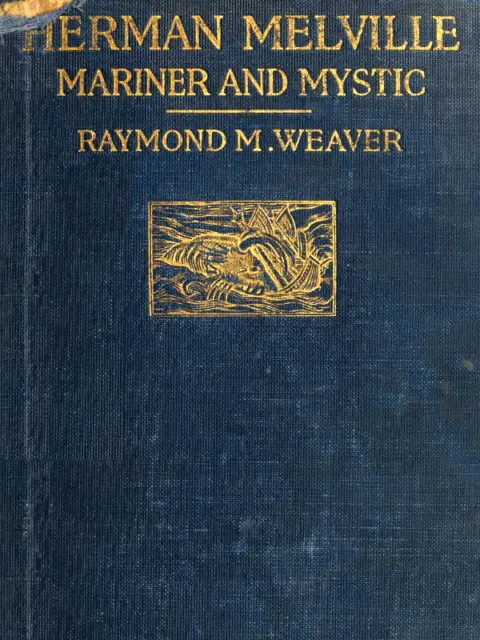
"Herman Melville, Mariner and Mystic" by Raymond M. Weaver is a biographical account written in the early 20th century. The book examines the life, experiences, and literary contributions of Herman Melville, an influential American author best known for his novel "Moby-Dick." The focus is on Melville's tumultuous career, reflecting on his early successes and the subsequent obscurity he faced, as well as offering insights into the personal and cultural contexts of his life, including his rich lineage and struggles with recognition. The opening of this biography sets the stage for Melville's complex character and multifaceted life experiences. It starts with a letter from Melville to his friend Nathaniel Hawthorne, hinting at his sense of melancholy and the burdens of literary fame. Weaver portrays Melville as a "gentleman adventurer" who immersed himself in the harsh realities of life at sea and the cultural richness of the Pacific, which informed his later writings. The narrative delves into themes of ambition and despair, underscoring Melville's ironic relationship with fame and the literary establishment, as well as exploring his inner conflicts and philosophical leanings.
Introduction adapted from the source catalogue; source summaries may be automatically generated.
Free to read · English · 134,431 words · No account needed
MAKE TIME FOR A GOOD BOOK
On by default. Untick to stop anonymous reading totals. Each page counts after 10 seconds in view. How this works.
Anonymous counting is on unless you have switched it off.
“Up early; went out; saw cemeteries where they dumped garbage. Sawing wood over a tomb. Forest of cemeteries. Intricacies of the streets. Started alone for Constantinople and after a terrible long walk found myself back where I started. Just like getting lost in a wood. No plan to streets. Pocket compass. Perfect labyrinth. Narrow. Close, shut in. If one could but get up aloft, it would be easy to see one’s way out. If you could get up into a tree. Soar out of the maze. But no. No names to the streets no more than to natural alleys among the groves. No numbers, no anything. Breakfasted at 10 A. M. Took guide ($1.25 per day) and started for tour. Took Cargua for Seraglio. Holy ground. Crossed some extensive grounds and gardens. Fine buildings of the Saracenic style. Saw the Mosque of St. Sophia. Went in. Rascally priests demanding ‘baksheesh.’ Fleeced me out of 1/2 dollar; following me round, selling the fallen mosaics. Ascended a kind of hose way leading up, round and round. Came into a gallery fifty feet above the floor. Superb interior. Precious marbles. Prophyry & Verd antique. Immense magnitude of the building. Names of the prophets in great letters. Roman Catholic air to the whole. To the hippodrome, near which stands the six towered mosque of Sultan Achmed; soaring up with its snowy white spires into the pure blue sky. Like light-houses. Nothing finer. In the hippodrome saw the obelisk with Roman inscription on the base. Also a broken monument of bronze, representing three twisted serpents erect upon their tails. Heads broken off. Also a square monument of masoned blocks. Leaning over and frittered away,--like an old chimney stack. A Greek inscription shows it to be of the time of Theodoric. Sculpture about the base of the obelisk, representing Constantine & wife and sons, &c. Then saw the ‘Burnt Column.’ Black and grimy enough & hooped about with iron. Stands soaring up from among a bundle of old wooden stakes. A more striking fire mount than that of London. Then to the cistern of 1001 columns. You see a rounded knoll covered with close herbage. Then a kind of broken cellar-way you go down, and find yourself on a wooden, rickety platform, looking down into a grove of marble pillars, fading away into the darkness. A palatial sort of Tartarus. Two tiers of pillars, one standing on the other; lower tier half buried. Here and there a little light percolates through from breaks in the keys of the arches; where bits of green struggle down. Used to be a reservoir. Now full of boys twisting silk. Great hubbub. Flit about like imps. Whirr of the spinning Jenns. In going down, (as into a ship’s hold) and wandering about, have to beware the innumerable skeins of silk. Terrible place to be robbed or murdered in. At whatever place you look, you see lines of pillars, like trees in an orchard arranged in the quincunx style.--Came out. Overhead looks like a mere shabby common, or worn out sheep pasture.--To the bazaar. A wilderness of traffic. Furniture, arms, silks, confectionery, shoes, saddles,--everything. (Cario) Covered overhead with stone arches, with wide openings. Immense crowds. Georgians, Armenians, Greeks, Jews & Turks are the merchants. Magnificent embroidered silk & gilt sabres & caparisons for horses. You lose yourself & are bewildered and confounded with the labyrinth, the din, the barbaric confusion of the whole.--Went to Watch Tower within a kind of arsenal (Immense arsenal) the tower of vast girth & height in the Saracenic style--a column. From the top, my God, what a view! Surpassing everything. The Propontis, the Bosphorus, the Golden Horn, the domes, the minarets, the bridges, the men-of-war, the cypresses.--Indescribable. Went to the Pigeon Mosque. In its court, the pigeons covered the pavement as thick as in the West they fly in hosts. A man feeding them. Some perched upon the roof of the colonnades & upon the fountain in the middle & on the cypresses. Took off my shoes and went in. Pigeons inside, flying round in the dome, in & out the lofty windows. Went to Mosque of Sultan Suleiman. The third one in point of size and splendour. The Mosque is a sort of marble mosque of which the minarets (four or six) are the stakes. In fact when inside it struck me that the idea of this kind of edifice was borrowed from the tent. Though it would make a noble ball room. Off shoes and went in. This custom more sensible than taking off hat. Muddy shoes; but never muddy head. Floor covered with mats & on them beautiful rugs of great size & square. Fine light coming through the side slits below the dome. Blind dome. Many Turks at prayer; lowering head to the floor towards a kind of altar. Charity going on. In a gallery saw lot of portmanteaux, chests & bags; as in a R. R. baggage car. Put there for safe-keeping by men who leave home, or afraid of robbers and taxation. ‘Lay not up your treasures where moth and rust do corrupt’ &c. Fountains (a row of them) outside along the side of the mosque for bathing the feet and hands of worshippers before going in. Natural rock.--Instead of going in in stockings (as I did) the Turks wear overshoes and doff them outside the mosque. The tent-like form of the Mosque broken up & dumbfounded with infinite number of arches, trellises, small domes, colonnades, &c, &c, &c. Went down to the Golden Horn. Crossed bridge of pontoons. Stood in the middle and not a cloud in the sky. Deep blue and clear. Delightful elastic atmosphere, although December. A kind of English June cooled and tempered sherbet-like with an American October; the serenity & beauty of summer without the heat.--Came home through the vast suburbs of Galatea, &c. Great crowds of all nations--money changers coins of all nations circulate--placards in four or five languages: (Turkish, French, Greek, Armenian) Lottery advertisements of boats the same. Sultan’s ship in colours--no atmosphere like this for flags. You feel you are among the nations. Great curse that of Babel; not being able to talk to a fellow being, &c.--Have to tend to your pockets. My guide went with his hands to his.--The horrible grimy tragic air of the Streets. (Ruffians of Galatea) The rotten & wicked looking houses. So gloomy & grimy seem as if a suicide hung from every rafter within.--No open spaces--no squares or parks. You suffocate for room.--You pass close together. The cafés of the Turks. Dingy holes, faded splendour, moth eaten. On both sides rude seats and divans where the old musty Turks sit smoking like conjurers. Saw in certain kiosks (pavilions) the crowns of the late Sultan. You look through gilt gratings & between heavy curtains of lace, at the sparkling things. Near the Mosque of Sultan Suleiman saw the cemetery of his family--big as that of a small village, all his wives and children and servants. All gilt and carved. The women’s tombs carved with heads (women no souls). The Sultan Suleiman’s tomb & that of his three brothers in a kiosk. Gilded like mantel ornaments.”
Your reading position is saved on this browser. Take it to another device with a library code. Reading pages adapt to text, rather than matching a printed edition.
BEHIND THE BOOK
This eBook is for the use of anyone anywhere in the United States and most other parts of the world at no cost and with almost no restrictions whatsoever. You may copy it, give it away or re-use it under the terms of the Project Gutenberg License included with this eBook or online at www.gutenberg.org. If you are not located in the United States, you will have to check the laws of the country where you are located before using this eBook. Read the source licence.
The original source file, including credits and licence, is retained by this library. Request an original-format copy at no charge. Please include the book title and Project Gutenberg identifier #50461.
KEEP YOUR CURIOSITY GOING
John L. Ransom

Herman W. Mudgett

Harriet Monroe
Daniel Dulany Addison
Charles Lanman

Harold Rosher