THE CLASSIC COLLECTION✦Andersonville diaryCLASSIC FREE BOOKS
Andersonville diary
John L. Ransom
THE CLASSIC COLLECTION · 1921
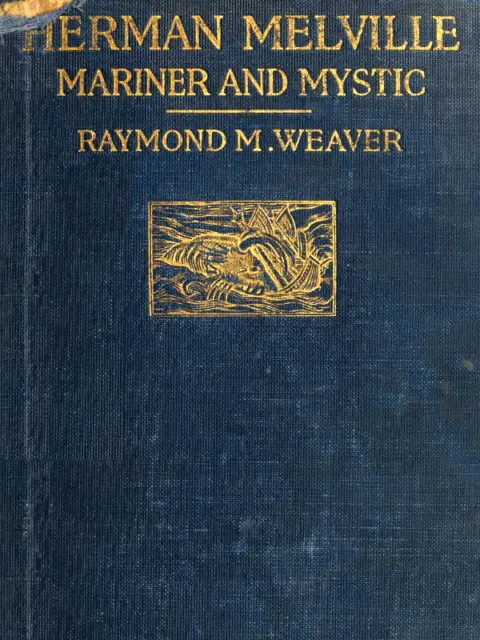
"Herman Melville, Mariner and Mystic" by Raymond M. Weaver is a biographical account written in the early 20th century. The book examines the life, experiences, and literary contributions of Herman Melville, an influential American author best known for his novel "Moby-Dick." The focus is on Melville's tumultuous career, reflecting on his early successes and the subsequent obscurity he faced, as well as offering insights into the personal and cultural contexts of his life, including his rich lineage and struggles with recognition. The opening of this biography sets the stage for Melville's complex character and multifaceted life experiences. It starts with a letter from Melville to his friend Nathaniel Hawthorne, hinting at his sense of melancholy and the burdens of literary fame. Weaver portrays Melville as a "gentleman adventurer" who immersed himself in the harsh realities of life at sea and the cultural richness of the Pacific, which informed his later writings. The narrative delves into themes of ambition and despair, underscoring Melville's ironic relationship with fame and the literary establishment, as well as exploring his inner conflicts and philosophical leanings.
Introduction adapted from the source catalogue; source summaries may be automatically generated.
Free to read · English · 134,431 words · No account needed
MAKE TIME FOR A GOOD BOOK
On by default. Untick to stop anonymous reading totals. Each page counts after 10 seconds in view. How this works.
Anonymous counting is on unless you have switched it off.
“But I was talking about the Whale. As the fishermen say, ‘he’s in his flurry’ when I left him some three weeks ago. I’m going to take him by his jaw, however, before long, and finish him up in some fashion or other. What’s the use of elaborating what, in its very essence, is so short-lived as a modern book? Though I wrote the Gospels in this century, I should die in the gutter.--I talk all about myself, and this is selfishness and egotism. Granted. But how help it? I am writing to you; I know little about you, but something about myself. So I write about myself,--at least, to you. Don’t trouble yourself, though, about writing; and don’t trouble yourself about visiting; and when you do visit, don’t trouble yourself about talking. I will do all the writing and visiting and talking myself.--By the way, in the last Dollar Magazine I read ‘The Unpardonable Sin.’ He was a sad fellow, that Ethan Brand. I have no doubt you are by this time responsible for many a shake and tremour of the tribe of ‘general readers.’ It is a frightful poetical creed that the cultivation of the brain eats out the heart. But it’s my prose opinion that in most cases, in those men who have fine brains and work them well, the heart extends down to hams. And though you smoke them with the fire of tribulation, yet, like veritable hams, the head only gives the richer and the better flavour. I stand for the heart. To the dogs with the head! I had rather be a fool with a heart, than Jupiter Olympus with his head. The reason the mass of men fear God, and at bottom dislike Him, is because they rather distrust His heart, and fancy Him all brain like a watch. (You perceive I employ a capital initial in the pronoun referring to the Deity; don’t you think there is a slight dash of flunkeyism in that usage?) Another thing. I was in New York for four-and-twenty hours the other day, and saw a portrait of N. H. And I have seen and heard many flattering (in a publisher’s point of view) allusions to the Seven Gables. And I have seen Tales and A New Volume announced, by N. H. So upon the whole, I say to myself, this N. H. is in the ascendant. My dear Sir, they begin to patronise. All Fame is patronage. Let me be infamous: there is no patronage in that. What ‘reputation’ H. M. has is horrible. Think of it! To go down to posterity is bad enough, any way; but to go down as a ‘man who lived among the cannibals’! When I speak of posterity, in reference to myself, I only mean the babies who will probably be born in the moment immediately ensuing upon my giving up the ghost. I shall go down to some of them, in all likelihood. Typee will be given to them, perhaps, with their gingerbread. I have come to regard this matter of Fame as the most transparent of all vanities. I read Solomon more and more, and every time see deeper and deeper and unspeakable meanings in him. I did not think of Fame, a year ago, as I do now. My development has been all within a few years past. I am like one of those seeds taken out of the Egyptian Pyramids, which, after being three thousand years a seed and nothing but a seed, being planted in English soil, it developed itself, grew to greenness, and then fell to mould. So I. Until I was twenty-five, I had no development at all. From my twenty-fifth year I date my life. Three weeks have scarcely passed, at any time between then and now, that I have not unfolded within myself. But I feel that I am now come to the inmost leaf of the bulb, and that shortly the flower must fall to the mould. It seems to me now that Solomon was the truest man who ever spoke, and yet that he a little managed the truth with a view to popular conservatism; or else there have been many corruptions and interpolations of the text--In reading some of Goethe’s sayings, so worshipped by his votaries, I came across this, ‘Live in the all.’ That is to say, your separate identity is but a wretched one,--good; but get out of yourself, spread and expand yourself, and bring to yourself the tinglings of life that are felt in the flowers and the woods, that are felt in the planets Saturn and Venus, and the Fixed Stars. What nonsense! Here is a fellow with a raging toothache. ‘My dear boy,’ Goethe says to him, ‘you are sorely afflicted with that tooth; but you must live in the all, and then you will be happy!’ As with all great genius, there is an immense deal of flummery in Goethe, and in proportion to my own contact with him, a monstrous deal of it in me.
Your reading position is saved on this browser. Take it to another device with a library code. Reading pages adapt to text, rather than matching a printed edition.
BEHIND THE BOOK
This eBook is for the use of anyone anywhere in the United States and most other parts of the world at no cost and with almost no restrictions whatsoever. You may copy it, give it away or re-use it under the terms of the Project Gutenberg License included with this eBook or online at www.gutenberg.org. If you are not located in the United States, you will have to check the laws of the country where you are located before using this eBook. Read the source licence.
The original source file, including credits and licence, is retained by this library. Request an original-format copy at no charge. Please include the book title and Project Gutenberg identifier #50461.
KEEP YOUR CURIOSITY GOING
John L. Ransom

Herman W. Mudgett

Harriet Monroe
Daniel Dulany Addison
Charles Lanman

Harold Rosher