THE CLASSIC COLLECTION✦Andersonville diaryCLASSIC FREE BOOKS
Andersonville diary
John L. Ransom
THE CLASSIC COLLECTION · 1921
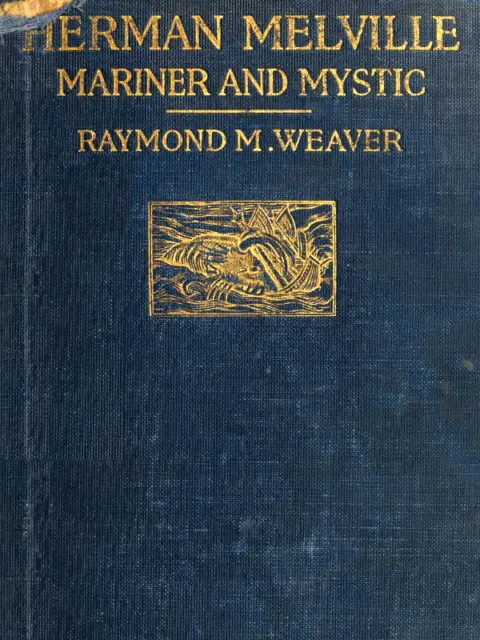
"Herman Melville, Mariner and Mystic" by Raymond M. Weaver is a biographical account written in the early 20th century. The book examines the life, experiences, and literary contributions of Herman Melville, an influential American author best known for his novel "Moby-Dick." The focus is on Melville's tumultuous career, reflecting on his early successes and the subsequent obscurity he faced, as well as offering insights into the personal and cultural contexts of his life, including his rich lineage and struggles with recognition. The opening of this biography sets the stage for Melville's complex character and multifaceted life experiences. It starts with a letter from Melville to his friend Nathaniel Hawthorne, hinting at his sense of melancholy and the burdens of literary fame. Weaver portrays Melville as a "gentleman adventurer" who immersed himself in the harsh realities of life at sea and the cultural richness of the Pacific, which informed his later writings. The narrative delves into themes of ambition and despair, underscoring Melville's ironic relationship with fame and the literary establishment, as well as exploring his inner conflicts and philosophical leanings.
Introduction adapted from the source catalogue; source summaries may be automatically generated.
Free to read · English · 134,431 words · No account needed
MAKE TIME FOR A GOOD BOOK
On by default. Untick to stop anonymous reading totals. Each page counts after 10 seconds in view. How this works.
Anonymous counting is on unless you have switched it off.
“I suppose we shall not be long here. Allan is looking out for a house in N. Y. and will be married next month.
“You know a proposition was made before I came here that I should furnish my own room, which for good reasons were then set aside--but if it is not too late now, I should like very much to do it if we go to N. Y.--but we can talk about that when I see you. I must bring my scribbling to a close, after I have begged you or somebody to write me. I have not received a single line since I left home. How did the dinner party go off? I want to hear about everything and everybody at home. Please give my warmest love to all and believe me your affectionate daughter,
“Herman desires his kindest remembrances to all.”
Soon after the marriage, Melville and his wife moved from Lansingburg to New York, where they lived with Melville’s brother, Allan, and his household of sisters. The letters of Mrs. Melville’s are the only surviving records of the intimate details of this domestic arrangement. They are interesting, too, as revelation of the character of Mrs. Melville. The three following are typical:
“NEW YORK, Dec. 23rd, 1847.
“Thank you, dear Mother, for your nice long letter. I was beginning to be afraid you had forgotten your part of the contract for that week, but Saturday brought me evidence to the contrary and made us even. And I should have written you earlier, but the days are so short, and I have so much to do, that they fly by without giving me half the time I want. Perhaps you will wonder what on earth I have to occupy me. Well in fact I hardly know exactly myself, but true it is little things constantly present themselves and dinner time comes before I am aware. We breakfast at 8 o’clock, then Herman goes to walk and I fly up to put his room to rights, so that he can sit down to his desk immediately on his return. Then I bid him good-bye, with many charges to be an industrious boy and not upset the inkstand and then flourish the duster, make the bed, etc., in my own room. Then I go downstairs and read the papers a little while, and after that I am ready to sit down to my work whatever it may be--darning stockings--making or mending for myself or Herman--at all events, I haven’t seen a day yet, without some sewing or other to do. If I have letters to write, as is the case to-day, I usually do that first--but whatever I am about I do not much more than get thoroughly engaged in it, than ding-dong goes the bell for luncheon. This is half-past 12 o’clock--by this time we must expect callers, and so must be dressed immediately after lunch. Then Herman insists upon taking a walk of an hour’s length at least. So unless I can have rain or snow for an excuse, I usually sally out and make a pedestrian tour a mile or two down Broadway. By the time I come home it is two o’clock and after, and then I must make myself look as bewitchingly as possible to meet Herman at dinner. This being accomplished, I have only about an hour of available time left. At four we dine, and after dinner is over, Herman and I come up to our room and enjoy a cosy chat for an hour or so--or he reads me some of the chapters he has been writing in the day. Then he goes down town for a walk, looks at the papers in the reading room, etc., and returns about half-past seven or eight. Then my work or my book is laid aside, and as he does not use his eyes but very little by candle light, I either read to him, or take a hand at whist for his amusement, or he listens to our reading or conversation, as best pleases him. For we all collect in the parlour in the evening, and generally one of us reads aloud for the benefit of the whole. Then we retire very early--at 10 o’clock we all disperse. Indeed we think that quite a late hour to be up. This is the general course of daily events so you see how my time is occupied; but sometime--dear me! we have to go and make calls! and then good-bye to everything else for that day! for upon my word, it takes the whole day, from 1 o’clock till four! and then perhaps we don’t accomplish more than two or three, if unluckily they chance to be in--for everybody lives so far from everybody else, and all Herman’s and Allan’s friends are so polite, to say nothing of Mrs. M.’s old acquaintances, that I am fairly sick and tired of returning calls. And no sooner do we do up a few, than they all come again, and so it has to be gone over again.
Your reading position is saved on this browser. Take it to another device with a library code. Reading pages adapt to text, rather than matching a printed edition.
BEHIND THE BOOK
This eBook is for the use of anyone anywhere in the United States and most other parts of the world at no cost and with almost no restrictions whatsoever. You may copy it, give it away or re-use it under the terms of the Project Gutenberg License included with this eBook or online at www.gutenberg.org. If you are not located in the United States, you will have to check the laws of the country where you are located before using this eBook. Read the source licence.
The original source file, including credits and licence, is retained by this library. Request an original-format copy at no charge. Please include the book title and Project Gutenberg identifier #50461.
KEEP YOUR CURIOSITY GOING
John L. Ransom

Herman W. Mudgett

Harriet Monroe
Daniel Dulany Addison
Charles Lanman

Harold Rosher