THE CLASSIC COLLECTION✦Andersonville diaryCLASSIC FREE BOOKS
Andersonville diary
John L. Ransom
THE CLASSIC COLLECTION · 1921
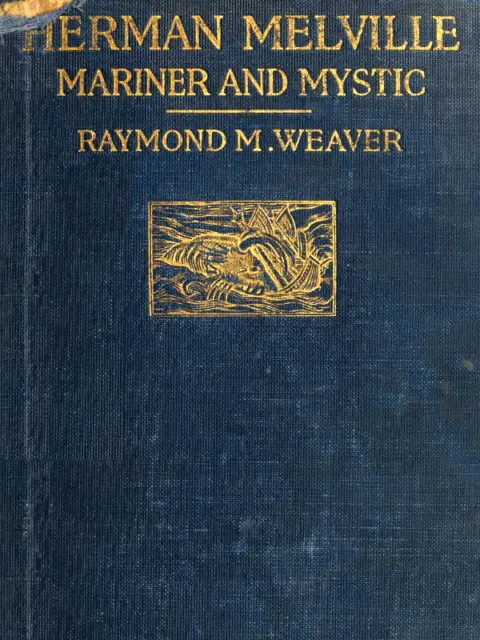
"Herman Melville, Mariner and Mystic" by Raymond M. Weaver is a biographical account written in the early 20th century. The book examines the life, experiences, and literary contributions of Herman Melville, an influential American author best known for his novel "Moby-Dick." The focus is on Melville's tumultuous career, reflecting on his early successes and the subsequent obscurity he faced, as well as offering insights into the personal and cultural contexts of his life, including his rich lineage and struggles with recognition. The opening of this biography sets the stage for Melville's complex character and multifaceted life experiences. It starts with a letter from Melville to his friend Nathaniel Hawthorne, hinting at his sense of melancholy and the burdens of literary fame. Weaver portrays Melville as a "gentleman adventurer" who immersed himself in the harsh realities of life at sea and the cultural richness of the Pacific, which informed his later writings. The narrative delves into themes of ambition and despair, underscoring Melville's ironic relationship with fame and the literary establishment, as well as exploring his inner conflicts and philosophical leanings.
Introduction adapted from the source catalogue; source summaries may be automatically generated.
Free to read · English · 134,431 words · No account needed
MAKE TIME FOR A GOOD BOOK
On by default. Untick to stop anonymous reading totals. Each page counts after 10 seconds in view. How this works.
Anonymous counting is on unless you have switched it off.
This originality lies partly, of course, in the novelty of Melville’s experience, partly in the temperament through which this experience was refracted. Melville himself believed his only originality was his loyalty to fact. He bows himself out of the Preface “trusting that his anxious desire to speak the ungarnished truth will gain him the confidence of his readers.”
When Melville’s brother Gansevoort offered Typee for publication in England, it was accepted not as fiction but as ethnology, and was published as Melville’s Marquesas only after Melville had vouched for its entire veracity.
Though Melville published Typee upright in the conviction that he had in its composition been loyal both to veracity and truth, his critics were not prone to take him at his word. And he was to learn, too, that veracity and truth are not interchangeable terms. Men do, in fact, believe pretty much what they find it most advantageous to believe. We live by prejudices, not by syllogisms. In Typee, Melville undertook to show from first-hand observation the obvious fact that there are two sides both to civilisation and to savagery. He was among the earliest of literary travellers to see in barbarians anything but queer folk. He intuitively understood them, caught their point of view, respected and often admired it. He measured the life of the Marquesans against that of civilisation, and wrote: “The term ‘savage’ is, I conceive, often misapplied, and indeed when I consider the vices, cruelties, and enormities of every kind that spring up in the tainted atmosphere of a feverish civilisation, I am inclined to think that so far as the relative wickedness of the parties is concerned, four or five Marquesan Islanders sent to the United States as missionaries, might be quite as useful as an equal number of Americans dispatched to the Islands in a similar capacity.” Civilisation is so inured to anathema,--so reassured by it,--indeed, that Melville could write a vague and sentimental attack upon its obvious imperfections with the cool assurance that each of his readers, applying the charges to some neighbour, would approve in self-righteousness. But one ventures the “ungarnished truth” about any of the vested interests of civilisation at the peril of his peace in this world and the next. It was when Melville focussed his charge and wrote “a few passages which may be thought to bear rather hard upon a reverend order of men” with incidental reflections upon “that glorious cause which has not always been served by the proceedings of some of its advocates,” that all the musketry of the soldiers of the Prince of Peace was aimed at his head. Melville himself was a man whose tolerance provoked those who sat in jealous monopoly upon warring sureties to accuse him of license. He specifies his delight in finding in the valley of Typee that “an unbounded liberty of conscience seemed to prevail. Those who were pleased to do so were allowed to repose implicit faith in an ill-favoured god with a large bottle-nose and fat shapeless arms crossed upon his breast; whilst others worshipped an image which, having no likeness either in heaven or on earth, could hardly be called an idol. As the islanders always maintained a discrete reserve with regard to my own peculiar views on religion, I thought it would be excessively ill-bred in me to pry into theirs.” This boast of delicacy did not pass unnoticed by “a reverend order of men.” The vitriolic rejoinder of the London Missionary Society would seem to indicate that there may be two versions of “the ungarnished truth.” It should be stated, however, that the English editions of Typee contain strictures against the Missionaries that were omitted in the American editions. But even Melville’s unsanctified critics showed an anxiety to repudiate him. Both Typee and Omoo were scouted as impertinent inventions, defying belief in their “cool sneering wit and perfect want of heart.” Melville’s name was suspiciously examined as being a nom de plume used to cover a cowardly and supercilious libel. A gentleman signing himself G. W. P. and writing in the American Review (1847, Vol. IV, pp. 36-46) was scandalised by Melville’s habit of presenting “voluptuous pictures, and with cool deliberate art breaking off always at the right point, so as without offending decency, he may excite unchaste desire.” After discovering in Melville’s writing a boastful lechery, this gentleman undertakes to discountenance Melville on three scores: (1) only the impotent make amorous boasts; (2) Melville had none of Sir Epicure Mammon’s wished-for elixir; (3) the beauty of Polynesian women is all myth.
Your reading position is saved on this browser. Take it to another device with a library code. Reading pages adapt to text, rather than matching a printed edition.
BEHIND THE BOOK
This eBook is for the use of anyone anywhere in the United States and most other parts of the world at no cost and with almost no restrictions whatsoever. You may copy it, give it away or re-use it under the terms of the Project Gutenberg License included with this eBook or online at www.gutenberg.org. If you are not located in the United States, you will have to check the laws of the country where you are located before using this eBook. Read the source licence.
The original source file, including credits and licence, is retained by this library. Request an original-format copy at no charge. Please include the book title and Project Gutenberg identifier #50461.
KEEP YOUR CURIOSITY GOING
John L. Ransom

Herman W. Mudgett

Harriet Monroe
Daniel Dulany Addison
Charles Lanman

Harold Rosher