THE CLASSIC COLLECTION✦Andersonville diaryCLASSIC FREE BOOKS
Andersonville diary
John L. Ransom
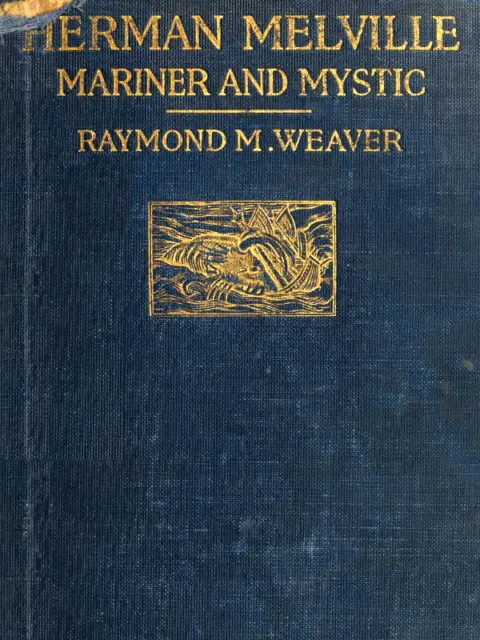
THE CLASSIC COLLECTION · 1921
"Herman Melville, Mariner and Mystic" by Raymond M. Weaver is a biographical account written in the early 20th century. The book examines the life, experiences, and literary contributions of Herman Melville, an influential American author best known for his novel "Moby-Dick." The focus is on Melville's tumultuous career, reflecting on his early successes and the subsequent obscurity he faced, as well as offering insights into the personal and cultural contexts of his life, including his rich lineage and struggles with recognition. The opening of this biography sets the stage for Melville's complex character and multifaceted life experiences. It starts with a letter from Melville to his friend Nathaniel Hawthorne, hinting at his sense of melancholy and the burdens of literary fame. Weaver portrays Melville as a "gentleman adventurer" who immersed himself in the harsh realities of life at sea and the cultural richness of the Pacific, which informed his later writings. The narrative delves into themes of ambition and despair, underscoring Melville's ironic relationship with fame and the literary establishment, as well as exploring his inner conflicts and philosophical leanings.
Introduction adapted from the source catalogue; source summaries may be automatically generated.
Free to read · English · 134,431 words · No account needed
MAKE TIME FOR A GOOD BOOK
On by default. Untick to stop anonymous reading totals. Each page counts after 10 seconds in view. How this works.
Anonymous counting is on unless you have switched it off.
Melville at first prided himself that he was the only person on board the Acushnet sufficiently reckless to attempt an idyllic sojourn on an island of irreclaimable cannibals. But Toby’s perennially hanging over the side of the ship, gazing wistfully at the shore in moody isolation, coupled with Melville’s knowledge of Toby’s hearty detestation of the ship, of his dauntless courage, and his other engaging traits as companion in high adventure, led Melville to share with Toby his schemes. A few words won Toby’s most impetuous co-operation. Plans were rapidly made and ratified by an affectionate wedding of palms, when, to elude suspicion, each repaired to his hammock to spend a last night aboard the Acushnet.
On the morrow, with as much tobacco, ship’s biscuit and calico as they could stow in the front of their frocks, Melville and Toby made off for the interior of Nukuheva,--but not before Melville “lingered behind in the forecastle a moment to take a parting glance at its familiar features.” Their five days of marvellous adventures that landed them finally in the valley of Typee has abidingly tried the credulity of Melville’s readers--though never for an instant their patience. After reading these adventures, Stevenson expressed his slangy approval by hailing Melville as “a howling cheese.” It has been questioned in passing whether or not the number of days that two strong male humans, going through incredible exertion, can support themselves upon a hunk of bread soaked in sweat and ingrained with shreds of tobacco, must not be fewer than Melville makes out. And did they, in sober verity, critics have asked, lower themselves down the cliff by swinging from creeper to creeper with horrid gaps between them--was it as steep as Melville says, and the creepers as far apart? And did they, on another occasion, as Melville asserts, break a second gigantic fall by pitching on the topmost branches of a very high palm tree? During these thrilling and terrible five days, hardship runs hard on the heels of hardship, and each obstacle as it presents itself, seems, if possible, more unsurmountable than the last. There is no way out of this, one says for the tenth time: but the sagacity and fearless confidence of Toby--to whom let glory be given--and the manful endurance of Melville through parching fever and agonising lameness, disappoint the lugubrious reader. On the third day after their escape, their ardour is cooled to a resolve to forego futile ramblings for a space. They crawled under a clump of thick bushes, and pulling up the long grass that grew around, covered themselves completely with it to endure another downpour. While the exhausted Toby slept through the violent rain, Melville tossed about in a raging fever, without the heart to wake Toby when the rain ceased. Chancing to push aside a branch, Melville was as transfixed with surprised delight as if he had opened a sudden vista into Paradise. He “looked straight down into the bosom of a valley, which swept away in long wavy undulations to the blue waters in the distance. Midway towards the sea, and peering here and there amidst the foliage, might be seen the palmetto-thatched houses of its inhabitants glistening in the sun that had bleached them to a dazzling whiteness. The vale was more than three leagues in length, and about a mile across its greatest width. Everywhere below me, from the base of the precipice upon whose very verge I had been unconsciously reposing, the surface of the vale presented a mass of foliage, spread with such rich profusion that it was impossible to determine of what description of trees it consisted. But perhaps there was nothing about the scenery I beheld more impressive than those silent cascades, whose slender threads of water, after leaping down the steep cliffs, were lost amidst the rich foliage of the valley. Over all the landscape there reigned the most hushed repose, which I almost feared to break, lest, like the enchanted gardens of the fairy tale, a single syllable might dissolve the spell.” Toby was awakened and called into consultation. With his usual impetuosity, Toby wanted promptly to descend into the valley before them; but Melville restrained him, dwelling upon the perilous possibility of its inhabitants being Typees. Toby was with difficulty reined to circumspection, and off Melville and his companion started on a wild goose chase for a valley on the other side of the ridge. So fruitless and disheartening did this attempt prove, that Melville was reduced to the wan solace that it was, after all, better to die of starvation in Nukuheva than to be fed on salt beef, stale water and flinty bread in the forecastle of the Acushnet. Yet Toby was dauntless. Despite the defeats of the preceding day, Toby awoke on the following morning as blithe and joyous as a young bird. Melville’s fever and his swollen leg, however, had left him not so exultant.
Your reading position is saved on this browser. Take it to another device with a library code. Reading pages adapt to text, rather than matching a printed edition.
BEHIND THE BOOK
This eBook is for the use of anyone anywhere in the United States and most other parts of the world at no cost and with almost no restrictions whatsoever. You may copy it, give it away or re-use it under the terms of the Project Gutenberg License included with this eBook or online at www.gutenberg.org. If you are not located in the United States, you will have to check the laws of the country where you are located before using this eBook. Read the source licence.
The original source file, including credits and licence, is retained by this library. Request an original-format copy at no charge. Please include the book title and Project Gutenberg identifier #50461.
KEEP YOUR CURIOSITY GOING
John L. Ransom

Herman W. Mudgett

Harriet Monroe
Daniel Dulany Addison
Charles Lanman

Harold Rosher