THE CLASSIC COLLECTION✦Andersonville diaryCLASSIC FREE BOOKS
Andersonville diary
John L. Ransom
THE CLASSIC COLLECTION · 1921
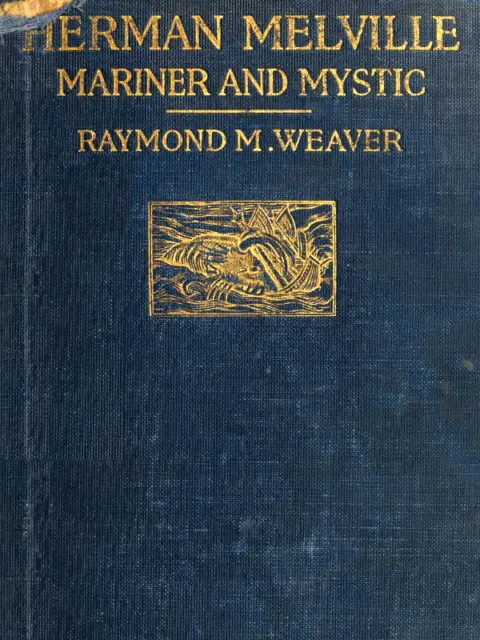
"Herman Melville, Mariner and Mystic" by Raymond M. Weaver is a biographical account written in the early 20th century. The book examines the life, experiences, and literary contributions of Herman Melville, an influential American author best known for his novel "Moby-Dick." The focus is on Melville's tumultuous career, reflecting on his early successes and the subsequent obscurity he faced, as well as offering insights into the personal and cultural contexts of his life, including his rich lineage and struggles with recognition. The opening of this biography sets the stage for Melville's complex character and multifaceted life experiences. It starts with a letter from Melville to his friend Nathaniel Hawthorne, hinting at his sense of melancholy and the burdens of literary fame. Weaver portrays Melville as a "gentleman adventurer" who immersed himself in the harsh realities of life at sea and the cultural richness of the Pacific, which informed his later writings. The narrative delves into themes of ambition and despair, underscoring Melville's ironic relationship with fame and the literary establishment, as well as exploring his inner conflicts and philosophical leanings.
Introduction adapted from the source catalogue; source summaries may be automatically generated.
Free to read · English · 134,431 words · No account needed
MAKE TIME FOR A GOOD BOOK
On by default. Untick to stop anonymous reading totals. Each page counts after 10 seconds in view. How this works.
Anonymous counting is on unless you have switched it off.
In his life, as in his death, Cook enjoyed all the successes. Boswell dined with him at Sir John Pringle’s on April 2, 1776, and reported the glowing event to Dr. Johnson. A snuff-box was carved out of the planks of one of his vessels, and presented to James Fenimore Cooper. Fanny Burney records with pride her father’s meeting the famous navigator, whom she herself met in society and in her own home. Joseph Priestly contemplated accompanying Cook to the South Seas. An artist--W. Hodges--was officially appointed to accompany him to perpetuate his exploits in oil. He read learned papers before the Royal Society, for one of which the counsel adjudged him the Copley Gold Medal. Six times was his portrait painted, and once was it seriously proposed that Dr. Johnson be appointed his official biographer. Not even by Omai, a native of Tahiti that Captain Furneaux brought to England, was Captain Cook’s glory eclipsed. And Omai was received by the King, was painted by Sir Joshua Reynolds, and was laden with gifts when he was taken back to Tahiti by Captain Cook on his third voyage. Omai, too, attended meetings of the Royal Society, and it is to his credit that he behaved himself fairly well. It was regretted by the Directors of the London Missionary Society that though “great attention was paid to him by some of the nobility, it was chiefly directed to his amusement, and tended rather to augment than to diminish his habitual profligacy.” In 1785-6, there was repeatedly performed at Covent Garden Theatre a pantomime named after him. The characters, besides Omai, were Towha, the Guardian Genius of Omai’s Ancestors; Otoo, Father of Omai; Harlequin, Servant to Omai. To give a blend of edification to romance, the performance included, so a surviving play-bill announces, “a Procession exactly representing the dresses, weapons and manners of the Inhabitants of Otaheite, New Zealand, Tanna, Marquesas, Friendly, Sandwich and Easter Islands, and other countries visited by Captain Cook.” In 1789, so vividly was the tragic end of Captain Cook still mourned, that at the Theatre-Royal, Covent Garden, was presented a spectacular tribute posted as The Death of Captain. It was “a Grand Serious Pantomimic Ballet, in Three Parts, as now exhibiting in Paris with uncommon applause, with the Original French Music, New Scenery, Machinery, and other Decorations.” This performance may have been inspired by an Ode on the Death of Captain Cook penned by Miss Seward, the Swan of Lichfield: an ode praised by her fellow-townsman, Dr. Johnson. In 1774 there appeared in London “An Epistle from Oberea, Queen of Otaheite, to Joseph Banks, Esq., translated by T. Q. Z., Esq., Professor of the Otaheite Language in Dublin, and of all the Languages of the Undiscovered Islands in the South Seas, enriched with Historical and Explanatory Notes,” and so novel and popular was the South Sea manner, that its author was mistaken for a wit, and his efforts at humour repeatedly and laboriously imitated. As a corrective to such levity, there appeared in 1779 an effusion in verse, adorned with vignette depicting Tahitian women dancing, entitled The Injured Islanders; or, The Influence of Art upon the Happiness of Nature. There is no lack of evidence to prove that the exploits of Captain Cook brought the South Seas, and especially Tahiti, into exuberant and irresponsible popularity. Nor did business enterprise nap during the festivities. Information which had been received of the great utility of the bread-fruit, induced the merchants and planters of the British West Indies to request that means might be used to transplant it thither. For this purpose a ship was benevolently commissioned by George the Third: the Bounty, commanded by Lieutenant Bligh. The voyage of the Bounty ended in a horrible tragedy and an intensely interesting romance. The story of the mutiny of the Bounty, and its astonishing sequels, joined further to vitalise the interest in the South Seas. A frigate, significantly called the Pandora, was sent out from England to Tahiti to seize the Bounty mutineers. Though the Pandora was despatched as a messenger of justice, the usual course of festivity, amusement and debaucheries was uninterrupted during the continuance of the ship at Tahiti. And the year following, with British doggedness, Captain Bligh returned to accomplish the purpose of his former voyage which had been frustrated by mutiny. In 1793, the Daedalus, Vancouver’s storeship, stopped at Tahiti, leaving behind a Swedish sailor with a taste for savagery. The same year an American whaler, the Matilda, was wrecked off Tahiti, and the crew, delighted at their good fortune, betrayed no inclination for an immediate departure.
Your reading position is saved on this browser. Take it to another device with a library code. Reading pages adapt to text, rather than matching a printed edition.
BEHIND THE BOOK
This eBook is for the use of anyone anywhere in the United States and most other parts of the world at no cost and with almost no restrictions whatsoever. You may copy it, give it away or re-use it under the terms of the Project Gutenberg License included with this eBook or online at www.gutenberg.org. If you are not located in the United States, you will have to check the laws of the country where you are located before using this eBook. Read the source licence.
The original source file, including credits and licence, is retained by this library. Request an original-format copy at no charge. Please include the book title and Project Gutenberg identifier #50461.
KEEP YOUR CURIOSITY GOING
John L. Ransom

Herman W. Mudgett

Harriet Monroe
Daniel Dulany Addison
Charles Lanman

Harold Rosher