THE CLASSIC COLLECTION✦Andersonville diaryCLASSIC FREE BOOKS
Andersonville diary
John L. Ransom
THE CLASSIC COLLECTION · 1921
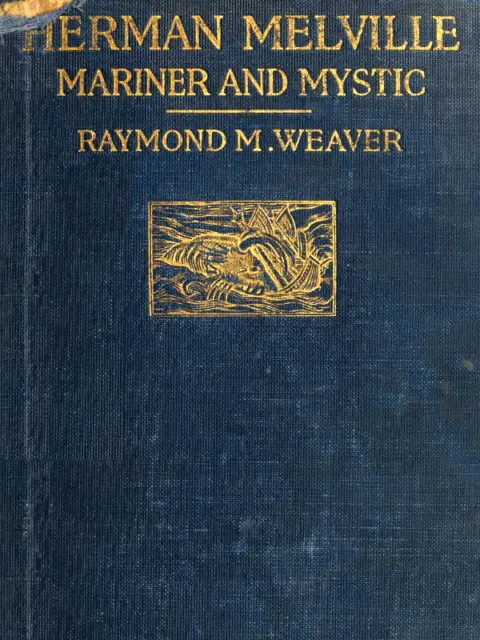
"Herman Melville, Mariner and Mystic" by Raymond M. Weaver is a biographical account written in the early 20th century. The book examines the life, experiences, and literary contributions of Herman Melville, an influential American author best known for his novel "Moby-Dick." The focus is on Melville's tumultuous career, reflecting on his early successes and the subsequent obscurity he faced, as well as offering insights into the personal and cultural contexts of his life, including his rich lineage and struggles with recognition. The opening of this biography sets the stage for Melville's complex character and multifaceted life experiences. It starts with a letter from Melville to his friend Nathaniel Hawthorne, hinting at his sense of melancholy and the burdens of literary fame. Weaver portrays Melville as a "gentleman adventurer" who immersed himself in the harsh realities of life at sea and the cultural richness of the Pacific, which informed his later writings. The narrative delves into themes of ambition and despair, underscoring Melville's ironic relationship with fame and the literary establishment, as well as exploring his inner conflicts and philosophical leanings.
Introduction adapted from the source catalogue; source summaries may be automatically generated.
Free to read · English · 134,431 words · No account needed
MAKE TIME FOR A GOOD BOOK
On by default. Untick to stop anonymous reading totals. Each page counts after 10 seconds in view. How this works.
Anonymous counting is on unless you have switched it off.
“What became of the ship’s company on the whale-ship ‘Acushnet,’ according to Hubbard who came back home in her (more than a four years’ voyage) and visited me in Pittsfield in 1850.
“Captain Pease--returned & lives in asylum at the Vineyard.
“Raymond, 1st Mate--had a fight with the Captain & went ashore at
Payta.
“Hall, 2nd Mate--came home & went to California.
“3rd Mate, Portuguese, went ashore at Payta.
“Boatswain, either ran away or killed at Ropo one of the Marquesas.
“Smith, went ashore at Santa, coast of Peru, afterwards committed
suicide at Mobile.
“Barney, boatswain, came home.
“Carpenter, went ashore at Mowee half dead with disreputable
disease.
“The Czar.
“Tom Johnson, black, went ashore at Mowee, half dead (ditto) & died
at the hospital.
“Reed, mulatto--came home.
“Blacksmith, ran away at San Francisco.
“Blackus, little black, ditto.
“Bill Green, after several attempts to run away, came home in the
end.
“The Irishman, ran away, coast of Colombia.
“Wright, went ashore half dead at the Marquesas.
“Jack Adams and Jo Portuguese came home.
“The Old Cook, came home.
“Haynes, ran away aboard of a Sidney ship.
“Little Jack, came home.
“Grant, young fellow, went ashore half dead, spitting blood, at
Oahu.
“Murray, went ashore, shunning fight at Rio Janeiro.
“The Cooper, came home.”
Of the twenty-seven men who went out with the ship, only the Captain, the Second Mate, a Boatswain, the Cook, the Cooper and six of the mongrel crew (one of which made several futile attempts to escape) came back home with her. The First Mate had a fight with the Captain and left the ship; the Carpenter and four of the crew went ashore to die, two at least with venereal diseases, another went ashore spitting blood, another to commit suicide.
With this company Melville was intimately imprisoned on board the Acushnet for fifteen months. Of the everyday life of Melville in this community we know little enough. In Moby-Dick Melville has left voluminous accounts of the typical occupations of whaling but beyond this nothing certainly to be identified as derived from life on the Acushnet. The ship’s company on board the Pequod, in so far as is known, belong as purely to romance as characters of fiction can. It doubtless abbreviates the responsibilities of the custodians of public morals, that the staple of conversation on board the Acushnet, the scenes enacted in the forecastle and elsewhere in the ship, shall probably never be known. In Typee Melville says of the crew of the Acushnet, however: “With a very few exceptions, our crew was composed of a parcel of dastardly and mean-spirited wretches, divided among themselves, and only united in enduring without resistance the unmitigated tyranny of the captain.”
Your reading position is saved on this browser. Take it to another device with a library code. Reading pages adapt to text, rather than matching a printed edition.
BEHIND THE BOOK
This eBook is for the use of anyone anywhere in the United States and most other parts of the world at no cost and with almost no restrictions whatsoever. You may copy it, give it away or re-use it under the terms of the Project Gutenberg License included with this eBook or online at www.gutenberg.org. If you are not located in the United States, you will have to check the laws of the country where you are located before using this eBook. Read the source licence.
The original source file, including credits and licence, is retained by this library. Request an original-format copy at no charge. Please include the book title and Project Gutenberg identifier #50461.
KEEP YOUR CURIOSITY GOING
John L. Ransom

Herman W. Mudgett

Harriet Monroe
Daniel Dulany Addison
Charles Lanman

Harold Rosher