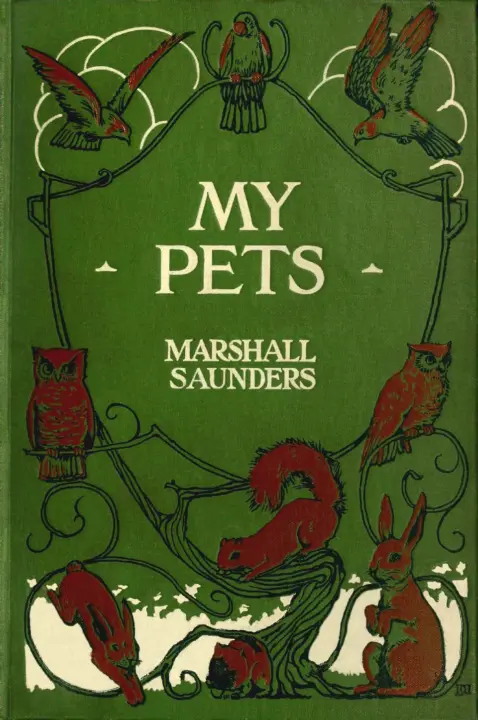
My pets
Marshall Saunders
THE CLASSIC COLLECTION · 1900
"Her Sailor: A Love Story" by Marshall Saunders is a romantic novel written in the late 19th century. The story unfolds around Nina, a spirited young girl poised between the joys of youth and the trials of impending adulthood, as she navigates her relationship with Esteban, her older sailor fiancé. At the start of the narrative, Nina is introduced swinging beneath a willow tree, singing melancholic songs about love, immediately setting the tone for her inner conflict regarding her upcoming marriage to Esteban. Their playful banter reveals their complex relationship, filled with teasing, affection, and underlying tension. Esteban is on the brink of marrying Nina, yet both characters must contend with their preconceptions about love and freedom, with Nina expressing her desire for independence and questioning her preordained fate. This interaction illustrates their contrasting personalities: Nina's youthful defiance and Esteban's seasoned authority.
Introduction adapted from the source catalogue; source summaries may be automatically generated.
Free to read · English · 61,448 words · No account needed
MAKE TIME FOR A GOOD BOOK
On by default. Untick to stop anonymous reading totals. Each page counts after 10 seconds in view. How this works.
Anonymous counting is on unless you have switched it off.
His voice was deeply tragic now. Star-gazing had made him forget the chicken committed to his care; the plate had tipped; the fowl, hesitating not an instant, had taken a swift glide down the inclined plane into the ocean. For the second time Nina had lost her supper.
“What bad taste!” exclaimed the boy, gloomily. “You have such pretty teeth, and a shark--oh, horrors!” Then, rapidly, and in the same breath, he asked, “Why have fowls no future state?”
He waited an instant only for her answer, then rattled off: “Because they have their next world in this world,--necks twirled in this world. Comprenez-vous? Now may I get you another?”
“Another what,--a conundrum or a chicken?”
“The latter,” he answered, soberly.
“What,--three chickens in one evening?” said Nina. “No, thank you. Think of the reputation for greediness you would put upon me. I shall content myself with the crackers and lemonade now, and that reminds me--I must go and eat them.”
“Where?” he asked, eagerly.
“In the chart-room.”
“That belongs to the captain, and are you travelling under his wing, too, Miss--Miss--I don’t know your name,” he added, suggestively.
“Miss Truecumtrotty,” said Nina, demurely.
“What a beautiful name! I suppose you are a schoolgirl whom he is taking home,” he said, with such waggish politeness, such inimitable drollery of tone and manner, that Nina was sorely tempted to forget her newly acquired dignity, to return to the days of her youth, and have a game of romps with this queer, delightful boy.
“He’s supposed to keep an eye on me, too,” he went on, with a shiver; “and by no means happy is this miserable little dolphin who sails in the huge, great shadow of a British whale; and I’m off for my health, too. I’m quite ill, though I don’t look it,” and his liquid eyes were raised wickedly and confidingly to her face.
“And won’t you say something against Captain Fordyce?” he went on, after a short pause; “do, just to comfort me. We’re in the same boat, you know. You are young and charming. So am I. If he keeps one down, he will the other. He told me to-day that I was not to go up on the bridge. Such impertinence! I’ll knock him down if he speaks that way to me again,--the old griffin!”
The boy was going too far. Nina gave him one sweeping, withering glance, vouchsafed him a rebuking, “Captain Fordyce is my husband. He could shake you all to pieces with one finger, you saucy little boy!” then she abruptly left him.
Your reading position is saved on this browser. Take it to another device with a library code. Reading pages adapt to text, rather than matching a printed edition.
Marshall Saunders
Marshall Saunders
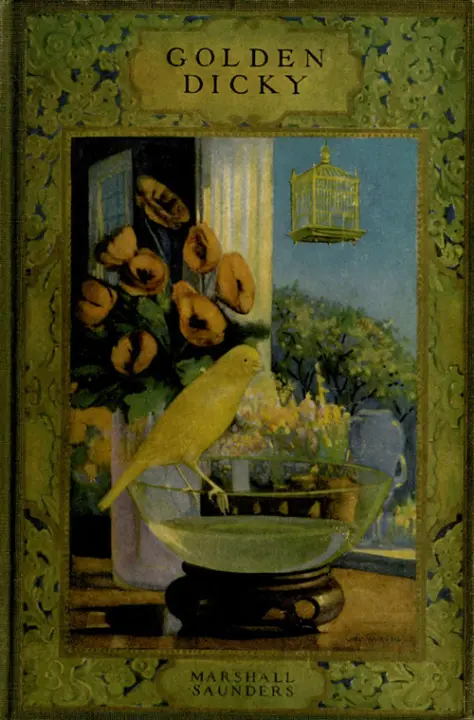
Marshall Saunders
Marshall Saunders
BEHIND THE BOOK
This eBook is for the use of anyone anywhere in the United States and most other parts of the world at no cost and with almost no restrictions whatsoever. You may copy it, give it away or re-use it under the terms of the Project Gutenberg License included with this eBook or online at www.gutenberg.org. If you are not located in the United States, you will have to check the laws of the country where you are located before using this eBook. Read the source licence.
The original source file, including credits and licence, is retained by this library. Request an original-format copy at no charge. Please include the book title and Project Gutenberg identifier #56563.
KEEP YOUR CURIOSITY GOING
Wilfrid Scawen Blunt
Wilfrid Scawen Blunt

E. W. (Edgar Watson) Howe
Coulson Kernahan

Maurice Baring
Frances Wright