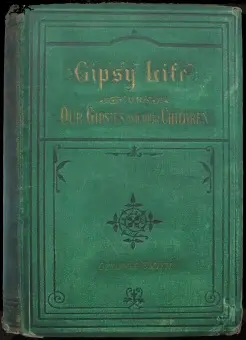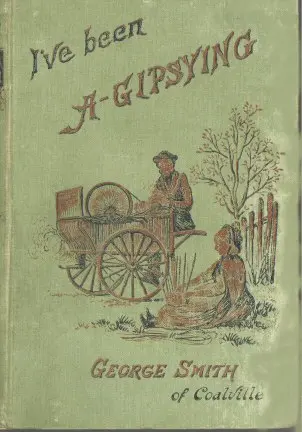
I’ve been a Gipsying or, Rambles among our Gipsies and their children in their tents and vans
George Smith
THE CLASSIC COLLECTION · 1892
"Henry Martyn, Saint and Scholar" by George Smith is a historical account written in the late 19th century. The work chronicles the life and legacy of Henry Martyn, who is remembered as the first modern missionary to the Mohammedans during the late 18th and early 19th centuries. The narrative focuses on his spiritual journey, his commitment to Christianity, and his mission work across cultures, particularly in India and Persia. The opening of the book sets the stage for Martyn's early life, detailing his upbringing in Cornwall and education at St. John's College, Cambridge. It discusses the influences that shaped his character, including his family's background and the religious environment of the time, particularly Methodism under John Wesley. The text emphasizes Martyn's struggle between his academic ambitions and his growing sense of calling to missionary work, reflecting on his intellectual pursuits and personal challenges as he moves toward a life dedicated to serving God and evangelizing, particularly among Muslims in the regions where he traveled.
Introduction adapted from the source catalogue; source summaries may be automatically generated.
Free to read · English · 186,043 words · No account needed
MAKE TIME FOR A GOOD BOOK
On by default. Untick to stop anonymous reading totals. Each page counts after 10 seconds in view. How this works.
Anonymous counting is on unless you have switched it off.
Two months after, on May 14, 1891, at the age of sixty-six, after exposure and toils like Martyn's, he was laid to rest in the cemetery of Muscat by the sailors of H.M.S. Sphinx, to whom he had preached.
Henry Martyn at Tokat, John Wilson at Bombay, George Maxwell Gordon at Kandahar, Ion Keith-Falconer at Aden, and Thomas Valpy French at Muscat, have by their bodies taken possession of Mohammedan Asia for Christ till the resurrection. Of each we say to ourselves and to our generation:
Is it for nothing he is dead?
Send forth your children in his stead!
O Eastern lover from the West!
Thou hast out-soared these prisoning bars;
Thy memory, on thy Master's breast,
Uplifts us like the beckoning stars.
We follow now as thou hast led,
Baptize us, Saviour, for the dead.[108]
Each, like not a few American missionaries, men and women, like Dr. Bruce and his colleagues of the Church Missionary Society, like Mr. W.W. Gardner and Dr. J.C. Young of the Scottish Keith-Falconer Mission, is a representative of the two great principles, as expressed by Dr. Bruce: (1) That the lands under the rule of Islam belong to Christ, and that it is the bounden duty of the Church to claim them for our Lord. (2) That duty can be performed only by men who are willing to die in carrying it out.
Henry Martyn's words, almost his last, on his thirty-first birthday were these: 'The Word of God has found its way into this land of Satan (Persia), and the devil will never be able to resist it if the Lord hath sent it.' We have seen what sort of men the Lord raised up to follow him. This is what the Societies have done. In 1829 the American Board of Commissioners for Foreign Missions began, and in 1871 the Presbyterian Board shared, the mission to Persia and Asiatic Turkey. The former has missionaries at Aintab, Marash, Antioch, Aleppo, and Oorfa, to the south of the Taurus range, being its mission to Central Turkey; at Constantinople, Adrianople, Smyrna, Broosa, Nicomedia, Trebizond, Marsovan, Sivas, including Tokat, and Cæsarea, being its mission to Western Turkey; at Erzroom, Harpoot, and Arabkir, uniting with the Assyrian stations of Mardin and Diarbekir, its mission to Eastern Turkey. Taking up the evangelisation at Oroomiah, the American Presbyterians unite with that Tabreez, Mosul, and Salmas as their Western, and Teheran and Hamadan as their Eastern Persia Mission. In 1876 a letter of Henry Venn's and the urgency of its principal missionary, Dr. Bruce, led the Church Missionary Society to charge itself with the evangelisation, by a revised version of the Persian Bible and medical missions, of the whole southern half of the ancient kingdom of Persia, the whole of Nimrod's Babylonia, and the eastern coast of Arabia, from Julfa (Ispahan) and Baghdad as centres. Very recently the independent Arabian Mission of America has made Busrah its headquarters for Turkish Arabia. The Latin Church since 1838 has worked for the Papacy alone. The Archbishop of Canterbury's mission since 1886 has sought to influence the Nestorian or Syrian Church, which in the seventh century sent forth missionaries to India from Seleucia, Nisibis, and Edessa, and now desires protection from Romish usurpation. All these represent a vast and geographically linked organisation claiming, at long intervals, the whole of Turkey, Persia, and Arabia for Christ since Henry Martyn pointed the way. Dr. Robert Bruce, writing to us from Julfa, thus sums up the results and the prospect:
Your reading position is saved on this browser. Take it to another device with a library code. Reading pages adapt to text, rather than matching a printed edition.
BEHIND THE BOOK
This eBook is for the use of anyone anywhere in the United States and most other parts of the world at no cost and with almost no restrictions whatsoever. You may copy it, give it away or re-use it under the terms of the Project Gutenberg License included with this eBook or online at www.gutenberg.org. If you are not located in the United States, you will have to check the laws of the country where you are located before using this eBook. Read the source licence.
The original source file, including credits and licence, is retained by this library. Request an original-format copy at no charge. Please include the book title and Project Gutenberg identifier #35873.
KEEP YOUR CURIOSITY GOING
Cécile Tormay

Moritz Busch
John L. Ransom
Frances Wright
Cécile Tormay

Mabel Potter Daggett