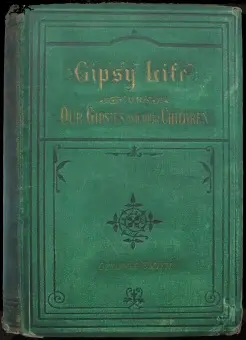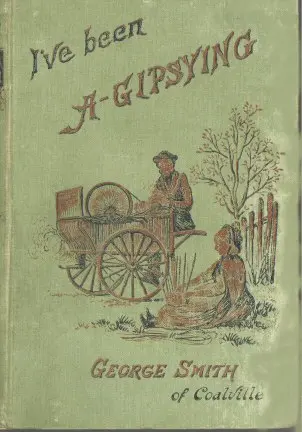
I’ve been a Gipsying or, Rambles among our Gipsies and their children in their tents and vans
George Smith
THE CLASSIC COLLECTION · 1892
"Henry Martyn, Saint and Scholar" by George Smith is a historical account written in the late 19th century. The work chronicles the life and legacy of Henry Martyn, who is remembered as the first modern missionary to the Mohammedans during the late 18th and early 19th centuries. The narrative focuses on his spiritual journey, his commitment to Christianity, and his mission work across cultures, particularly in India and Persia. The opening of the book sets the stage for Martyn's early life, detailing his upbringing in Cornwall and education at St. John's College, Cambridge. It discusses the influences that shaped his character, including his family's background and the religious environment of the time, particularly Methodism under John Wesley. The text emphasizes Martyn's struggle between his academic ambitions and his growing sense of calling to missionary work, reflecting on his intellectual pursuits and personal challenges as he moves toward a life dedicated to serving God and evangelizing, particularly among Muslims in the regions where he traveled.
Introduction adapted from the source catalogue; source summaries may be automatically generated.
Free to read · English · 186,043 words · No account needed
MAKE TIME FOR A GOOD BOOK
On by default. Untick to stop anonymous reading totals. Each page counts after 10 seconds in view. How this works.
Anonymous counting is on unless you have switched it off.
From the time Mr. Martyn left our house he was in the constant habit of supping with us two or three times a week, and he used to come on horseback, with the sais running by his side. He sat his horse as if he were not quite aware that he was on horseback, and he generally wore his coat as if it were falling from his shoulders. When he dismounted, his favourite place was in the verandah, with a book, till we came in from our airing. And when we returned many a sweet and long discourse we had, whilst waiting for our dinner or supper. Mr. Martyn often looked up to the starry heavens, and spoke of those glorious worlds of which we know so little now, but of which we hope to know so much hereafter. Often we turned from the contemplation of these to the consideration of the smallness, and apparent diminutiveness in creation, of our own little globe, and of the exceeding love of the Father, who so cared for its inhabitants that He sent His Son to redeem them.
On the occasion of the baptism of my second Lucy, never can I forget the solemn manner with which Mr. Martyn went through the service, or the beautiful and earnest blessing he implored for my baby, when he took her into his arms after the service was concluded. I still fancy I see that child of God as he looked down tenderly on the gentle babe, and then looked upwards, asking of his God that grace and mercy for the infant which he truly accounted as the only gift which parents ought to desire. This babe, in infancy, had so peculiar a gentleness of aspect, that Mr. Martyn always called her Serena.
Little was spoken of at Mr. Martyn's table but of various plans for advancing the triumphs of Christianity. Among the plans adopted, Mr. Martyn had, first at Dinapore and then at Cawnpore, established one or two schools for children of the natives of the lower caste. His plan was to hire a native schoolmaster, generally a Mussulman, to appoint him a place, and to pay him an anna (1-1/2d.) a head for each boy whom he could induce to attend school. These boys the master was to teach to write and read. It was Mr. Martyn's great aim, and, indeed, the sole end of his exertions, to get Christian books into the school. As no mention was ever made of proselytism, there was never any difficulty found in introducing even portions of the Scripture itself, more especially portions of the Old Testament, to the attention of the children. The books of Moses are always very acceptable to a Mussulman, and Genesis is particularly interesting to the Hindus. Mr. Martyn's first school at Cawnpore was located in a long shed, which was on the side of the cavalry lines. It was the first school of the kind I ever saw. The master sat at one end, like a tailor, on the dusty floor; and along under the shed sat the scholars, a pack of little urchins, with no other clothes on than a skull-cap and a piece of cloth round the loins. These little ones squatted, like their master, in the sand. They had wooden imitations of slates in their hands, on which, having first written their lessons with chalk, they recited them, à pleine gorge, as the French would say, being sure to raise their voices on the approach of any European or native of note. Now, Cawnpore is about one of the most dusty places in the world. The Sepoy lines are the most dusty part of Cawnpore; and as the little urchins are always well greased, either with cocoanut oil or, in failure thereof, with rancid mustard oil, whenever there was the slightest breath of air they always looked as if they had been powdered all over with brown powder. But what did this signify? They would have been equally dusty in their own huts. In these schools they were in the way of getting a few ideas; at all events, they often got so far as to be able to copy a verse on their wooden slates. Afterwards they committed to memory what they had written. Who that has ever heard it can forget the sounds of the various notes with which these little people intonated their 'Aleph Zubbur ah--Zair a--Paiche oh,' as they waved backwards and forwards in their recitations? Or who can forget the vacant self-importance of the schoolmaster, who was generally a long-bearded, dry old man, who had no other means of proving his superiority over the scholars but making more noise than even they could do? Such a scene, indeed, could not be forgotten; but would it not require great faith to expect anything green to spring from a soil so dry? But this faith was not wanting to the Christians then in India.
Your reading position is saved on this browser. Take it to another device with a library code. Reading pages adapt to text, rather than matching a printed edition.
BEHIND THE BOOK
This eBook is for the use of anyone anywhere in the United States and most other parts of the world at no cost and with almost no restrictions whatsoever. You may copy it, give it away or re-use it under the terms of the Project Gutenberg License included with this eBook or online at www.gutenberg.org. If you are not located in the United States, you will have to check the laws of the country where you are located before using this eBook. Read the source licence.
The original source file, including credits and licence, is retained by this library. Request an original-format copy at no charge. Please include the book title and Project Gutenberg identifier #35873.
KEEP YOUR CURIOSITY GOING
Cécile Tormay

Moritz Busch
John L. Ransom
Frances Wright
Cécile Tormay

Mabel Potter Daggett