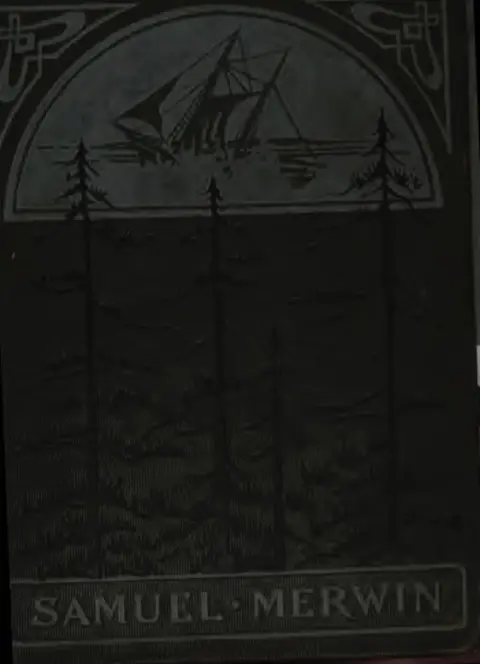
His Little World: The Story of Hunch Badeau
Samuel Merwin
THE CLASSIC COLLECTION · 1918
"Henry Is Twenty: A Further Episodic History of Henry Calverly, 3rd" by Samuel Merwin is a novel written in the early 20th century. The narrative centers on Henry Calverly, a sensitive and imaginative young man who grapples with his identity and relationships as he approaches adulthood. The book explores themes of self-discovery, societal expectations, and the complexities of young love. The opening of the novel introduces readers to Henry, who is portrayed as a blend of awkwardness and vulnerability as he prepares to navigate his twentieth year. Set in Sunbury, Illinois, the backdrop showcases a quaint village bustling with life, contrasting Henry's internal struggles. In the initial scenes, we see Henry's interactions with his past, including the memory of his deceased mother and the presence of other young women like Mamie Wilcox and Martha Caldwell, who complicate his emotional landscape. As Henry contemplates his relationships and the events of his life, he is caught between the expectations of society and his own personal aspirations, setting the stage for the unfolding drama to come.
Introduction adapted from the source catalogue; source summaries may be automatically generated.
Free to read · English · 90,953 words · No account needed
MAKE TIME FOR A GOOD BOOK
On by default. Untick to stop anonymous reading totals. Each page counts after 10 seconds in view. How this works.
Anonymous counting is on unless you have switched it off.
Humphrey knew without looking that the boy was fussing endlessly at that absurd moustache. And sighing--he heard that. He bit hard on his pipe-stem. The day was wrecked already. He would be boiling up every few moments; tripping over Henry's things; regretting his perhaps too harsh words. Yes, they were too harsh, of course.
Henry was muttering, mumbling, tracing out the pattern in the rug-border with his silly little stick. These words were audible:--
'I don't see why you asked me to come here. I suppose I... Of course, if you don't want me to stay here with you, I suppose I... Oh, well! I guess I ain't much good....'
The voice trailed huskily off into silence.
After all, there didn't seem to be any place the boy could stay, if not here. Living alone in a boarding-house hadn't worked at all. To send him out into the world would be like condemning him.
Henry moved off down the stairs, slowly, pausing once as if he had not yet actually determined to go.
Walking more briskly, he emerged from the alley and swung around into Filbert Avenue. The starched and shining children were pouring in an intermittent stream into the First Presbyterian chapel, behind the big church.
Gloom in his eyes, striking in a savage aimlessness with his cane at the grass, he passed the edifice. Walking thus, he felt a presence and lifted his eyes.
Approaching was a pleasant-looking young woman of twenty, of a good figure, a few girlish freckles across the bridge of her nose, abundant hair tucked in under her Sunday hat.
It was Martha Caldwell. She had a class in the Sunday-school.
Martha saw him. No doubt about that.
For the moment, in Henry's abasement of spirit, he half forgot that she had cut him dead, publicly, on Simpson Street on the Saturday. Or if it was not a forgetting it was a vagueness. Henry was full to brimming of himself. Not in years had he craved sympathy as he craved it to-day. The word 'craved,' though, isn't strong enough. It was an utter need. An outcast, perhaps literally homeless; for how could he go back to Humphrey's after what had occurred! He must pack his things, of course.
He raised his hand--slowly, a thought stiffly--toward his hat.
Martha moved swiftly by, staring past him, fixedly, her lips compressed,
her colour rising.
Henry's hand hung suspended a moment, then sank to his side.
Henry himself was capable of any sort of heedlessness, but never of unkindness or of cutting a friend.
The colour surged hotly over his face and reddened his ears.
Your reading position is saved on this browser. Take it to another device with a library code. Reading pages adapt to text, rather than matching a printed edition.
Samuel Merwin
Samuel Merwin
Samuel Merwin
Samuel Merwin
BEHIND THE BOOK
This eBook is for the use of anyone anywhere in the United States and most other parts of the world at no cost and with almost no restrictions whatsoever. You may copy it, give it away or re-use it under the terms of the Project Gutenberg License included with this eBook or online at www.gutenberg.org. If you are not located in the United States, you will have to check the laws of the country where you are located before using this eBook. Read the source licence.
The original source file, including credits and licence, is retained by this library. Request an original-format copy at no charge. Please include the book title and Project Gutenberg identifier #51948.
KEEP YOUR CURIOSITY GOING
Coulson Kernahan

Maurice Baring
Frances Wright
Cécile Tormay

Frederic Jesup Stimson

W. H. P. (William Henry Pope) Jarvis