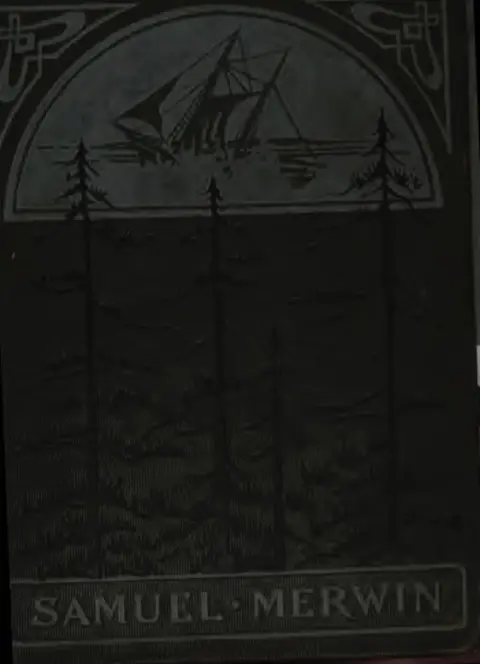
His Little World: The Story of Hunch Badeau
Samuel Merwin
THE CLASSIC COLLECTION · 1918
"Henry Is Twenty: A Further Episodic History of Henry Calverly, 3rd" by Samuel Merwin is a novel written in the early 20th century. The narrative centers on Henry Calverly, a sensitive and imaginative young man who grapples with his identity and relationships as he approaches adulthood. The book explores themes of self-discovery, societal expectations, and the complexities of young love. The opening of the novel introduces readers to Henry, who is portrayed as a blend of awkwardness and vulnerability as he prepares to navigate his twentieth year. Set in Sunbury, Illinois, the backdrop showcases a quaint village bustling with life, contrasting Henry's internal struggles. In the initial scenes, we see Henry's interactions with his past, including the memory of his deceased mother and the presence of other young women like Mamie Wilcox and Martha Caldwell, who complicate his emotional landscape. As Henry contemplates his relationships and the events of his life, he is caught between the expectations of society and his own personal aspirations, setting the stage for the unfolding drama to come.
Introduction adapted from the source catalogue; source summaries may be automatically generated.
Free to read · English · 90,953 words · No account needed
MAKE TIME FOR A GOOD BOOK
On by default. Untick to stop anonymous reading totals. Each page counts after 10 seconds in view. How this works.
Anonymous counting is on unless you have switched it off.
'No--hardly. I've thought of some more. There'll be fifteen or twenty altogether. I just thought of one, coming over here. Think I'll call it. The Story of the Man from Jerusalem. It's about the life of a little Jew storekeeper in a town like this. Struck me all of a sudden--you know, how he must feel. I don't think I'll write it to-night--just make a few notes so it won't get away from me.'
Bob McGibbon rose up, put on coat and hat, took, Henry firmly by the arm, and marched him, protesting, home.
'Now,' he said, 'you go to bed.'
'Sure, Bob! What's the matter with you! I'm just going to jot down a few
notes------'
'You're going to bed!' said McGibbon.
And he stood there, earnest, even grim, until Henry was undressed and stretched out peacefully asleep.'
Henry slept until nearly three o'clock Saturday afternoon.
Senator Watt laid down the Gleaner, took off his glasses, removed an unlighted cigar from his mouth, and said, in his low, slightly husky voice:--
'A really remarkable piece of work. Quite worthy of Kipling.' The nineties, as we have already remarked, belong to Kipling. Outright. He had to be mentioned. 'It is fresh, vivid, and remarkably condensed. The author produces his effects with a sure swift stroke of the brush.'
The Senator rarely spoke. When he did it was always in these measured, solid sentences, as if his words might be heard round the world and therefore must be chosen with infinite care. After delivering himself of this opinion he resumed his 'dry smoke' and reached for the Evening Post, which lay folded back to the financial page.
'I was sure you would think so,' said Cicely Hamlin, glancing first at the Senator then at her aunt. 'I wish you would read it, Aunt Eleanor.'
'Hm!' remarked that formidable person, planting her own gold-rimmed glasses firmly astride her rugged nose just above the point where it bent sharply downward, picking up the paper, then lowering it to gaze with a hint of habitual, impersonal severity at her niece.
'Even so,' she said. 'Suppose the young man has gifts. That will hardly make it necessary for you to cultivate him. I gather he's a bad lot.'
'I have no intention of cultivating him,' replied Cicely, moving toward the door, but pausing by the mantel to pat her dark ample hair into place. She wore it low on her shapely neck. Cicely was wearing a simple-appearing, far from inexpensive blue frock.
Madame Watt read the opening sentence of The Caliph of Simpson Street, then lowered the paper again.
Your reading position is saved on this browser. Take it to another device with a library code. Reading pages adapt to text, rather than matching a printed edition.
Samuel Merwin
Samuel Merwin
Samuel Merwin
Samuel Merwin
BEHIND THE BOOK
This eBook is for the use of anyone anywhere in the United States and most other parts of the world at no cost and with almost no restrictions whatsoever. You may copy it, give it away or re-use it under the terms of the Project Gutenberg License included with this eBook or online at www.gutenberg.org. If you are not located in the United States, you will have to check the laws of the country where you are located before using this eBook. Read the source licence.
The original source file, including credits and licence, is retained by this library. Request an original-format copy at no charge. Please include the book title and Project Gutenberg identifier #51948.
KEEP YOUR CURIOSITY GOING
Coulson Kernahan

Maurice Baring
Frances Wright
Cécile Tormay

Frederic Jesup Stimson

W. H. P. (William Henry Pope) Jarvis