THE CLASSIC COLLECTION✦The star jewels, and other wondersCLASSIC FREE BOOKS
The star jewels, and other wonders
Abbie Farwell Brown
THE CLASSIC COLLECTION · 1920
"Heart of New England by Abbie Farwell Brown" is a collection of lyric and narrative poetry written in the early 20th century. The book dwells on New England’s landscape and legacy, the Pilgrim and colonial past, homely gardens and family memory, folklore and ghostly legend, and a rising strain of civic and wartime patriotism. Its likely topic is the spirit of New England—its nature, history, and ideals—cast as a living inheritance for modern America. The collection moves from salt-tinged coastal love songs and Pilgrim recollections to Hampton legends of pirates and haunted houses; from intimate scenes of grandmothers’ gardens, walls, paths, and birds to meditations on books, city smoke, and conscience. Nature pieces—pines, frost, tanager, mushrooms—mix with whimsical fairy lore, while character sketches and playful verses sit beside elegies and tributes. A central wartime suite turns resolute and compassionate, honoring sailors, soldiers, nurses, and the home front, and weighing “peace with a sword.” The book culminates in a dramatic ode to the Pilgrims that stages voyage, struggle, and achievement through choruses and psalm-like voices, binding local memory to a national calling of liberty, unity, and praise.
Introduction adapted from the source catalogue; source summaries may be automatically generated.
Free to read · English · 13,039 words · No account needed
MAKE TIME FOR A GOOD BOOK
On by default. Untick to stop anonymous reading totals. Each page counts after 10 seconds in view. How this works.
Anonymous counting is on unless you have switched it off.
Nay! But New England’s apple trees,
Her homely houses, square and plain,
The simple gardens loved of bees,
The maple groves, the firs of Maine!
Ho! For me,
Where the spring comes slowly, like a play to see;
And the sea wind is the east wind, as the sea wind ought to be!
Heart of New England
⁂
From Somerset and Devon,
From Kent and Lincolnshire,
The younger sons came sailing
With hearts of steel and fire.
From leafy lane and valley,
Fair glebe and ancient wood,
The counties of old England
Poured forth their warmest blood.
Out of the gray-walled cities,
Away from the castled towns,
Corners of thatch and roses,
Heathery combes and downs,
With neither crown nor penny,
But an iron will they came,
Heirs of an old tradition
And a good old English name.
A brooding silence met them
On a nameless, savage shore;
But they called the wild—“New England,”
For the sake of the blood they bore.
“Plymouth, Exeter, Bristol,
Boston, Windsor, Wells.”
Beloved names of England
Rang in their hearts like bells.
They named their rocky farmlands,
Their hamlets by the sea,
For the mother-towns that bred them
In racial loyalty.
“Cambridge, Hartford, Gloucester,
Hampton, Norwich, Stowe.”
The younger sons looked backward
And sealed their sonship so.
The old blood thrills in answer,
As centuries go by,
To names that meant a challenge,
A signal, or a sigh.
Now over friendly waters
The old towns, each to each,
Call with the kinship in a name;
One race, one truth, one speech.
Raw April came. The snow was melting fast From the bleak Plymouth hills. The Mayflower, Who had been fretting at her anchor-chains Through the unfriendly weeks of rain and snow, Flew like a homing pigeon out to sea, With treacherous captain and a sulky crew. But not one of the Faithful was returning. Iron of purpose, worn but undismayed By the fell winter, on a little hill That bedded half the flock in a long sleep, Pale Pilgrims watched the shining sails grow dim, With straining vision. So, the final link With home was severed now! The happy ship Was homeward bound to the belovèd land, Where soon the may would blossom in the hedges Of Kent and Suffolk; while in Lincolnshire The friendly robin sang by flooding tides. “Never again to see the green of England Or hear that song!” they murmured. “Never again! For us sad exiles on a barren shore, Sorrow and toil till death, uncomforted. Yet the Lord’s will be done!” Running there came A little maid with treasure-trove in hand, A flushed and furry blossom. “Look!” she cried, “The first pink posy peeping through the snow Upon a sunny hillside in the wood! Is it not like the precious English may, But sweeter still?” “Behold, the mayflower!” The Pilgrims whispered. “God has sent to us A messenger of homeland and the spring!” The wistful shadow faded from their eyes, Their set lips softened. Came a little lad, Leaping and laughing. “I have heard a song! A redbreast bubbling in the willow-tree Caroled ‘Cheer up! Cheer up!’ See where he flies With his bright feathers!” Eagerly they peered, Elder and Captain, man and weary wife, Orphans with little faces pinched and pale. Forgetting now the vanished ship, they cried— “The robin and the mayflower are here! Now in New England shall we be at home, God wills it so.” Thereon they shyly smiled, Straightened bent shoulders, and with lifted hearts Slowly departed; thinking more than speaking, In the old English fashion.
Your reading position is saved on this browser. Take it to another device with a library code. Reading pages adapt to text, rather than matching a printed edition.
Abbie Farwell Brown
Abbie Farwell Brown
Abbie Farwell Brown
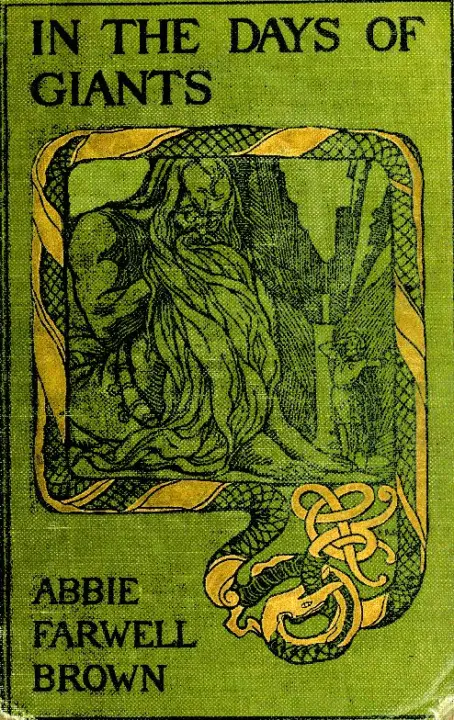
Abbie Farwell Brown
BEHIND THE BOOK
This eBook is for the use of anyone anywhere in the United States and most other parts of the world at no cost and with almost no restrictions whatsoever. You may copy it, give it away or re-use it under the terms of the Project Gutenberg License included with this eBook or online at www.gutenberg.org. If you are not located in the United States, you will have to check the laws of the country where you are located before using this eBook. Read the source licence.
The original source file, including credits and licence, is retained by this library. Request an original-format copy at no charge. Please include the book title and Project Gutenberg identifier #76783.
KEEP YOUR CURIOSITY GOING

Eric Mackay
Edmund Gosse
Sophia Margaretta Hensley
Gilbert Parker
George MacDonald

Elizabeth Bibesco