THE CLASSIC COLLECTION✦The nemesis of mediocrityCLASSIC FREE BOOKS
The nemesis of mediocrity
Ralph Adams Cram
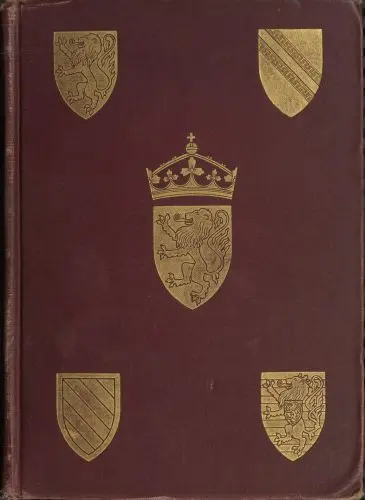
THE CLASSIC COLLECTION · 1915
"Heart of Europe" by Ralph Adams Cram is a richly illustrated historical account written in the early 20th century. The book explores the intricate history and cultural legacy of a region in Europe, with a focus on the architectural and artistic contributions that have emerged from its past. Cram reflects on the impact of wars and civil strife on the timeless beauty and significance of this land, particularly as it faced destruction during World War I. The opening of the book sets a somber tone, recounting the beauty and historic significance of the land between the Seine and the Rhine, which has experienced tremendous loss due to warfare. Cram vividly describes the grand names of the past, invoking memories of a thriving civilization rich in art and architecture that now lies "laid waste." He laments the destruction of churches, schools, and cities, including Louvain and Reims, emphasizing that these losses represent a deeper cultural and spiritual annihilation than the physical. This historical narrative serves as a foundation for exploring how this once-unified heart of Europe has become fragmented yet remains a symbol of resilience amid chaos.
Introduction adapted from the source catalogue; source summaries may be automatically generated.
Free to read · English · 65,628 words · No account needed
MAKE TIME FOR A GOOD BOOK
On by default. Untick to stop anonymous reading totals. Each page counts after 10 seconds in view. How this works.
Anonymous counting is on unless you have switched it off.
little left from the mediæval period from which one can gain an adequate idea of its excellence, which was probably great. As in Luxembourg, everything has been shattered into wildly picturesque ruins which are outside the category of architecture, and such Renaissance work as Heidelberg is quite as far without the same category, though for another reason; here even picturesqueness of site and dilapidation cannot make amends for ignorance, assurance, and excruciating taste. As a matter of fact, the best architecture of the Rhine is the domestic building of the sixteenth and seventeenth centuries, the half timber, many-gabled structures that give the little Rhine towns a charm that is unexcelled and testify to the native sense of beauty in the common people, when they were left alone and not confused by the self-satisfied and ill-bred interference of the connoisseur.
If Christian culture began too late along the Rhine to find a great expression in architecture, the same is not true of painting, which followed after and achieved much that the older art could not accomplish. The Teutonic tribes of the Rhine had always excelled in certain virtues of frugality, temperance, domestic morality, and a righteous revolt showed itself here against the corruption of the Church and society in the fourteenth century that followed the first downward trend of mediævalism. Early in the century men and women began to draw away from a world with which they had little sympathy, striving for personal righteousness, the sense of an inner relation to God, the attainment through mystical means of escape from the devastating wars, the pestilence and famine, the favouritism and cupidity and licentiousness of the Church. The centre of these mystical brotherhoods was Cologne, particularly at the end of the fourteenth and the beginning of the fifteenth century, and it is not a mere coincidence that here at Cologne also, and at the same time, a new school of painting should come into existence, exactly as had happened a few years earlier in Siena and Florence. There had been great wall painting for several centuries, but it had always been an essential part of architecture, hieratic, formal, monumental, impersonal; now the new spiritual impulse was to work out an original and very personal form of expression on the basis of these earlier works, but at smaller scale and with a minute craftsmanship borrowed partly from the goldsmiths’ work and the enamels for which Cologne already was famous; partly from the exquisite illumination of the vellum volumes of the time. It was somewhere about 1350 that Master Wilhelm, who holds the same place in the north that was attained by Cimabue in the south, was born. His pictures are rare but there is one of great value in Cologne cathedral, the “St. Clara Triptych,” and it shows all the elements now at work toward the development of the new art, the fine and masterly line and composition, with a strong rhythmic sense taken over from the fully developed wall painting of the preceding century, the delicate craftsmanship of the goldsmith, the illuminator, or the worker in enamels, and the extraordinary personal quality, the direct human appeal, that was furnished by the mystical seekers after union with God through a direct relationship outside the formalised institutions and practices of the Church. You get the quality best of all perhaps from the “Madonna of the Bean-flower” in the Cologne Museum, another picture by Master Wilhelm, and as lovely and personal as one could ask. There are also the “Paradise pictures,” equally human and even more mystical; visions of delicate and gracious gardens, where youths and ladies and children and angels all mingle in the midst of flowers and singing around the Queen of Heaven herself; efforts, one might think, to create a paradise for the imagination, where one could escape from the too numerous horrors of a none too accommodating world. The more specifically devotional pictures are very numerous and generally anonymous; painters then were craftsmen, members of guilds devoted to the upbuilding of the highest standards of workmanship, and caring little for their own personal fame. Picture exhibitions and competitions for prizes and medals were also unknown, which made a difference. In all these works is the same sweet humanism, the invariable personal appeal, and it is easy to understand that a new art such as this must have been a wonderful boon to a weary and disappointed generation.
Your reading position is saved on this browser. Take it to another device with a library code. Reading pages adapt to text, rather than matching a printed edition.
Ralph Adams Cram
Ralph Adams Cram
Ralph Adams Cram
Ralph Adams Cram
BEHIND THE BOOK
This eBook is for the use of anyone anywhere in the United States and most other parts of the world at no cost and with almost no restrictions whatsoever. You may copy it, give it away or re-use it under the terms of the Project Gutenberg License included with this eBook or online at www.gutenberg.org. If you are not located in the United States, you will have to check the laws of the country where you are located before using this eBook. Read the source licence.
The original source file, including credits and licence, is retained by this library. Request an original-format copy at no charge. Please include the book title and Project Gutenberg identifier #56858.
KEEP YOUR CURIOSITY GOING
Wilfrid Scawen Blunt
Wilfrid Scawen Blunt

E. W. (Edgar Watson) Howe
Cécile Tormay

Moritz Busch
John L. Ransom