
Piccino, and other child stories
Frances Hodgson Burnett

THE CLASSIC COLLECTION · 1879
"Haworth's" by Frances Hodgson Burnett is a novel written in the late 19th century. The story revolves around Jem Haworth, a man who has risen from humble beginnings to become the owner of "Haworth Iron Works," a significant business in the town. The narrative explores themes of ambition, the complexities of social class, and the personal histories of various characters, including Stephen Murdoch, the son of a failed inventor, and Janey Briarley, the daughter of a workman whose father struggles with alcoholism. The opening of the book introduces us to Jem Haworth, reflecting on his past and the significant changes in his life over the past twenty years. As he encounters old workmen who assisted him during a pivotal moment years ago, we learn about his determination to succeed and his nature as a strong-willed leader. Also introduced is Stephen Murdoch, whose father, an inventor, has faced years of struggle and failure. The narrative hints at the intertwining fates between these characters and the impact of their shared histories, setting up a story filled with emotional depth and societal critique as it unfolds.
Introduction adapted from the source catalogue; source summaries may be automatically generated.
Free to read · English · 97,811 words · No account needed
MAKE TIME FOR A GOOD BOOK
On by default. Untick to stop anonymous reading totals. Each page counts after 10 seconds in view. How this works.
Anonymous counting is on unless you have switched it off.
The reception this polite anxiety met with was not encouraging. Granny Dixon's eye assumed an expression still more baleful.
"Tha'st been at it again," she shouted. "Tha'st been at it again. Tha'll neer git none o' my brass to spend at th' ale-house. Mak' sure o' that."
Mr. Briarley turned his attention to the fire again. Melancholy was upon the point of marking him for her own, when the most delicate of tact came to his rescue.
"It is na thy brass we want, Misses," he proclaimed. "It's--it's thy comp'ny." And then clenched the matter by adding still more feebly, "Ay, to be sure it's thy comp'ny, is na it, Sararann?"
"Ay," faltered Mrs. Briarley, "to be sure."
"It's nowt o' th' soart," answered Granny Dixon, in the tone of the last trump. "An' dunnot yo' threep me down as it is."
Mr. Briarley's countenance fell. Mrs. Briarley shed a few natural tears under cover of the baby; discretion and delicacy forbade either to retort. Their venerable guest having badgered them into submission glared at the fire with the air of one who detected its feeble cunning and defied it.
It was Mr. Briarley who first attempted to recover cheerfulness.
"Tha'st had quality to see thee, Sararann," he ventured. "Our Jane towd
me."
"Ay," answered Mrs. Briarley, tearfully.
Mr. Briarley fell into indiscreet reverie.
"The chap as gets her," he said, "'ll get a han'some lass. I would na moind," modestly, "I would na moind bein' i' his shoes mysen."
Mrs. Briarley's smothered wrongs broke forth.
"Thee!" she cried out. "Tha brazant nowt! I wonder tha'rt na sham't o' thy face--talkin' i' that rood about a lady, an' afore thy own wife! I wonder tha art na sham't."
Mr. Briarley's courage forsook him. He sought refuge in submissive
penitence almost lachrymose.
"I did na mean nowt, Sararann," he protested meekly. "It wur a slip o' th' tongue, lass. I'm--I'm not th' build as a young woman o' that soart ud be loike to tak' up wi'."
"Yo' wur good enow fur me onct," replied Mrs. Briarley, sharply. "A noice un yo' are settin' yore wedded wife below other people--as if she wur dirt."
"Ay, Sararann," the criminal faltered, "I wur good enow fur yo'
but--but--yo----"
But at this point he dropped his head upon his hand, shaking it in
mournful contrition.
"I'm a poor chap," he said. "I'm nowt but a poor chap as is allus i' trouble. I'm not th' man yo' ought to ha' had, Sararann."
"Nay," retorted Mrs. Briarley. "That tha'rt not, an' it's a pity tha did na foind that theer out thirteen year ago."
Mr. Briarley shook his head with a still deeper depression.
Your reading position is saved on this browser. Take it to another device with a library code. Reading pages adapt to text, rather than matching a printed edition.
Frances Hodgson Burnett

Frances Hodgson Burnett

Frances Hodgson Burnett
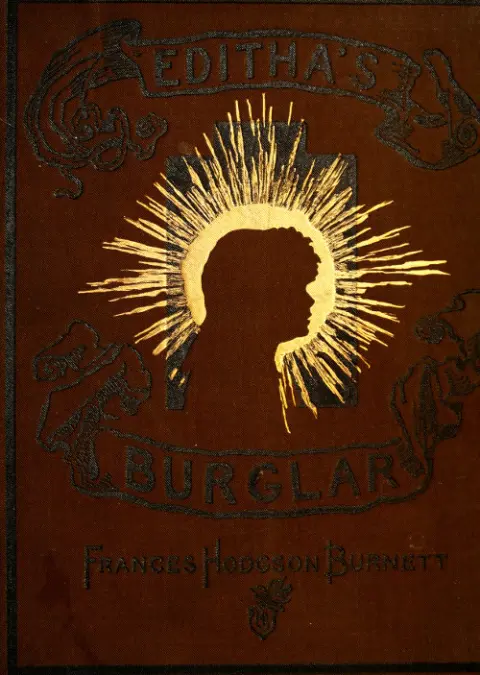
Frances Hodgson Burnett
BEHIND THE BOOK
This eBook is for the use of anyone anywhere in the United States and most other parts of the world at no cost and with almost no restrictions whatsoever. You may copy it, give it away or re-use it under the terms of the Project Gutenberg License included with this eBook or online at www.gutenberg.org. If you are not located in the United States, you will have to check the laws of the country where you are located before using this eBook. Read the source licence.
The original source file, including credits and licence, is retained by this library. Request an original-format copy at no charge. Please include the book title and Project Gutenberg identifier #58183.
KEEP YOUR CURIOSITY GOING
Coulson Kernahan

Maurice Baring
Frances Wright
Cécile Tormay

Frederic Jesup Stimson

W. H. P. (William Henry Pope) Jarvis