
Piccino, and other child stories
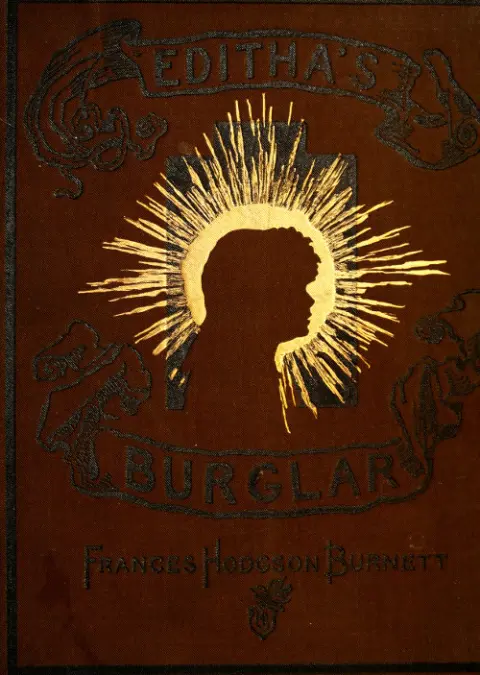
Frances Hodgson Burnett

THE CLASSIC COLLECTION · 1879
"Haworth's" by Frances Hodgson Burnett is a novel written in the late 19th century. The story revolves around Jem Haworth, a man who has risen from humble beginnings to become the owner of "Haworth Iron Works," a significant business in the town. The narrative explores themes of ambition, the complexities of social class, and the personal histories of various characters, including Stephen Murdoch, the son of a failed inventor, and Janey Briarley, the daughter of a workman whose father struggles with alcoholism. The opening of the book introduces us to Jem Haworth, reflecting on his past and the significant changes in his life over the past twenty years. As he encounters old workmen who assisted him during a pivotal moment years ago, we learn about his determination to succeed and his nature as a strong-willed leader. Also introduced is Stephen Murdoch, whose father, an inventor, has faced years of struggle and failure. The narrative hints at the intertwining fates between these characters and the impact of their shared histories, setting up a story filled with emotional depth and societal critique as it unfolds.
Introduction adapted from the source catalogue; source summaries may be automatically generated.
Free to read · English · 97,811 words · No account needed
MAKE TIME FOR A GOOD BOOK
On by default. Untick to stop anonymous reading totals. Each page counts after 10 seconds in view. How this works.
Anonymous counting is on unless you have switched it off.
"Been i' furrin parts!" exclaimed Mrs. Briarley. "Bless us! No wonder th' poor thing's a bit heathenish. Hast tha ivver seed her at Chapel, Jane Ann?"
The fact that she had not been seen at chapel awakened grave misgivings as to the possible presence of popery and the "scarlet woman," which objectionable female figured largely and in most unpleasant guise in the discourses of Brother Hixon.
"Theer's no knowin' what th' poor lass has been browt up to," said the good matron, "livin' reet under th' Pope's nose an' nivver darin' to say her soul's her own. I nivver had no notion o' them furrin parts mysen. Gie me Lancashire."
But the next week the girl made her visit to the chapel and sat throughout the sermon with her steadfast black eyes fixed upon the Reverend Mr. Hixon. Once, during a moment of inflammatory eloquence, that gentleman, suddenly becoming conscious of her gaze, stopped with a start and with difficulty regained his equilibrium, though Christian did not flinch at all, or seem to observe his alarm and confusion.
She cultivated Janey with an odd persistence after this. She asked her questions concerning her life and experiences, and always seemed to find her interesting. Often Janey was conscious of the fact that she stood and looked at her for some time with an air of curiosity.
"Do you," she asked her suddenly one day, "do you believe all that man
says to you?"
Janey started into a sitting posture, as was her custom when roused in
the midst of her labors.
"Eh! bless us! Yes," she exclaimed. "Dunnot yo'?"
"No.".
Recollections of the "scarlet woman" flashed across her young hearer's
mind.
"Art tha a Papist?" she gasped.
"No--not yet."
"Art tha," Janey asked, breathlessly,--"art tha goin' to be?"
"I don't know."
"An' tha--tha does na believe what Mester Hixon says?"
"No--not yet."
"What does tha believe?"
She stared up at the dark young face aghast. It was quite unmoved. The girl's eyes were fixed on space.
"Nothing."
"Wheer--wheer does tha expect to go when tha dees?"
"I don't know," she said, coldly; "very often I don't care."
Janey dropped her brush and forgot to pick it up.
"Why, bless thee!" she exclaimed with some sharpness, and also with the manner of one presenting the only practical solution of a difficulty, "tha'lt go to hell, i' tha does na repent!"
The girl turned her eyes upon her.
"Does it all depend on that?" she demanded.
"Aye, to be sure," she replied, testily. "Does na tha know that?"
"Then," said Christian, slowly, "I shall not go to hell for I am
repenting."
And she turned about and walked away.
Your reading position is saved on this browser. Take it to another device with a library code. Reading pages adapt to text, rather than matching a printed edition.
Frances Hodgson Burnett

Frances Hodgson Burnett

Frances Hodgson Burnett
Frances Hodgson Burnett
BEHIND THE BOOK
This eBook is for the use of anyone anywhere in the United States and most other parts of the world at no cost and with almost no restrictions whatsoever. You may copy it, give it away or re-use it under the terms of the Project Gutenberg License included with this eBook or online at www.gutenberg.org. If you are not located in the United States, you will have to check the laws of the country where you are located before using this eBook. Read the source licence.
The original source file, including credits and licence, is retained by this library. Request an original-format copy at no charge. Please include the book title and Project Gutenberg identifier #58183.
KEEP YOUR CURIOSITY GOING
Coulson Kernahan

Maurice Baring
Frances Wright
Cécile Tormay

Frederic Jesup Stimson

W. H. P. (William Henry Pope) Jarvis