THE CLASSIC COLLECTION✦An outlaw’s diary: the CommuneCLASSIC FREE BOOKS
An outlaw’s diary: the Commune
Cécile Tormay
THE CLASSIC COLLECTION · 1865
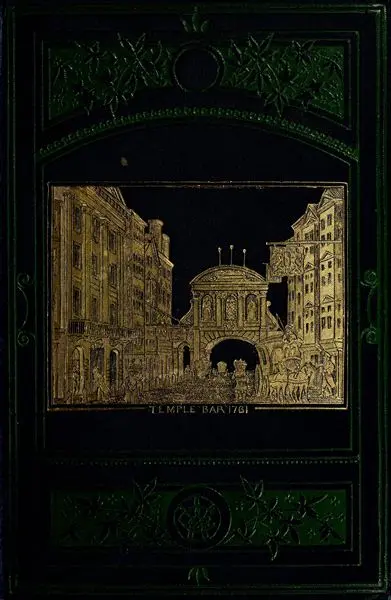
"Haunted London" by Walter Thornbury is a historical account written in the late 19th century. The book delves into the intricate layers of London's past, exploring not only its well-known ghost stories but also the rich traditions, historical events, and notable figures associated with various locations throughout the city. Through its pages, Thornbury aims to reveal the city's transformation over time and the social dynamics that have characterized London. The opening of "Haunted London" introduces the reader to the grandiosity and complexity of London as perceived by historical figures like Dr. Johnson and Boswell. It sets the stage by reflecting on the sheer vastness of human habitation within the city and how its past is intricately woven into its fabric. Thornbury expresses a deep affection for London and hints at his intent to guide readers through various locales, uncovering fascinating anecdotes and events tied to them. He describes the physical and cultural changes in London, underlining the tension between progress and the preservation of historical memory, which propels the journey he invites readers to embark upon through the book.
Introduction adapted from the source catalogue; source summaries may be automatically generated.
Free to read · English · 162,936 words · No account needed
MAKE TIME FOR A GOOD BOOK
On by default. Untick to stop anonymous reading totals. Each page counts after 10 seconds in view. How this works.
Anonymous counting is on unless you have switched it off.
The Royal Academy soon found a home in Somerset House. Germs of this institution are to be found as early as the reign of Charles I., when Sir Francis Kynaston, a translator of Chaucer into Latin (circa 1636), was chosen regent of an academy in Covent Garden.[125]
In 1643 that shifty adventurer, Sir Balthazar Gerbier, who had been fellow ambassador with Rubens in Spain, started some quack establishment of the same kind at Bethnal Green. He afterwards went to Surinam, was turned out by the Dutch, came back, designed an ugly house at Hampstead Marshal, in Berks, and died in 1667.
In 1711 Sir Godfrey Kneller instituted a private art academy, of which he became president. Hogarth, writing about 1760, says, that sixty years before some artists had started an academy, but their leaders assuming too much pomposity, a caricature procession was drawn on the walls of the studio, upon which the society broke up in dudgeon. Sir James Thornhill, in 1724, then set up an academy at his own house in Covent Garden, while others, under Vanderbank, turned a neighbouring meeting-house into a studio; but these rival confederations broke up at Sir James’s death in 1734.
Hogarth, his son-in-law, opened an academy, under the direction of Mr. Moser, at the house of a painter named Peter Hyde, in Greyhound Court, Arundel Street. In 1739 these artists removed to a more commodious house in Peter’s Court, St. Martin’s Lane, where they continued till 1767, when they removed to Pall Mall.
In 1738 the Duke of Richmond threw open to art-students his gallery at Whitehall, closed it again when his absence in the German war prevented the paying of the premiums, was laughed at, and then re-opened it again. It lasted some years, and Edwards, author of the Anecdotes, studied there.
In 1753 some artists meeting at the Turk’s Head, Gerrard Street, Soho, tried ineffectually to organise an academy; but in 1765 they obtained a charter, and appointed Mr. Lambert president.
In 1760 their first exhibition of pictures was held in the rooms of the Society of Arts, and in 1761 there were two exhibitions, one at Spring Gardens: for the latter Hogarth illustrated a catalogue, with a compliment to the young king and a caricature of rich connoisseurs.
In 1768 eight of the directors of the Spring Gardens Society, indignant at Mr. Kirby being made president of the society in the place of Mr. Hayman, resigned; and, co-operating with sixteen others who had been ejected, secretly founded a new society. Wilton, Chambers, West, Cotes, and Moser, were the leaders in this scheme, and Reynolds soon joined them, tempted, it is supposed, by a promise of knighthood.
Your reading position is saved on this browser. Take it to another device with a library code. Reading pages adapt to text, rather than matching a printed edition.
BEHIND THE BOOK
This eBook is for the use of anyone anywhere in the United States and most other parts of the world at no cost and with almost no restrictions whatsoever. You may copy it, give it away or re-use it under the terms of the Project Gutenberg License included with this eBook or online at www.gutenberg.org. If you are not located in the United States, you will have to check the laws of the country where you are located before using this eBook. Read the source licence.
The original source file, including credits and licence, is retained by this library. Request an original-format copy at no charge. Please include the book title and Project Gutenberg identifier #41580.
KEEP YOUR CURIOSITY GOING
Cécile Tormay

Moritz Busch
John L. Ransom
Frances Wright
Cécile Tormay

Mabel Potter Daggett