THE CLASSIC COLLECTION✦An outlaw’s diary: the CommuneCLASSIC FREE BOOKS
An outlaw’s diary: the Commune
Cécile Tormay
THE CLASSIC COLLECTION · 1865
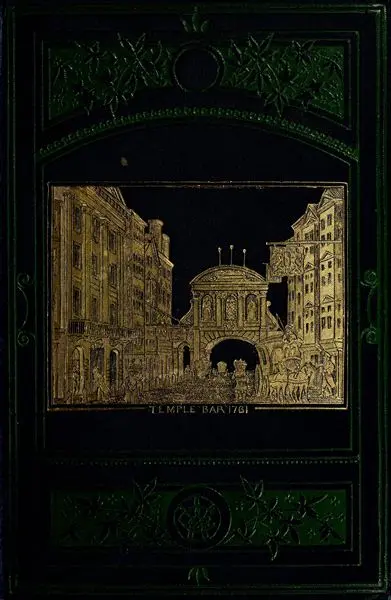
"Haunted London" by Walter Thornbury is a historical account written in the late 19th century. The book delves into the intricate layers of London's past, exploring not only its well-known ghost stories but also the rich traditions, historical events, and notable figures associated with various locations throughout the city. Through its pages, Thornbury aims to reveal the city's transformation over time and the social dynamics that have characterized London. The opening of "Haunted London" introduces the reader to the grandiosity and complexity of London as perceived by historical figures like Dr. Johnson and Boswell. It sets the stage by reflecting on the sheer vastness of human habitation within the city and how its past is intricately woven into its fabric. Thornbury expresses a deep affection for London and hints at his intent to guide readers through various locales, uncovering fascinating anecdotes and events tied to them. He describes the physical and cultural changes in London, underlining the tension between progress and the preservation of historical memory, which propels the journey he invites readers to embark upon through the book.
Introduction adapted from the source catalogue; source summaries may be automatically generated.
Free to read · English · 162,936 words · No account needed
MAKE TIME FOR A GOOD BOOK
On by default. Untick to stop anonymous reading totals. Each page counts after 10 seconds in view. How this works.
Anonymous counting is on unless you have switched it off.
Newcastle, the Duke of, his house in Lincoln’s Inn Fields, 410;
his levees, ib.;
the porter’s reply to an intruder on, 411;
impertinence of his cook, 412;
anecdote of, ib.;
Smollett’s and Walpole’s sketches of, 413;
Walpole’s review of his career, ib.;
his reply to Lord Bute, 414
Newgate ballads, 463
New Inn, 164
Newspaper offices, 454
Nisbett, Mrs., 335
Nivernois, the Duc de, 18
Nokes, James, 432
Nollekens, the sculptor, 379
Norfolk Street, 44 et seq.;
Charles Dickens’s sketch of, 445
Northampton, the Earl of, 191
Northampton, Algernon, tenth Earl of, 192, 195
Northumberland, the wizard Earl of, his marriage 192;
treason, etc., ib.
Northumberland, the Duke of, 192
Northumberland House, 191;
the oldest part of, 195;
accident at, ib.;
the letters and date on its façade, 196;
destruction of the Strand front by fire, 197;
Sir John Hawkins’s and Goldsmith’s visit to Mr. Percy at, 198;
Goldsmith’s account of a visit to, 199;
pictures in the gallery of, ib.
Northumberland Street, 142;
demolition of, 200
Nottingham, the Countess of, 39, 40
Noy, Attorney-general, 389
Oates, Titus, 208, 302
O’Keefe, the dramatist, 18, 258
Oldcastle, Sir John, Lord Cobham, 352;
his imprisonment, escape, and death, ib.
Oldfield, Mrs., actress, 186;
her merits as a comedian, 310;
her death, 311
“Old Slaughter’s,” the frequenters of, 249;
Hogarth and Roubilliac at, ib.
Olympic, the, 164;
Mr. Robson’s representations at, 165
Oratory, Henley’s, 339
Oxberry, the actor, 335
Oxburgh, Sir John, 13
Oxford, the Earl of, 137
Page, Judge, 217;
the “Dunciad” on, ib.
Paget, Lord, 26
Paintings, the first exhibition in London of, 75
Palsgrave Head Tavern, 148, 151
Parr, Dr., 47
Parr, Old, 91
Parsons, parish-clerk of St. Sepulchre’s, 214
Partridge, the charlatan cobbler, 90
Pasquin (Williams), Anthony, 142
Patterson, Samuel, bookseller, 34
Payne, Mr. James, collector of MSS., 459
Payne, Roger, bookbinder, 457
Pendrell, Richard, his tomb and epitaph, 368
Penn, the Quaker, 44
Pepys, residence of, 135;
his career, 136;
residence of his father-in-law, 282;
visits Drury Lane Theatre, 302;
Lord Cottenham, a descendant of the author of the “Diary,” 395
Perceval, Spencer, 394
Percy, the Earl Marshal, 109
Percy, Elizabeth, her marriages, 192
Perkins, Sir William, 12
Perry, James, 167
Pest-houses, 297
Peter the Great, 45;
his evenings in York Buildings, 136
Peters, Hugh, 207
Petty, William, 42
Philips, Ambrose, 248;
Pope’s lines on, ib.
Physicians, the Royal College of, 225
Pickett, Alderman, 148;
street named after, 147
“Pic-Nic,” the, London newspaper, 139
Pidgeon, Bat, barber, 160
Pierce, Edward, sculptor, 49
Pine, the engraver, 252
“Pine Apple,” the, 178
Plague, the Great, 143;
its origin in London, 262;
its progress, 263
Poitiers, the victory of, 111
Pope, the, 9
Pope, a relic of, 37;
lines on the death of Buckingham by, 132;
insolence of, 248;
reply of Sir Godfrey Kneller to, 268;
his dispute with Orator Henley, 342
Pope, Miss, the actress, 273;
her manner on the stage, 321
Porridge Island, 236
Porter, Mrs., the actress, 43
Portugal Row, 403, 421
Portugal Street, 429 et seq.
Precinct of the Savoy, 122
Precinct Club, the, 169
Prior, his boyhood, 229;
his attachments, 282;
his death, 283
Pritchard, Mrs., actress, 317
Proctor, student of the Royal Academy, 80
Prynne, William, 398
Punch, the puppet-show, 208
“Punch,” the periodical, 303
Quakers, the, 44
“Queen” newspaper, 168
Your reading position is saved on this browser. Take it to another device with a library code. Reading pages adapt to text, rather than matching a printed edition.
BEHIND THE BOOK
This eBook is for the use of anyone anywhere in the United States and most other parts of the world at no cost and with almost no restrictions whatsoever. You may copy it, give it away or re-use it under the terms of the Project Gutenberg License included with this eBook or online at www.gutenberg.org. If you are not located in the United States, you will have to check the laws of the country where you are located before using this eBook. Read the source licence.
The original source file, including credits and licence, is retained by this library. Request an original-format copy at no charge. Please include the book title and Project Gutenberg identifier #41580.
KEEP YOUR CURIOSITY GOING
Cécile Tormay

Moritz Busch
John L. Ransom
Frances Wright
Cécile Tormay

Mabel Potter Daggett