THE CLASSIC COLLECTION✦An outlaw’s diary: the CommuneCLASSIC FREE BOOKS
An outlaw’s diary: the Commune
Cécile Tormay
THE CLASSIC COLLECTION · 1865
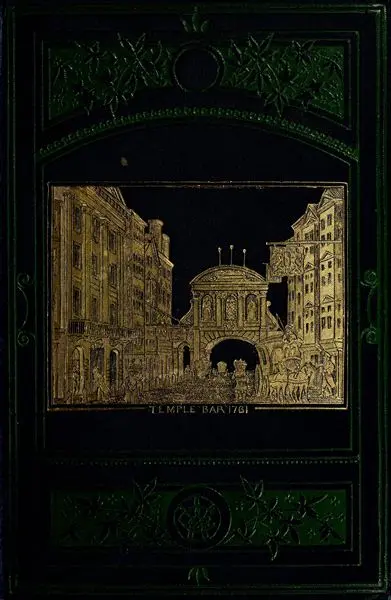
"Haunted London" by Walter Thornbury is a historical account written in the late 19th century. The book delves into the intricate layers of London's past, exploring not only its well-known ghost stories but also the rich traditions, historical events, and notable figures associated with various locations throughout the city. Through its pages, Thornbury aims to reveal the city's transformation over time and the social dynamics that have characterized London. The opening of "Haunted London" introduces the reader to the grandiosity and complexity of London as perceived by historical figures like Dr. Johnson and Boswell. It sets the stage by reflecting on the sheer vastness of human habitation within the city and how its past is intricately woven into its fabric. Thornbury expresses a deep affection for London and hints at his intent to guide readers through various locales, uncovering fascinating anecdotes and events tied to them. He describes the physical and cultural changes in London, underlining the tension between progress and the preservation of historical memory, which propels the journey he invites readers to embark upon through the book.
Introduction adapted from the source catalogue; source summaries may be automatically generated.
Free to read · English · 162,936 words · No account needed
MAKE TIME FOR A GOOD BOOK
On by default. Untick to stop anonymous reading totals. Each page counts after 10 seconds in view. How this works.
Anonymous counting is on unless you have switched it off.
Lancaster, John, Duke of, favours Wickliffe, 109;
his peril from the London mob, 110;
his escape, ib.;
amende of the Londoners to, ib.;
his marriage and connections, ib.;
his unpopularity and violence, 119;
clause aimed by Wat Tyler against, 112;
destruction of his London palace, etc., 113;
his death and burial, 114
Lancaster, the Duchy of, 122, 450
Lander, Richard, 120
Langhorne, Dr., 396
Law Courts, new, 147
“Law Times,” Office, 168
Layer, Christopher, 17
Learning, Society for the encouragement of, 49
Lee, the poet, his death, 154
Lepers, 354
Lewis, the comedian, 274;
his acting, 323, 324
Lillie, Charles, the perfumer, 84
Limput, Remigius van, 187
Liston, the comedian, 323
Lincoln’s Inn, origin of its name, 387;
the Chancery Lane side of, 388;
the gateway of, ib.;
the chapel, 388, 389;
distinguished students of, 390 et seq.;
persons buried in the chapel, 392 et seq.;
old customs and laws of, 397, 398;
disposal of Hogarth’s picture, “Preaching before Felix,” at, 398;
the new hall, library, and garden of, ib., 464;
Mr. Disraeli’s studies at, 400
Lincoln’s Inn Field, part of Fickett’s field, 401;
King James regulates building in, 401, 402;
Inigo Jones’s plan for laying out and building, 402;
state in the time of Charles I. and Charles II.;
Gay’s sketch of its dangers, 403;
Earl of Rochester’s house in, 404;
execution of plotters against Elizabeth in, ib.;
procession of Thomas Sadler, the thief, through, ib.;
Lord Russell’s death in, 405;
improvements in 1735 in, 410;
Macaulay’s picture of, ib.;
distinguished inhabitants of, 414 et seq.;
Tennyson’s chambers in, 418;
Mr. Povey’s house in, 428
Lindsey, Earl, 416, 417
Lindsey House, 417
Literary Club, Boswell and Johnson at, 17
Literary Fund Society, 427
Literature, Royal Society of, 259
Locket’s Ordinary, 227
London, growth and changes of, 2;
points of departure for tours in, ib.;
start for the author’s tour in, 3;
banks in, 7;
the rebels under Tyler in, 112;
King William at the celebration of the peace of Ryswick in, 23, 24;
a bishop beheaded by the mob of, 26;
cruel treatment of a Spaniard by the mob of, 213;
the street signs of, 237;
foreigners in 1580 in, 356;
a glance at an ancient map of, 356, 357;
Pennant on its churchyards, 367;
crusade against Irish and other vagrants, 377;
royal fears as to its increase, 401;
its history an epitome of that of the world, 441;
its newspapers and periodicals, 454
Long Acre, the plague in, 262;
Oliver Cromwell’s residence in, 279;
Tory tavern Club in, 284
Lord Mayor’s Day, 23
Loutherberg, De, 167
Lowin, John, 154
Lyceum, the, 171;
exhibitions in, ib.;
experiment in, 172;
Mathew’s entertainment in, ib.;
Beefsteak Club meet in, ib.;
Mr. T. P. Cooke’s early triumphs in, 174
Lyndhurst, Lord, 395
Lyons, Emma (afterwards Lady Hamilton), 102
Lyon’s Inn, 165;
sale of its materials, ib.;
murder of Mr. Weare, ib.
Lyttelton, Sir Thomas, 44
M’Ardell, Hogarth’s engraver, 251
Mackintosh, Sir James, 464
Macklin, the actor, 436
Macready, William Charles, 337
Maginn, Dr., ballad by, 232
Malibran, Madame, 334
Manos, Gannee, and other beggars, 382
Mansfield, the Earl of, 394
Your reading position is saved on this browser. Take it to another device with a library code. Reading pages adapt to text, rather than matching a printed edition.
BEHIND THE BOOK
This eBook is for the use of anyone anywhere in the United States and most other parts of the world at no cost and with almost no restrictions whatsoever. You may copy it, give it away or re-use it under the terms of the Project Gutenberg License included with this eBook or online at www.gutenberg.org. If you are not located in the United States, you will have to check the laws of the country where you are located before using this eBook. Read the source licence.
The original source file, including credits and licence, is retained by this library. Request an original-format copy at no charge. Please include the book title and Project Gutenberg identifier #41580.
KEEP YOUR CURIOSITY GOING
Cécile Tormay

Moritz Busch
John L. Ransom
Frances Wright
Cécile Tormay

Mabel Potter Daggett