THE CLASSIC COLLECTION✦An outlaw’s diary: the CommuneCLASSIC FREE BOOKS
An outlaw’s diary: the Commune
Cécile Tormay
THE CLASSIC COLLECTION · 1865
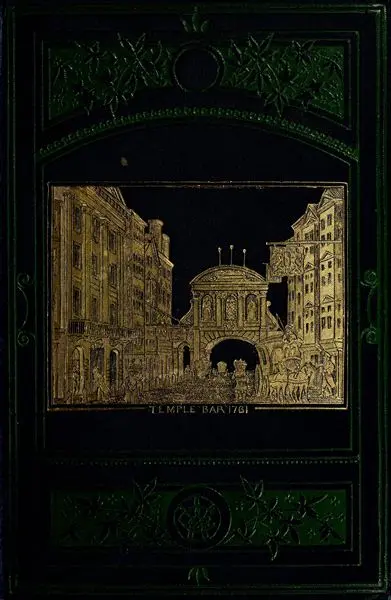
"Haunted London" by Walter Thornbury is a historical account written in the late 19th century. The book delves into the intricate layers of London's past, exploring not only its well-known ghost stories but also the rich traditions, historical events, and notable figures associated with various locations throughout the city. Through its pages, Thornbury aims to reveal the city's transformation over time and the social dynamics that have characterized London. The opening of "Haunted London" introduces the reader to the grandiosity and complexity of London as perceived by historical figures like Dr. Johnson and Boswell. It sets the stage by reflecting on the sheer vastness of human habitation within the city and how its past is intricately woven into its fabric. Thornbury expresses a deep affection for London and hints at his intent to guide readers through various locales, uncovering fascinating anecdotes and events tied to them. He describes the physical and cultural changes in London, underlining the tension between progress and the preservation of historical memory, which propels the journey he invites readers to embark upon through the book.
Introduction adapted from the source catalogue; source summaries may be automatically generated.
Free to read · English · 162,936 words · No account needed
MAKE TIME FOR A GOOD BOOK
On by default. Untick to stop anonymous reading totals. Each page counts after 10 seconds in view. How this works.
Anonymous counting is on unless you have switched it off.
These fields in Charles I.’s time became the haunt of wrestlers, bowlers, beggars, and idle boys; and here, in 1624, Lilly the astrologer, then servant to a mantua-maker in the Strand, spent his time in bowling with Wat the cobbler, Dick the blacksmith, and such idle apprentices. Hither, after the Restoration, came every sort of villain--the Rufflers, or maimed soldiers, who told lies of Edgehill and Naseby, and who surrounded the coaches of charitable lords; “Dommerers,” or sham dumb men; “Mumpers,” or sham broken gentlemen; “Whipjacks,” or sham seamen with bound-up legs; “Abram-men,” or sham idiots; “Fraters,” or rogues with forged patents; “Anglers,” wild rogues, “Clapper-dudgeons,”[698] and men with gambling wheels of fortune.
In Queen Anne’s reign Gay sketches the dangers of night in these fields; he warns his readers to avoid the lurking thief, by day a beggar, or else--
“The crutch, which late compassion moved, shall wound Thy bleeding head, and fell thee to the ground.
Nor trust the linkman,” he adds, “along the lonely wall, or he’ll put out his light and rob you, but--
“Still keep the public streets where oily rays That from the crystal lamp o’erspread the ways.”
The south side of Lincoln’s Inn Fields was built and named three years before the Restoration, by Sir William Cowper, James Cowper, and Robert Henley. In 1668 Portugal Row, as it was called, but not from Charles’s queen,[699] was extremely fashionable. There were then living here such noble and noted persons as Lady Arden, William Perpoint, Esq., Sir Charles Waldegrave, Lady Fitzharding, Lady Diana Curzon, Serjeant Maynard, Lord Cardigan, Mrs. Anne Heron, Lady Mordant, Richard Adams, Esq., Lady Carr, Lady Wentworth, Mr. Attorney Montagu, Lady Coventry, Judge Welch, and Lady Davenant.[700]
Mr. Serjeant Maynard was the brave old Presbyterian lawyer, then eighty-seven, who replied to the Prince of Orange, when he said that he must have outlived all the men of law of his time--“Sir, I should have outlived the law itself had not your highness come over.”
Lady Davenant was the widow of Sir William Davenant, the Oxford innkeeper’s son, the poet and manager, who, aided by Whitlocke and Maynard, was allowed in Cromwell’s time to perform operas at a theatre in Charterhouse Square. After the Restoration he had the theatre in Portugal Street. He died in 1668, insolvent. His poems were published by his widow, and dedicated to the Duke of York in 1673.
Your reading position is saved on this browser. Take it to another device with a library code. Reading pages adapt to text, rather than matching a printed edition.
BEHIND THE BOOK
This eBook is for the use of anyone anywhere in the United States and most other parts of the world at no cost and with almost no restrictions whatsoever. You may copy it, give it away or re-use it under the terms of the Project Gutenberg License included with this eBook or online at www.gutenberg.org. If you are not located in the United States, you will have to check the laws of the country where you are located before using this eBook. Read the source licence.
The original source file, including credits and licence, is retained by this library. Request an original-format copy at no charge. Please include the book title and Project Gutenberg identifier #41580.
KEEP YOUR CURIOSITY GOING
Cécile Tormay

Moritz Busch
John L. Ransom
Frances Wright
Cécile Tormay

Mabel Potter Daggett