THE CLASSIC COLLECTION✦An outlaw’s diary: the CommuneCLASSIC FREE BOOKS
An outlaw’s diary: the Commune
Cécile Tormay
THE CLASSIC COLLECTION · 1865
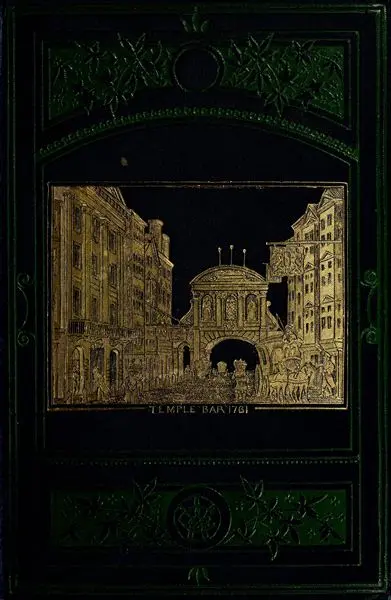
"Haunted London" by Walter Thornbury is a historical account written in the late 19th century. The book delves into the intricate layers of London's past, exploring not only its well-known ghost stories but also the rich traditions, historical events, and notable figures associated with various locations throughout the city. Through its pages, Thornbury aims to reveal the city's transformation over time and the social dynamics that have characterized London. The opening of "Haunted London" introduces the reader to the grandiosity and complexity of London as perceived by historical figures like Dr. Johnson and Boswell. It sets the stage by reflecting on the sheer vastness of human habitation within the city and how its past is intricately woven into its fabric. Thornbury expresses a deep affection for London and hints at his intent to guide readers through various locales, uncovering fascinating anecdotes and events tied to them. He describes the physical and cultural changes in London, underlining the tension between progress and the preservation of historical memory, which propels the journey he invites readers to embark upon through the book.
Introduction adapted from the source catalogue; source summaries may be automatically generated.
Free to read · English · 162,936 words · No account needed
MAKE TIME FOR A GOOD BOOK
On by default. Untick to stop anonymous reading totals. Each page counts after 10 seconds in view. How this works.
Anonymous counting is on unless you have switched it off.
“While trembling rebels at the fabrick gaze,
And dread their fate with horror and amaze,
Let Briton’s sons the emblematick view,
And plainly see what to rebellion’s due.”
A curious little book “by a member of the Inner Temple,” which has preserved this print, has also embalmed the following stupid and cold-blooded impromptu on the heads of Oxburgh, Townley, and Fletcher:--
“Three heads here I spy,
Which the glass did draw nigh,
The better to have a good sight;
Triangle they’re placed,
Old, bald, and barefaced,
Not one of them e’er was upright.”[16]
The heads of Fletcher and Townley were put up on Temple Bar August 2, 1746. On August 16, Walpole writes to Montague to say that he had “passed under the new heads at Temple Bar, where people made a trade of letting spying-glasses at a halfpenny a look.”
Townley was a young officer about thirty-eight years of age, born at Wigan, and of a good family. His uncle had been out in 1715, but was acquitted on his trial. Townley had been fifteen years abroad in the French army, and was close to the Duke of Berwick when the duke’s head was shot off at the siege of Philipsburgh. When the Highlanders came into England he met them near Preston, and received from the young Pretender a commission to raise a regiment of foot. He had been also commandant at Carlisle, and directed the sallies from thence.
Fletcher, a young linen chapman at Salford, had been seen pulling off his hat and shouting when a sergeant and a drummer were beating up for volunteers at the Manchester Exchange. He had been seen also at Carlisle, dressed as an officer, with a white cockade in his hat and a plaid sash round his waist.[17]
Seven other Jacobites were executed on Kennington Common with Fletcher and Townley. They were unchained from the floor of their room in Southwark new gaol early in the morning, and having taken coffee, had their irons knocked off. They were then, at about ten o’clock, put into three sledges, each drawn by three horses. The executioner, with a drawn scimitar, sat in the first sledge with Townley; a party of dragoons and a detachment of foot-guards conducted him to the gallows, near which a pile of faggots and a block had been placed. While the prisoners were stepping from their sledges into a cart drawn up beneath a tree, the wood was set on fire, and the guards formed a circle round the place of execution. The prisoners had no clergyman, but Mr. Morgan, one of their number, put on his spectacles and read prayers to them, which they listened and responded to with devoutness. This lasted above an hour. Each one then threw his prayer-book and some written papers among the spectators; they also delivered notes to the sheriff, and then flung their hats into the crowd. “Six of the hats,” says the quaint contemporary account, “were laced with gold,--all of these prisoners having been genteelly dressed.” Immediately after, the executioner took a white cap from each man’s pocket and drew it over his eyes; then they were turned off. When they had hung about three minutes, the executioner pulled off their shoes, white stockings, and breeches, a butcher removing their other clothes. The body of Mr. Townley was then cut down and laid upon a block, and the butcher seeing some signs of life remaining, struck it on the breast, then took out the bowels and the heart, and threw them into the fire. Afterwards, with a cleaver, they severed the head and placed it with the body in the coffin. When the last heart, which was Mr. Dawson’s, was tossed into the fire, the executioner cried, “God save King George!” and the immense multitude gave a great shout. The heads and bodies were then removed to Southwark gaol to await the king’s pleasure.
Your reading position is saved on this browser. Take it to another device with a library code. Reading pages adapt to text, rather than matching a printed edition.
BEHIND THE BOOK
This eBook is for the use of anyone anywhere in the United States and most other parts of the world at no cost and with almost no restrictions whatsoever. You may copy it, give it away or re-use it under the terms of the Project Gutenberg License included with this eBook or online at www.gutenberg.org. If you are not located in the United States, you will have to check the laws of the country where you are located before using this eBook. Read the source licence.
The original source file, including credits and licence, is retained by this library. Request an original-format copy at no charge. Please include the book title and Project Gutenberg identifier #41580.
KEEP YOUR CURIOSITY GOING
Cécile Tormay

Moritz Busch
John L. Ransom
Frances Wright
Cécile Tormay

Mabel Potter Daggett