THE CLASSIC COLLECTION✦An outlaw’s diary: the CommuneCLASSIC FREE BOOKS
An outlaw’s diary: the Commune
Cécile Tormay
THE CLASSIC COLLECTION · 1865
"Haunted London" by Walter Thornbury is a historical account written in the late 19th century. The book delves into the intricate layers of London's past, exploring not only its well-known ghost stories but also the rich traditions, historical events, and notable figures associated with various locations throughout the city. Through its pages, Thornbury aims to reveal the city's transformation over time and the social dynamics that have characterized London. The opening of "Haunted London" introduces the reader to the grandiosity and complexity of London as perceived by historical figures like Dr. Johnson and Boswell. It sets the stage by reflecting on the sheer vastness of human habitation within the city and how its past is intricately woven into its fabric. Thornbury expresses a deep affection for London and hints at his intent to guide readers through various locales, uncovering fascinating anecdotes and events tied to them. He describes the physical and cultural changes in London, underlining the tension between progress and the preservation of historical memory, which propels the journey he invites readers to embark upon through the book.
Introduction adapted from the source catalogue; source summaries may be automatically generated.
Free to read · English · 162,936 words · No account needed
MAKE TIME FOR A GOOD BOOK
On by default. Untick to stop anonymous reading totals. Each page counts after 10 seconds in view. How this works.
Anonymous counting is on unless you have switched it off.
The number of spectators in the balconies and windows was computed at two hundred thousand. A hundred and fifty flambeaux followed the procession by order, and as many more came as volunteers.
Roger North also describes a fellow with a stentorophonic tube (a speaking-trumpet), who kept bellowing out--“Abhorrers! abhorrers!”[10]
Lastly came a complaisant, civil gentleman, who was meant to represent either Sir Roger l’Estrange, or the King of France, or the Duke of York. “Taking all in good part, he went on his way to the fire.”
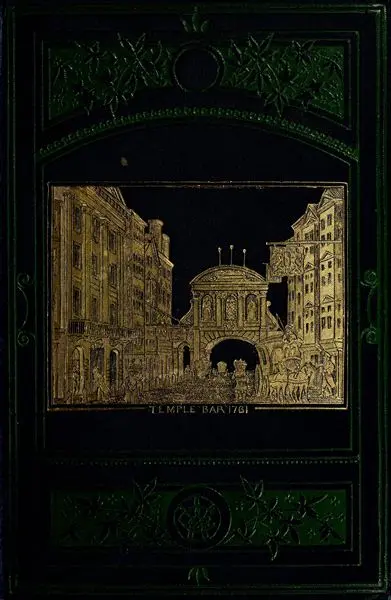
At Temple Bar some of the mob had crowned the statue of Elizabeth with gilt laurel, and placed in her hand a gilt shield with the motto, “The Protestant Religion and Magna Charta.” A spear leant against her arm, and the niche was lit with candles and flambeaux, so that, as North said, she looked like the goddess Pallas, the object of some solemn worship and sacrifice.
All this time perpetual battles and skirmishes went on between the Whigs and Tories at the different windows, and thousands of volleys of squibs were discharged.
When the pope was at last toppled into the fire a prodigious shout was raised, that spread as far as Somerset House, where the queen then was, and, as a pamphleteer of the time says, before it ceased, reached Scotland, France, and even Rome.
From these processions the word MOB (mobile vulgus) became introduced into our language.[11] In 1682, Charles II. tried to prohibit this annual festival, but it continued nevertheless till the reign of Queen Anne, or even later.[12]
At Temple Bar, where the houses seemed turned into mountains of heads, and many fireworks were let off, a man representing the English cardinal (Philip Howard, brother of the Duke of Norfolk) sang a rude part-song with other men who personated the people of England. The cardinal first began:--
“From York to London town we come
To talk of Popish ire,
To reconcile you all to Rome,
And prevent Smithfield fire.”
To which the people replied, valorously:--
“Cease, cease, thou Norfolk cardinal,
See! yonder stands Queen Bess,
Who saved our souls from Popish thrall:
Oh, Bess! Queen Bess! Queen Bess!
“Your Popish plot, and Smithfield threat,
We do not fear at all,
For, lo! beneath Queen Bess’s feet,
You fall! you fall! you fall!
“’Tis true our king’s on t’other side,
A looking t’wards Whitehall,
But could we bring him round about,
He’d counterplot you all.
“Then down with James and up with Charles,
On good Queen Bess’s side,
That all true commons, lords, and earls
May wish him a fruitful bride.
Your reading position is saved on this browser. Take it to another device with a library code. Reading pages adapt to text, rather than matching a printed edition.
BEHIND THE BOOK
This eBook is for the use of anyone anywhere in the United States and most other parts of the world at no cost and with almost no restrictions whatsoever. You may copy it, give it away or re-use it under the terms of the Project Gutenberg License included with this eBook or online at www.gutenberg.org. If you are not located in the United States, you will have to check the laws of the country where you are located before using this eBook. Read the source licence.
The original source file, including credits and licence, is retained by this library. Request an original-format copy at no charge. Please include the book title and Project Gutenberg identifier #41580.
KEEP YOUR CURIOSITY GOING
Cécile Tormay

Moritz Busch
John L. Ransom
Frances Wright
Cécile Tormay

Mabel Potter Daggett