THE CLASSIC COLLECTION✦An outlaw’s diary: the CommuneCLASSIC FREE BOOKS
An outlaw’s diary: the Commune
Cécile Tormay
THE CLASSIC COLLECTION · 1865
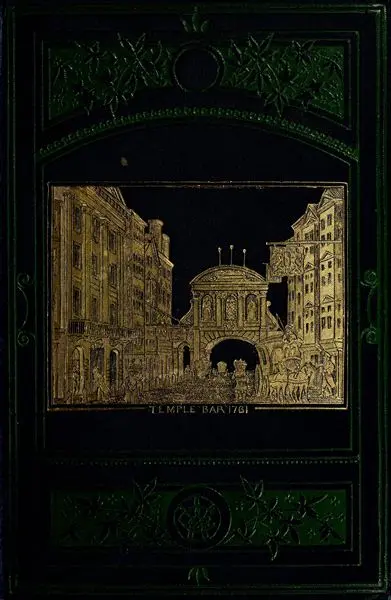
"Haunted London" by Walter Thornbury is a historical account written in the late 19th century. The book delves into the intricate layers of London's past, exploring not only its well-known ghost stories but also the rich traditions, historical events, and notable figures associated with various locations throughout the city. Through its pages, Thornbury aims to reveal the city's transformation over time and the social dynamics that have characterized London. The opening of "Haunted London" introduces the reader to the grandiosity and complexity of London as perceived by historical figures like Dr. Johnson and Boswell. It sets the stage by reflecting on the sheer vastness of human habitation within the city and how its past is intricately woven into its fabric. Thornbury expresses a deep affection for London and hints at his intent to guide readers through various locales, uncovering fascinating anecdotes and events tied to them. He describes the physical and cultural changes in London, underlining the tension between progress and the preservation of historical memory, which propels the journey he invites readers to embark upon through the book.
Introduction adapted from the source catalogue; source summaries may be automatically generated.
Free to read · English · 162,936 words · No account needed
MAKE TIME FOR A GOOD BOOK
On by default. Untick to stop anonymous reading totals. Each page counts after 10 seconds in view. How this works.
Anonymous counting is on unless you have switched it off.
JACOB TONSON’S BOOK-SHOP, 1742, from an etching by Benoist. The shop of this famous bibliopole was opposite Catherine Street. The view is obtained from the background of the print representing a burlesque procession of Masons, got up by some humourist in ridicule of the craft 82
OLD HOUSES IN THE STRAND, 1742, copied from the same print as the preceding view. These houses stood on the site of the present Wellington Street 104
THE SAVOY, FROM THE THAMES, IN 1650, after Hollar 106
THE SAVOY CHAPEL, from an original drawing 119
THE SAVOY PRISON, 1793, from an etching by J. T. Smith 125
DURHAM HOUSE, 1790, from an etching by J. T. Smith 126
THE WATER GATE, 1860, from a Sketch 133
YORK STAIRS AND SURROUNDING BUILDINGS, circa 1745, after an original drawing by Canaletti in the British Museum. This is one of the few interesting views of Old London sketched by Canaletti during his short stay in England. It comprises the famous water-gate designed by Inigo Jones, and the tall wooden tower of the York Buildings Water Company. The large mansion behind this (at the south-west corner of Buckingham Street) was that inhabited by Pepys from 1684, and in which he entertained the members of the Royal Society during his presidency. The house at the opposite corner (seen above the trees) is that in which the Czar Peter the Great resided for some time, when he visited England for instruction in shipbuilding 144
CROCKFORD’S FISH-SHOP, from an original sketch 146
THE OLD ROMAN BATH, from a drawing 169
EXETER CHANGE, 1821, from an etching by Cooke 188
TITUS OATES IN THE PILLORY, from an anonymous contemporary Dutch engraving 190
THE KING’S MEWS, 1750, from a print by I. Maurer. This building, erected in 1732 at the expense of King George II., was pulled down in 1830. In the foreground of this view the King is represented returning to his carriage after inspecting his horses 238
BARRACK AND OLD HOUSES on the site of Trafalgar Square in 1826, from an original sketch by F. W. Fairholt. The view is taken from St. Martin’s Church, looking toward Pall Mall; the building in the distance, to the left, is the College of Physicians 239
OLD SLAUGHTER’S COFFEE-HOUSE, 1826, from an original sketch by F. W. Fairholt 260
SALISBURY AND WORCESTER HOUSES IN 1630, from a drawing by Hollar in the Pepysian Library, Cambridge 262
LYON’S INN, 1804, from an engraving in Herbert’s History of the Inns of Court 286
CRAVEN HOUSE, 1790, from an original drawing in the British Museum 287
DRURY LANE THEATRE, 1806, from an original drawing by Pugin. This was the third theatre, succeeding Garrick’s. It was built by Henry Holland, opened March 12, 1794, and burnt down Feb. 24, 1809. It was never properly finished on the side toward Catherine Street, where this view was taken 347
Your reading position is saved on this browser. Take it to another device with a library code. Reading pages adapt to text, rather than matching a printed edition.
BEHIND THE BOOK
This eBook is for the use of anyone anywhere in the United States and most other parts of the world at no cost and with almost no restrictions whatsoever. You may copy it, give it away or re-use it under the terms of the Project Gutenberg License included with this eBook or online at www.gutenberg.org. If you are not located in the United States, you will have to check the laws of the country where you are located before using this eBook. Read the source licence.
The original source file, including credits and licence, is retained by this library. Request an original-format copy at no charge. Please include the book title and Project Gutenberg identifier #41580.
KEEP YOUR CURIOSITY GOING
Cécile Tormay

Moritz Busch
John L. Ransom
Frances Wright
Cécile Tormay

Mabel Potter Daggett