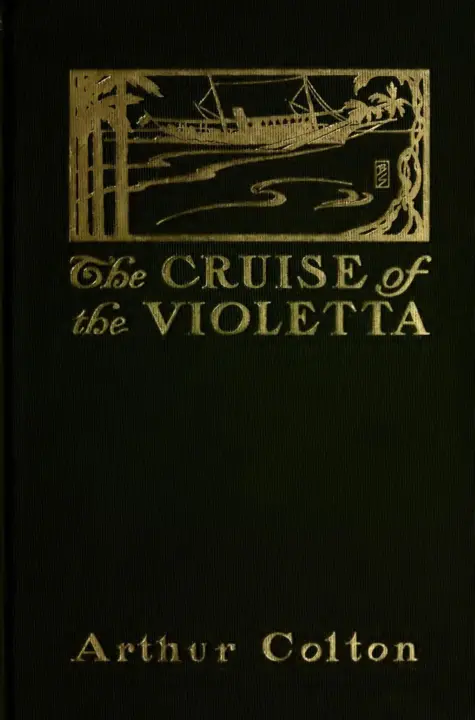
The Cruise of The Violetta
Arthur Colton
THE CLASSIC COLLECTION · 1907
"Harps Hung up in Babylon" by Arthur Colton is a collection of poetic works written in the early 20th century. This book encompasses a variety of themes that include reflections on love, loss, and the passage of time, drawing heavily upon biblical and historical imagery to evoke deep emotional resonance. Through its lyrical expressions, the collection explores both personal and universal experiences, inviting readers into a world rich with evocative language and contemplative thought. The content of the book is characterized by its diverse range of poems, such as "The Captive," which illustrates the interplay of mercy and justice through the story of a king and a beggar, and "The Shepherd and the Knight," which contrasts the lives of a knight on a quest and a shepherd content with his pastoral existence. Other poems, like "Faustine" and "The Water-Lily," delve into musings of love and beauty, while "Without the Gate" provides a poignant metaphor for longing and unfulfilled desire. Throughout "Harps Hung up in Babylon," Colton intertwines nature, spirituality, and commentary on humanity, allowing readers to reflect on their own lives and the universal truths that bind them to the past and future.
Introduction adapted from the source catalogue; source summaries may be automatically generated.
Free to read · English · 9,624 words · No account needed
MAKE TIME FOR A GOOD BOOK
On by default. Untick to stop anonymous reading totals. Each page counts after 10 seconds in view. How this works.
Anonymous counting is on unless you have switched it off.
A kind of hopeless Jacobites.
--This brand, indeed, smokes fragrantly.
The perfect mixture's far to seek;
Your pure Virginia, pale and meek,
Requires the passion of Perique,
The Latakian lyrics;
Perfection is the crown that flies
The reaching hands and longing eyes,
And art demands what life denies
To nicotine empirics.
Sirs, you remember Omar's choice,
Wine, verses, and his lady's voice
Making the wilderness rejoice?
It needs one more ingredient.
A boon, the Persian knew not of,
Had made to mellower music move
The lips to wine, if not to love,
A trifle too obedient.
This weed I call the "herb of grace."
My reasons are, as some one says,
"Between me and my fireplace."
Ophelia spoke of rue, you know.
"There's rue for you and there's for me,
But you must wear it differently."
Quite true, of course.--Your pipe I see
Draws hard. They sometimes do, you know.
Alas, if we in fancy's train
To drowse beside our fires are fain,
Letting the world slip by amain,
Uneager of its verities,
Our neighbours will not let us be
At peace with inutility.
They quote us maxims, two or three,
Or similar asperities.
I question not a man may bear
His still soul walled from noisy care,
And walk serene in places where
An ancient wrath is denizen;
The pilgrim's feet may know no ease,
And yet his heart's delight increase,
For all ways that are trod in peace
Lead upward to God's benison.
No less I doubt our age's need
Is some of Izaak Walton's creed.--
Your pardon, gentlemen! I breed
Impatience with a homily.--
Our flag there were a sombre type,
If every star implied a stripe.
I wish you all a wholesome pipe,
And ingle blinking bonnily.
Poor ethics these of mine, I fear,
And yet, when our green leaves and sere
Have dropped away, perhaps we'll hear
These questions answered curiously.
The battered book here on my knees?
Is Herrick, his "Hesperides."
Gold apples from the guarded trees
Are stored here not penuriously.
The poet of the gurgling phrase
And quaint conceits of elder days,
Loved holiness and primrose ways
About in equal quantities,
Wassail and yuletide, feast and fair,
Blown petticoats, a child's low prayer;
A fine, old pagan joy is there;
Some wild-rose muse's haunt it is.
Mine herb of grace, that kindred art
To all who choose "the better part,"
Grant us the old world's childlike heart,
Now grown an antique rarity!
With mayflowers on our swords and shields
We'll learn to babble of green fields
Like Falstaff, whom good humour yields
A place still in its charity.
Visions will come at times; I note
Your reading position is saved on this browser. Take it to another device with a library code. Reading pages adapt to text, rather than matching a printed edition.
Arthur Colton

Arthur Colton
Arthur Colton
Arthur Colton
BEHIND THE BOOK
This eBook is for the use of anyone anywhere in the United States and most other parts of the world at no cost and with almost no restrictions whatsoever. You may copy it, give it away or re-use it under the terms of the Project Gutenberg License included with this eBook or online at www.gutenberg.org. If you are not located in the United States, you will have to check the laws of the country where you are located before using this eBook. Read the source licence.
The original source file, including credits and licence, is retained by this library. Request an original-format copy at no charge. Please include the book title and Project Gutenberg identifier #52456.
KEEP YOUR CURIOSITY GOING

Eric Mackay
Edmund Gosse
Sophia Margaretta Hensley
Gilbert Parker
George MacDonald

Elizabeth Bibesco