THE CLASSIC COLLECTION✦Sunshine and snowCLASSIC FREE BOOKS
Sunshine and snow
Harold Bindloss
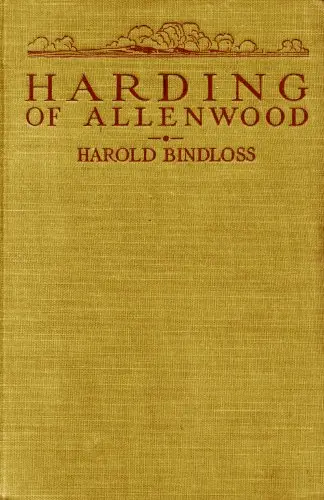
THE CLASSIC COLLECTION · 1915
"Harding of Allenwood" by Harold Bindloss is a novel written in the early 20th century. The story focuses on Craig Harding, a determined pioneer, as he navigates the challenges of settling on the Canadian prairie during a time of significant change. The narrative unfolds amidst the tensions between the traditional settlers of Allenwood, represented by Colonel Mowbray and his family, and the newcomers like Harding who embody the spirit of progress and practicality. At the start of the novel, we are introduced to Harding and his companion, Fred Devine, as they clear land in preparation for their homesteads amidst the vast, unpopulated prairie. Their conversations reflect both the optimistic future potential of agriculture in the region and the challenges they face due to the existing customs upheld by the affluent settlers of Allenwood. The narrative shifts as Harding encounters Beatrice Mowbray, sparking a connection that introduces themes of class, ambition, and the struggle between old-world traditions and new-world realities. As their lives intertwine, Harding’s ambitions will clash with the expectations of Beatrice’s family, setting the stage for personal and societal conflicts as they strive to build their lives in a rapidly changing landscape.
Introduction adapted from the source catalogue; source summaries may be automatically generated.
Free to read · English · 88,133 words · No account needed
MAKE TIME FOR A GOOD BOOK
On by default. Untick to stop anonymous reading totals. Each page counts after 10 seconds in view. How this works.
Anonymous counting is on unless you have switched it off.
The boy gave an imperious toss of his head.
"What I meant was that you have no right on this property."
"No?"
"It belongs to us. And logs large enough for building are scarce enough already. As a matter of fact, we're not allowed to cut these ourselves without the Colonel's permission."
"Haven't met him yet," said Devine dryly. "Who's he?"
"Colonel Mowbray, of Allenwood Grange."
"And who's Colonel Mowbray? And where's Allenwood Grange?"
The boy seemed nettled by the twinkle in Devine's eyes, but Harding noticed that pride compelled him to hide his feelings.
"You can't cut this lumber without asking leave! Besides, you're spoiling one of our best coyote covers."
"Kyotes!" exclaimed Devine. "What do you do with 'em?"
The youngster stared at him a moment in disdain.
"We have a pack of hounds at the Grange," he then condescended to
answer.
"Hunt them! Well, now, that's mighty strange. I'd have thought you'd find arsenic cheaper. Then if you were to lie out round the chicken-house with a gun----"
The boy cut him short.
"If you want these logs, you must ask for them. Shall I tell the Colonel you are coming to do so?"
"Well, sonny," drawled Devine, "you just run along home and send somebody grown-up. We might talk to him."
"As it happens," the boy said with great dignity, "Kenwyne is in the bluff. I must warn you not to touch a tree until you see him."
Without another word he turned and rode off.
During the conversation Harding had been studying him closely. The well-bred reserve in his manner, which, while peremptory, was somehow free from arrogance, compelled the man's admiration.
"From the Old Country," he said with a laugh, "and a bit high-handed, but there's sand in him. Do you know anything about Allenwood?"
"Not much, but I heard the boys talking about it at the railroad store. It's a settlement of high-toned Britishers with more money than sense. They play at farming and ride round the country on pedigree horses."
"The horse the boy rode was certainly a looker!" Harding commented,
swinging his ax once more.
As it sliced out a chip with a ringing thud, and another, and yet another, the boy returned, accompanied by a well-mounted older man with a sallow face and very dark eyes and a languidly graceful air. The man was plainly dressed but he wore the stamp Harding had noticed on the youngster; and again there flashed through Harding's mind the half-indistinct thought that these people were familiar to him.
"I understand that you insist upon cutting this timber," Kenwyne began.
Your reading position is saved on this browser. Take it to another device with a library code. Reading pages adapt to text, rather than matching a printed edition.
Harold Bindloss
Harold Bindloss
Harold Bindloss
Harold Bindloss
BEHIND THE BOOK
This eBook is for the use of anyone anywhere in the United States and most other parts of the world at no cost and with almost no restrictions whatsoever. You may copy it, give it away or re-use it under the terms of the Project Gutenberg License included with this eBook or online at www.gutenberg.org. If you are not located in the United States, you will have to check the laws of the country where you are located before using this eBook. Read the source licence.
The original source file, including credits and licence, is retained by this library. Request an original-format copy at no charge. Please include the book title and Project Gutenberg identifier #38343.
KEEP YOUR CURIOSITY GOING
Coulson Kernahan

Maurice Baring
Frances Wright
Cécile Tormay

Frederic Jesup Stimson

W. H. P. (William Henry Pope) Jarvis