THE CLASSIC COLLECTION✦An outlaw’s diary: the CommuneCLASSIC FREE BOOKS
An outlaw’s diary: the Commune
Cécile Tormay
THE CLASSIC COLLECTION · 1921
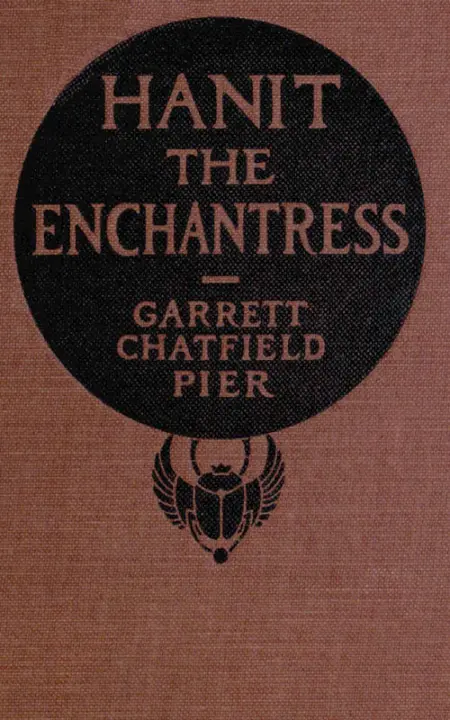
"Hanit the Enchantress" by Garrett Chatfield Pier is a historical novel written in the early 20th century. The story immerses readers in ancient Egyptian culture and mythology, revolving around the titular character Hanit, a queen embroiled in political intrigues and dark sorcery. The narrative begins with the discovery of ancient manuscripts that hint at magic and mystery, setting the stage for a tale woven with elements of romance, betrayal, and supernatural powers. At the start of the novel, the protagonist, Professor Steven Ranney, encounters an ancient manuscript that captivates him and his companions, including Mrs. Gardiner and Dr. Clem Gardiner. The manuscript reveals a contract involving the powerful secrets of the Luminous Book of Thoth, suggesting that the key to immense knowledge and power is tied to Hanit, the first wife of Pharaoh Amenhotep III. As the plot unfolds, the discovery of hidden tombs and the intertwining destinies of Hanit, her son Wazmes, and a host of other characters lead to a rich tapestry of suspense and drama, all under the watchful eyes of ancient Egyptian gods and the dark machinations of ambitious rivals.
Introduction adapted from the source catalogue; source summaries may be automatically generated.
Free to read · English · 46,980 words · No account needed
MAKE TIME FOR A GOOD BOOK
On by default. Untick to stop anonymous reading totals. Each page counts after 10 seconds in view. How this works.
Anonymous counting is on unless you have switched it off.
From his golden throne Pharaoh’s prominent eyes swept the oil-coned heads of his subjects. One and all were dressed, be-jeweled and anointed as for a gala day. Their loyal shouts of welcome had warmed his heart. At the same time, their enthusiasm seemed to give him the necessary strength for his momentous task.
No sooner was he seated, and the jeweled scepter placed upon a stand at his side, than the nobles on his right, ever the most exalted, pressed about him. Some prostrated themselves before him; some kissed the pointed tip of his gilded sandal, while others, in this case the aged members of his court or blood relations, embraced the pleated skirt that tightly bound his knees.
Suddenly Pharaoh signaled that he would hear no more, and immediately, with a wave of his scepter, rose to his feet.
At once, as if by magic, whisperings ceased. No one so much as breathed. Such a hush fell upon that crowded hall that one could hear without the shrill cries of the quarrelsome hawks, that flew in circles back and forth from the eaves of the roof.
As one, that vast audience sank to its knees. As one, it broke into the stirring shout of welcome:
“Hail, Life-giver! Hail, Electrum of Kings! Hail, Thou who art the very breath of our nostrils! Life, health and peace be thine, so long as Ra endures!”
Then again the same expectant hush fell upon that shimmering hall.
Pharaoh raised his hand. His soft, but resonant voice filled the long
hall:
“My children! We have summoned you before us that you may hear the words of Pharaoh, which change not! For centuries past hath Egypt been a jest in the mouths of strangers who cried:
“These be the sons of the Egyptians that have raised to themselves more gods than they have days in which to worship them.’ Had we not been hindered by the priests of Amen yonder, long ago, yea, even in our fathers’ time, this reproach had been removed from amongst us! Henceforth, my children, cease to cry upon the Triads; upon Amen, Mut, and Khonsu; upon Horus, Set and Ausar!
“As you all know, the gods of Thebes, of On, of white-walled Memphis, are but attributes of the one beneficent sun-god, of Aton the Glorious, the Life-giver, who dwelleth within the Sun!
“Henceforth, let Aton, not Amen, be upon your lips! Let Aton, not Amen, be upon the lips of your children! Thus, as in times past, Egypt shall worship one god from Nubia to Suan of the North. May Aton’s bright beams embrace you! May Aton’s rays forever enfold you!”
Your reading position is saved on this browser. Take it to another device with a library code. Reading pages adapt to text, rather than matching a printed edition.
BEHIND THE BOOK
This eBook is for the use of anyone anywhere in the United States and most other parts of the world at no cost and with almost no restrictions whatsoever. You may copy it, give it away or re-use it under the terms of the Project Gutenberg License included with this eBook or online at www.gutenberg.org. If you are not located in the United States, you will have to check the laws of the country where you are located before using this eBook. Read the source licence.
The original source file, including credits and licence, is retained by this library. Request an original-format copy at no charge. Please include the book title and Project Gutenberg identifier #61699.
KEEP YOUR CURIOSITY GOING
Cécile Tormay

Moritz Busch
Coulson Kernahan
John L. Ransom

Maurice Baring
Frances Wright