The Olden Time Series: Vol. 2: The Days of the Spinning-Wheel in New England Gleanings Chiefly from old Newspapers of Boston and Salem, Massachusetts
Henry M. (Henry Mason) Brooks
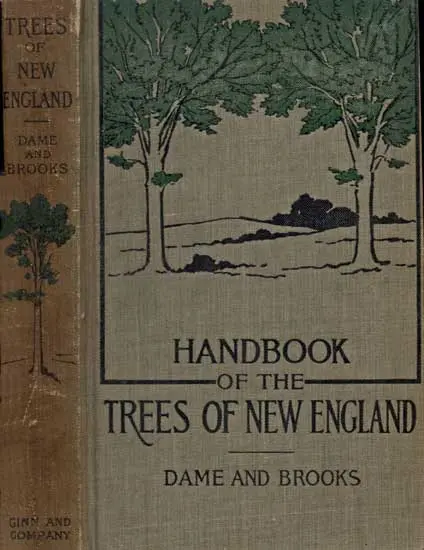
THE CLASSIC COLLECTION · 1901
"Handbook of the Trees of New England" by Lorin Low Dame and Henry M. Brooks is a scientific publication written in the early 20th century. This comprehensive guide serves as an illustrated manual for identifying trees native to New England and those established in the region, highlighting their characteristics and geographical distribution. It aims to provide a clear understanding of trees in this specific area, distinguishing between subtropical and boreal species as they coexist. The opening of the handbook establishes the need for an accessible resource on the trees of New England, emphasizing the interplay between various floras found in the region. The authors discuss the characteristics of trees as they transition between their native habitats and how these traits can vary along their geographical range. They outline the organization of the book, detailing how it will categorize trees by their leaf structure and provide information on their habitat, horticultural value, and distribution. The introduction sets the tone for a detailed examination of botanical intricacies and practical utility for both enthusiasts and professionals interested in botany and ecology.
Introduction adapted from the source catalogue; source summaries may be automatically generated.
Free to read · English · 52,631 words · No account needed
MAKE TIME FOR A GOOD BOOK
On by default. Untick to stop anonymous reading totals. Each page counts after 10 seconds in view. How this works.
Anonymous counting is on unless you have switched it off.
=Note.=--Not liable to be taken for any other native maple, but sometimes confounded with the cultivated Norway maple, Acer platanoides, from which it is easily distinguished by the milky juice which exudes from the broken petiole of the latter.
The leaves of the Norway maple are thinner, bright green and glabrous beneath, and its keys diverge in a straight line.
1. Winter buds.
2. Flowering branch.
3. Sterile flower.
4. Fertile flower, part of perianth and stamens removed.
5. Fruiting branch.
=Acer saccharum, Marsh., var. nigrum, Britton.=
Acer nigrum, Michx. Acer saccharinum, var. nigrum, T. & G. Acer barbatum, var. nigrum, Sarg.
=Habitat and Range.=--Low, damp ground on which, in New England at
least, the sugar maple is rarely if ever seen, or upon moist, rocky
slopes.
Apparently a common tree from Ottawa westward throughout Ontario.
The New England specimens, with the exception of those from the Champlain valley, appear to be dubious intermediates between the type and the variety.
Maine,--the Rangeley lake region; New Hampshire,--occasional near the Connecticut river; Vermont,--frequent in the western part in the Champlain valley, occasional in all other sections, especially in the vicinity of the Connecticut; Massachusetts,--occasional in the Connecticut river valley and westward, doubtfully reported from eastern sections; Rhode Island,--doubtful, resting on the authority of Colonel Olney's list; Connecticut,--doubtfully reported.
South along the Alleghanies to the Gulf states; west to the 95th
meridian.
The extreme forms of nigrum show well-marked varietal differences; but there are few, if any, constant characters. Further research in the field is necessary to determine the status of these interesting plants.
=Habit.=--The black maple is somewhat smaller than the sugar maple, the bark is darker and the foliage more sombre. It generally has a symmetrical outline, which it retains to old age.
=Leaves.=--The fully grown leaves are often larger than those of the type, darker green above, edges sometimes drooping, width equal to or exceeding the length, 5-lobed, margin blunt-toothed, wavy-toothed, or entire, the two lower lobes small, often reduced to a curve in the outline, broad at the base, which is usually heart-shaped; texture firm; the lengthening scales of the opening leaves, the young shoots, the petioles, and the leaves themselves are covered with a downy to a densely woolly pubescence. As the parts mature, the woolliness usually disappears, except along the midrib and principal veins, which become almost glabrous.
=Horticultural Value.=--Hardy throughout New England, preferring a moist, fertile, gravelly loam; young trees are rather more vigorous than those of the sugar maple, and easily transplanted. Difficult to secure, for it is seldom offered for sale or recognized by nurseries, although occasionally found mixed with the sugar maple in nursery rows.
Your reading position is saved on this browser. Take it to another device with a library code. Reading pages adapt to text, rather than matching a printed edition.
Henry M. (Henry Mason) Brooks
Henry M. (Henry Mason) Brooks
Henry M. (Henry Mason) Brooks
Henry M. (Henry Mason) Brooks
BEHIND THE BOOK
This eBook is for the use of anyone anywhere in the United States and most other parts of the world at no cost and with almost no restrictions whatsoever. You may copy it, give it away or re-use it under the terms of the Project Gutenberg License included with this eBook or online at www.gutenberg.org. If you are not located in the United States, you will have to check the laws of the country where you are located before using this eBook. Read the source licence.
The original source file, including credits and licence, is retained by this library. Request an original-format copy at no charge. Please include the book title and Project Gutenberg identifier #20467.
KEEP YOUR CURIOSITY GOING
Cécile Tormay

Moritz Busch
John L. Ransom
Frances Wright
Cécile Tormay

Mabel Potter Daggett