THE CLASSIC COLLECTION✦A lovers’ taleCLASSIC FREE BOOKS
A lovers’ tale
Maurice Hewlett
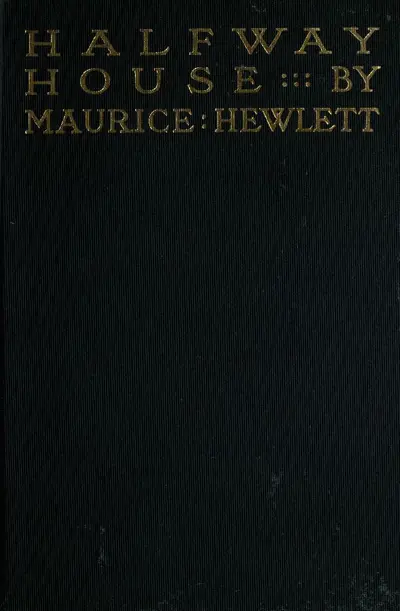
THE CLASSIC COLLECTION · 1908
"Halfway House: A Comedy of Degrees" by Maurice Hewlett is a novel written in the early 20th century. This light-hearted story centers around Mr. John Germain, a distinguished widower of fifty, who unexpectedly falls in love with a young governess named Mary Middleham, who is much younger and of modest means. The novel explores themes of class differences, romance, and the complexities of social interactions in a rural English setting. At the start of the story, Mr. Germain is attending a Sunday-school feast hosted by his sister-in-law, where he observes the children playing. His attention is captured by Mary Middleham, a radiant and charming young governess responsible for teaching the local children. The narrative captures Mr. Germain's initial fascination and burgeoning affection for her, as well as his reflections on her modest life and the implications of their age and social status disparity. The characters' interactions provide a glimpse into their personalities and relationships, setting the stage for the comedic and romantic elements that will unfold throughout the novel.
Introduction adapted from the source catalogue; source summaries may be automatically generated.
Free to read · English · 106,308 words · No account needed
MAKE TIME FOR A GOOD BOOK
On by default. Untick to stop anonymous reading totals. Each page counts after 10 seconds in view. How this works.
Anonymous counting is on unless you have switched it off.
The butler, with a careful hand, placed a rack containing three triangles of toast upon a little table. He poured a cup of chocolate from a porcelain jug, and added that to the feast. The afternoon’s post, upon a salver, was held for Mr. Wilbraham. These things done, he waited until Mr. Germain was in his deep-seated chair. “The ladies are not returned, Sir,” he said, and went his noiseless way.
Mr. Germain, who looked white and had faded eyes, munched his toast in silence. Young Mr. Wilbraham, quick, gentlemanly, pleasantly alert, demolished envelopes and their contents while he ate muffin. Three or four letters he handed to his patron.
“Those look to me personal,” he said. Mr. Germain, having adjusted his pince-nez, inspected the envelopes and put them unopened into his pocket. Toast-munching was resumed, and silence. Once or twice Mr. Germain looked at his watch, once compared it with the hall-clock, but made no other sign.
Wilbraham poured more tea, spread himself honeycomb on bread and butter, and went on with his letters. He broke the silence. “The Association has written again to know whether you have decided. They hope you will come forward. Sir Gregory has gone to Madeira. They say, he’s quite made up his mind.”
Mr. Germain blinked solemnly at space, without reply.
“And I’ve a note here from Mr. Jess—rather, from his secretary. There was a meeting at the Reform on Monday. Your name was mentioned. Mr. Jess hopes that he hasn’t been indiscreet. He referred to the possibility.”
Mr. Germain, without turning his head or ceasing to munch, asked here, Who was Mr. Jess’s private secretary.
“Duplessis,” said brisk Mr. Wilbraham, adding, as if to himself,
“Clever beggar.” After a pause Mr. Germain got up.
“I shall rest for a little, Wilbraham. We will consider these things before dinner. Meantime I will ask you to remember that they are between you and me. Strictly so.”
“Oh, of course! Quite understood,” the friendly young man nodded.
The master of the house had his hand on the library door when a step on the flags of the vestibule caused him to look quickly round. There was a moment during which he could have been observed to hold his breath in suspense. A tall and sumptuously fair lady, free-moving, deep-bosomed, robed in white—all her dresses robed her—came into the hall. She wore a broad-brimmed Tuscan hat, which set about her like a halo, and carried flowers. This was the Honourable Hertha de Speyne, the last of the Cantacutes.
Mr. Germain turned away from his refuge and stood attentive; Wilbraham
jumped to the upright.
Your reading position is saved on this browser. Take it to another device with a library code. Reading pages adapt to text, rather than matching a printed edition.
Maurice Hewlett
Maurice Hewlett
Maurice Hewlett
Maurice Hewlett
BEHIND THE BOOK
This eBook is for the use of anyone anywhere in the United States and most other parts of the world at no cost and with almost no restrictions whatsoever. You may copy it, give it away or re-use it under the terms of the Project Gutenberg License included with this eBook or online at www.gutenberg.org. If you are not located in the United States, you will have to check the laws of the country where you are located before using this eBook. Read the source licence.
The original source file, including credits and licence, is retained by this library. Request an original-format copy at no charge. Please include the book title and Project Gutenberg identifier #59963.
KEEP YOUR CURIOSITY GOING
Coulson Kernahan

Maurice Baring
Frances Wright
Cécile Tormay

Frederic Jesup Stimson

W. H. P. (William Henry Pope) Jarvis