
The Diary of a Goose Girl
Kate Douglas Smith Wiggin
THE CLASSIC COLLECTION · 1903
"Half-A-Dozen Housekeepers: A Story for Girls in Half-A-Dozen Chapters" by Kate Douglas Wiggin is a charming novel written in the early 20th century that captures the whimsical adventures of six schoolgirls. The story centers around Bell Winship and her friends who devise a plan to keep house together at Bell's family cottage during their school break. Emphasizing themes of friendship, independence, and the joys of growing up, the book offers a delightful glimpse into the lives of these young girls as they navigate the challenges and hilarities of housekeeping. At the start of the narrative, we are introduced to the lively atmosphere at the Wareham Female Seminary, where a group of schoolgirls is excitedly planning an experiment in independent living while their teachers anticipate a two-week vacation due to a fire that damaged their recitation hall. Bell, the protagonist, emerges as a leader with a bold idea to invite her five friends over to the cottage to experience household management without adult supervision. The excitement is palpable as they prepare for this adventure, and they eagerly divide household responsibilities, displaying their youthful enthusiasm and creativity. The opening sets the tone for a humorous and heartwarming exploration of youth, domesticity, and friendship.
Introduction adapted from the source catalogue; source summaries may be automatically generated.
Free to read · English · 19,243 words · No account needed
MAKE TIME FOR A GOOD BOOK
On by default. Untick to stop anonymous reading totals. Each page counts after 10 seconds in view. How this works.
Anonymous counting is on unless you have switched it off.
“Stop your nonsense, Jo. You remember, Bell, the evening when we made a comic pantomime of 'Young Lochinvar,' and acted it before the teachers and seniors?”
“Indeed I do,” laughed Bell, in recollection. “We girls took all the characters. What fun it was!”
“Why can't we do that again, changing and improving it, of course? The boys are so clever and bright about anything of the kind that they would be irresistibly funny. What do you think?”
“I like the idea,” exclaimed Patty Weld. “Uncle Harry's large hall would be just the place for it, and the stage is already there.”
“So it is; how fortunate,” agreed Alice; “we couldn't think of anything that would be greater fun. How shall we cast the characters! You must be the bride, Bell, the 'fair Ellen!' you will do it better than anybody. Jo will make up into the funniest old lady for a mother, and the rest of us can be the bride-maidens. Hugh Pennell will be a glorious Young Lochinvar, if he can be persuaded to run away with Bell--” this with a sly glance at her hostess.
“Yes,” said Edith, “and poor Jack will have to be the 'craven bridegroom,' who loses his bride, and Geoff, the stern parent.”
“Uncle Harry will read the poem for us, I know,” continued Bell; “he does that sort of thing often at the church, and does it beautifully. Phil Howard, Royal Lawrence, and Harry will be bridemen. We'll perform the piece in such a tragic way that each separate hair in the audience will stand erect.”
“But, oh, the labor of it, girls!” sighed Patty--“wooden horses to be made for the elopement scene, Scottish dresses, and all sorts of toggery to be hunted up; can we ever do it in time, with our house-cleaning before us?”
“Nonsense, of course we can,” rejoined Bell, energetically. “We will consult every book on private theatricals, Scottish history, manners, and costumes in this house, and Uncle Harry's, too. Let us get up at five to-morrow morning, have a simple breakfast of--”
“Cornmeal mush or dry bread and milk,” finished Lilia, with grim sarcasm. “If time must be saved, of course, it must come out of the cooking! How are we to do this amount of work on a low diet, I should like to know?”
“How are the cooks to get time for anything outside the kitchen if they humor your unnatural appetites! Out of kindness, we propose to lower you gradually, meal by meal, into the pit of boarding-school fare.”
Your reading position is saved on this browser. Take it to another device with a library code. Reading pages adapt to text, rather than matching a printed edition.
Kate Douglas Smith Wiggin
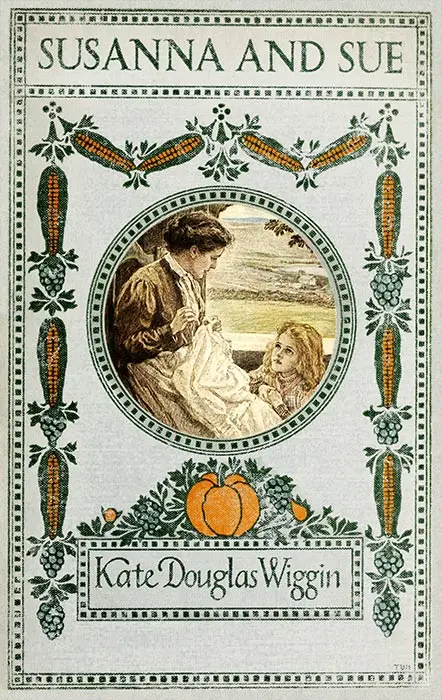
Kate Douglas Smith Wiggin
Kate Douglas Smith Wiggin & Nora Archibald Smith
Kate Douglas Smith Wiggin
BEHIND THE BOOK
This eBook is for the use of anyone anywhere in the United States and most other parts of the world at no cost and with almost no restrictions whatsoever. You may copy it, give it away or re-use it under the terms of the Project Gutenberg License included with this eBook or online at www.gutenberg.org. If you are not located in the United States, you will have to check the laws of the country where you are located before using this eBook. Read the source licence.
The original source file, including credits and licence, is retained by this library. Request an original-format copy at no charge. Please include the book title and Project Gutenberg identifier #54685.
KEEP YOUR CURIOSITY GOING
Coulson Kernahan

Maurice Baring
Frances Wright
Cécile Tormay

Frederic Jesup Stimson

W. H. P. (William Henry Pope) Jarvis