THE CLASSIC COLLECTION✦Two Suffolk FriendsCLASSIC FREE BOOKS
Two Suffolk Friends
Francis Hindes Groome
THE CLASSIC COLLECTION · 1899
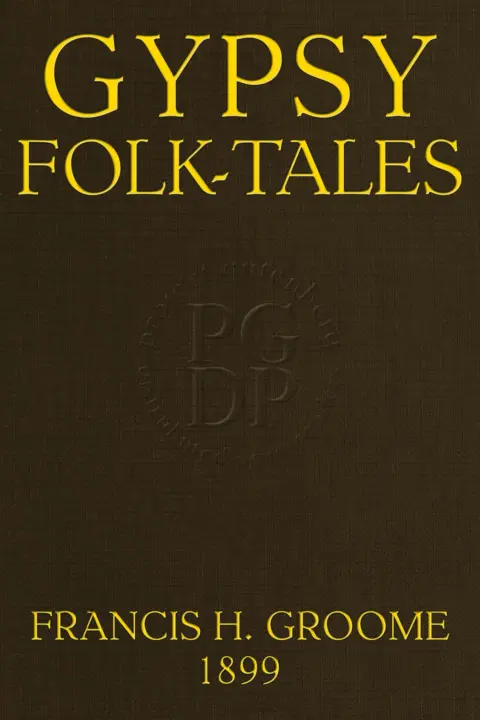
"Gypsy Folk-Tales" by Francis Hindes Groome is a collection of folklore narratives published in the late 19th century. The work seeks to preserve and present various folk-tales from the Gypsy culture, reflecting the rich oral tradition that encompasses a wide range of themes, characters, and moral lessons integral to Gypsy life. Groome’s interest in Gypsy folklore underscores a desire to document these tales, especially in light of their declining interest among folklorists of his time. The opening of "Gypsy Folk-Tales" sets the stage for Groome’s journey into the world of Gypsy culture, mentioning his attempts to engage folklorists in the significance of these stories over the past two decades. In a detailed preface, Groome discusses the widespread presence of Gypsies in Europe, their nomadic history, and the challenges they face as a culture. He pays homage to influential figures in the field of folklore and acknowledges the contributions of various scholars who have supported his efforts. This introduction prepares readers for a deeper exploration of the folk tales themselves, hinting at the cultural tapestry woven throughout the narratives that follow.
Introduction adapted from the source catalogue; source summaries may be automatically generated.
Free to read · English · 158,354 words · No account needed
MAKE TIME FOR A GOOD BOOK
On by default. Untick to stop anonymous reading totals. Each page counts after 10 seconds in view. How this works.
Anonymous counting is on unless you have switched it off.
‘Not likely I should tell you. Strip yourself,’ said the lad to the maiden. The maiden stripped herself.
‘Tell me it.’ Then he told her.
The maiden clapped her hands; her servants came, took the maiden, and let her go. The maiden was wearing the lad’s sark, and the lad was wearing the maiden’s.
Day broke. They summoned the lad. The lad mounted his horse, and rides to the palace. The people see the lad. ‘’Tis a pity; they’ll kill him.’
He went up, and stood face to face with the king.
‘My daughter has guessed your riddle,’ said the king.
‘How did she guess it, my king? At night when I was asleep, there came a bird to my breast. I caught it, I killed it, I cooked it. Just as I was going to eat it, it flew away.’
The king says, ‘Kill him; he’s wandering.’
‘I am not wandering, my king. I told your daughter the riddle. Your daughter had an underground passage made, and she came to where I was sleeping, came to my arms. I caught her, I stripped her, I took her to my bosom, I told her the riddle. She clapped her hands; her servants came and took her. And if you don’t believe, I am wearing her sark, and she is wearing mine.’
The king saw it was true.
Forty days, forty nights they made a marriage. He took the maiden, went, bought back his father, his mother.
When I translated this story, I deemed it unique, though the Bellerophon letter is a familiar feature in Indian and European folk-tales, and so too is the princess who guesses or propounds riddles for the wager of her hand to the suitors’ heads. She occurs in ‘The Companion’ of Asbjörnsen (Dasent’s Tales from the Fjeld, p. 68, and so in our ‘Jack the Giant-killer,’ cf. p. 3), and in Ralston’s ‘The Blind Man and the Cripple’ (p. 241), of both of which there are Gypsy versions, our Nos. 1 and 24. In Ralston’s story, as here, the princess takes her magic book, her grimoire, and turns over the leaves to find out the answer (cf. also the Welsh-Gypsy tale of ‘The Green Man of Noman’s Land,’ No. 62). Maive Stokes’s Indian Fairy Tales has a story, ‘Rájá Harichand’s Punishment,’ No. 29, p. 225, where a ráni is ‘very wise and clever, for she had a book, which she read continually, called the Kop shástra; and this book told her everything.’ I know myself of a Gypsy woman who told fortunes splendidly out of her ‘magic book’—it was really a Treatise on Navigation, with diagrams. Fortune-tellers with ‘sacred book’ occur in Mary Frere’s Old Deccan Days, p. 261. Now, since translating this story, I find it is largely identical with Campbell’s West Highland tale, ‘The Knight of Riddles,’ No. 22 (ii. p. 36), with which cf. Grimm’s ‘The Riddle,’ No. 22 (i. 100, 368). See also Reinhold Köhler in Orient und Occident (ii. 1864), p. 320.
Your reading position is saved on this browser. Take it to another device with a library code. Reading pages adapt to text, rather than matching a printed edition.
BEHIND THE BOOK
This eBook is for the use of anyone anywhere in the United States and most other parts of the world at no cost and with almost no restrictions whatsoever. You may copy it, give it away or re-use it under the terms of the Project Gutenberg License included with this eBook or online at www.gutenberg.org. If you are not located in the United States, you will have to check the laws of the country where you are located before using this eBook. Read the source licence.
The original source file, including credits and licence, is retained by this library. Request an original-format copy at no charge. Please include the book title and Project Gutenberg identifier #71092.
KEEP YOUR CURIOSITY GOING

Maurice Baring
Francis Greenleaf Allinson & Anne C. E. (Anne Crosby Emery) Allinson
Stuart Dodgson Collingwood
Percy Keese Fitzhugh
Mary Macleod & Edmund Spenser

Cooke Don-Carlos