THE CLASSIC COLLECTION✦Two Suffolk FriendsCLASSIC FREE BOOKS
Two Suffolk Friends
Francis Hindes Groome
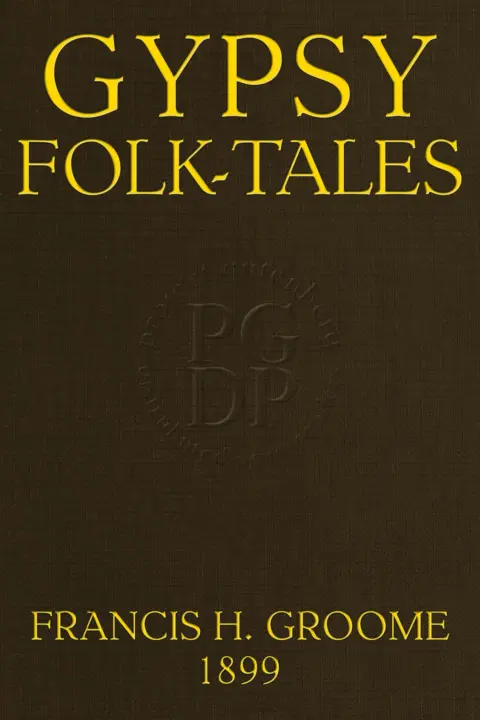
THE CLASSIC COLLECTION · 1899
"Gypsy Folk-Tales" by Francis Hindes Groome is a collection of folklore narratives published in the late 19th century. The work seeks to preserve and present various folk-tales from the Gypsy culture, reflecting the rich oral tradition that encompasses a wide range of themes, characters, and moral lessons integral to Gypsy life. Groome’s interest in Gypsy folklore underscores a desire to document these tales, especially in light of their declining interest among folklorists of his time. The opening of "Gypsy Folk-Tales" sets the stage for Groome’s journey into the world of Gypsy culture, mentioning his attempts to engage folklorists in the significance of these stories over the past two decades. In a detailed preface, Groome discusses the widespread presence of Gypsies in Europe, their nomadic history, and the challenges they face as a culture. He pays homage to influential figures in the field of folklore and acknowledges the contributions of various scholars who have supported his efforts. This introduction prepares readers for a deeper exploration of the folk tales themselves, hinting at the cultural tapestry woven throughout the narratives that follow.
Introduction adapted from the source catalogue; source summaries may be automatically generated.
Free to read · English · 158,354 words · No account needed
MAKE TIME FOR A GOOD BOOK
On by default. Untick to stop anonymous reading totals. Each page counts after 10 seconds in view. How this works.
Anonymous counting is on unless you have switched it off.
‘Another surprise was in store for me. On asking them where they got this language from, one of the men said, “We got it from our grandfather. He could speak it much better than we can,” and then volunteered the information that this grandfather was a keeper to the Duke of Argyll, and had supplied Campbell of Islay with many of the Sgeulachdan in his Highland Tales. This must be either the John M’Donald, travelling tinker, referred to by Mr. MacRitchie in his article on the “Irish Tinkers and their Language” (Oct. 1889, p. 354), or a relation of his. An account of this family will be found in the notes to the tale of the “Brown Bear of the Green Glen” (Popular Tales, vol. i. pp. 174–175). It mentions that the father had served in the Forty-Second. Had he brought back this word moorghee with him from India? One of the sons is mentioned as being a keen sportsman. No hint is given, however, of their knowing any language but Gaelic. It would probably have astonished Campbell of Islay to find that they were masters of four tongues—Gaelic, Shelta, English, and Rommanis. It may be noticed that the accounts of occupation do not quite tally, as these tinklers distinctly stated that their grandfather was one of Argyll’s keepers. I should like to know whether any of the sons did actually hold such a post. This is all I could learn in an interview of, at the most, twenty minutes.’
Dr. Ranking, my friend for a quarter of a century, has a thorough knowledge of Rómani; I would trust his judgment as I would trust my own. I have never myself come across any Tinklers of the West Coast, but I have met scores in the Lothians and in the Border Country, and my observations on these tally closely with Dr. Ranking’s. The Lowland Tinklers have little or nothing of the Gypsy type, though they have a marked type of their own—a bleached, washed-out, mongrel type; their language has sunk to a mere gibberish, without the least trace of inflection, as different from the Welsh-Gypsy dialect as Pidgin-English from the English of Tennyson. None the less, side by side with such thieves’ cant as mort, woman, dell, girl, beenlightment, daylight, ruffie, devil, and patri, clergyman, that gibberish contains two or three hundred good enough Rómani words, as chúri, knife, drom, road, paúni, water, gad, shirt, and dústa lóvo, plenty money. Nay, a curious point is that it retains a few Rómani words which have been almost or wholly lost in the English and Welsh Gypsy dialects—shúkar, beautiful, háro, sword, klísti, soldier, kálshes, breeches, and pówiski, gun. On the other hand, Scottish thieves’ cant shows a much larger admixture of words of Rómani origin than does the English. We possess no early specimens of Scottish Rómani, but Scotland two centuries since would seem to have had as true Gypsies as any Stanleys or Boswells or Herons south of the Border. But the persecution of the race as a race lasted a hundred years longer in Scotland than in England, and it is probable that, whilst many of its chief members were hanged or drowned or transported to America, others fled southward—one finds to-day the Gaelic Gilderoy (‘red lad’) a Christian name among English Gypsies, and such surnames as Baillie, Gregory, and Marshall. Those who remained behind must have intermarried largely with Scottish vagrants, Irish vagrants, gangrel bodies generally: the Gypsy stream broadened out, and became correspondingly shallow. Nowadays, then, it is difficult to say of the Faa-Blyths, Taits, Norrises, Baillies, Douglases, or any other of the Tinklers I have met, whether they are more Gypsies or Gentiles; English Gypsies assuredly would not regard them as Gypsies. Still, they have all a dash of the Gypsy, stronger or weaker; and with these boat-dwelling Tinklers, whom Dr. Ranking describes, the dash was decidedly stronger. There can hardly be any doubt that the grandfather whom they spoke of as a keeper to the Duke of Argyll, was John MacDonald the younger, who at Inverary in 1859 had an ambition to become an underkeeper. [24]
Your reading position is saved on this browser. Take it to another device with a library code. Reading pages adapt to text, rather than matching a printed edition.
BEHIND THE BOOK
This eBook is for the use of anyone anywhere in the United States and most other parts of the world at no cost and with almost no restrictions whatsoever. You may copy it, give it away or re-use it under the terms of the Project Gutenberg License included with this eBook or online at www.gutenberg.org. If you are not located in the United States, you will have to check the laws of the country where you are located before using this eBook. Read the source licence.
The original source file, including credits and licence, is retained by this library. Request an original-format copy at no charge. Please include the book title and Project Gutenberg identifier #71092.
KEEP YOUR CURIOSITY GOING

Maurice Baring
Francis Greenleaf Allinson & Anne C. E. (Anne Crosby Emery) Allinson
Stuart Dodgson Collingwood
Percy Keese Fitzhugh
Mary Macleod & Edmund Spenser

Cooke Don-Carlos