THE CLASSIC COLLECTION✦Two Suffolk FriendsCLASSIC FREE BOOKS
Two Suffolk Friends
Francis Hindes Groome
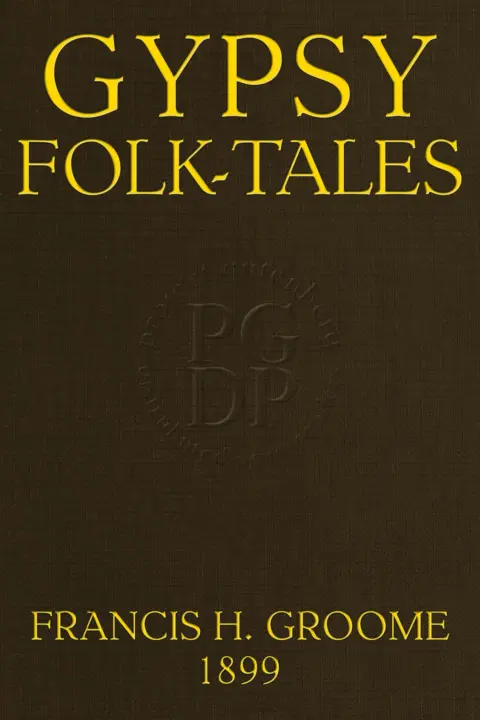
THE CLASSIC COLLECTION · 1899
"Gypsy Folk-Tales" by Francis Hindes Groome is a collection of folklore narratives published in the late 19th century. The work seeks to preserve and present various folk-tales from the Gypsy culture, reflecting the rich oral tradition that encompasses a wide range of themes, characters, and moral lessons integral to Gypsy life. Groome’s interest in Gypsy folklore underscores a desire to document these tales, especially in light of their declining interest among folklorists of his time. The opening of "Gypsy Folk-Tales" sets the stage for Groome’s journey into the world of Gypsy culture, mentioning his attempts to engage folklorists in the significance of these stories over the past two decades. In a detailed preface, Groome discusses the widespread presence of Gypsies in Europe, their nomadic history, and the challenges they face as a culture. He pays homage to influential figures in the field of folklore and acknowledges the contributions of various scholars who have supported his efforts. This introduction prepares readers for a deeper exploration of the folk tales themselves, hinting at the cultural tapestry woven throughout the narratives that follow.
Introduction adapted from the source catalogue; source summaries may be automatically generated.
Free to read · English · 158,354 words · No account needed
MAKE TIME FOR A GOOD BOOK
On by default. Untick to stop anonymous reading totals. Each page counts after 10 seconds in view. How this works.
Anonymous counting is on unless you have switched it off.
Komodromoi.
What it was first directed my attention to the Komodromoi of Byzantine writers I cannot be positive, but I am pretty sure it was something somewhere in Pott. Not in any of the 1034 pages of his Zigeuner in Europa und Asien (2 vols., Halle, 1844–45), for I have once more gone through that stupendous work, but perhaps in a letter, perhaps in a conversation, or perhaps in one of his contributions to the Zeitschrift der Deutschen Morgenländischen Gesellschaft. Anyhow, I am sure no work hitherto on the Gypsies has cited this extract from Du Cange’s Glossarium ad Scriptores Mediæ et Infimæ Græcitatis (Paris, 1688):—
‘κωμοδρόμοι, interdum κομοδρόμοι, Circulatores, atque adeò Fabri ærarij qui per pagos cursitant: ut hodie passim apud nos, quos Chaudroniers dicimus. Lexicon MS. ad Schedographiam:
Βαβαὶ, θαυμαστικόν ἐστι, Βάναυσος, ὁ χαλκεύς τε, Καὶ χρυσοχόος, λέγεται, ἀλλὰ καὶ κωμοδρόμος.
Glossæ Græcobarb. Ἀκμὼν, σίδηρον ἐφ’ ᾧ χαλκεὺς χαλκεύει, ἤγουν ἀκμόνιν ὁπου κομοδρομεύει ὁ κομοδρόμος. Alibi, Ἀκροφύσια, τὰ ἄκρα τῶν ἀσκῶν, ἐν οἷς οἰ χαλκεῖς τὸ πῦρ ἐκφυσῶσιν· αἱ ἄκραι, ἤγουν ἡ ἄκρες τῶν ἀσκῶν ἤ ἀσκιῶν, μεθ’ αἷς ὁποίαις φυσοῦσιν οἱ κομοδρόμοι τὴν φωτίαν. Theophanes, an. 17 Justiniani: τὶς ἐκ τῶν Ἰταλῶν χῶρας κομοδρόμος,—ἔχων μεθ’ ἑαυτο͂υ κύνα ξανθὸν καὶ τυφλὸν, etc. Constantinus de Adm. Imp. c. 50, p. 182, καὶ ἀπὸ τοῦ θέματος τῶν Ἀρμενιακῶν εἰς τὸ τοῦ Χαρσιανοῦ θέμα μετέθησαν ταῦτα τὰ βάνδα, ἤτοι ἡ τοῦ κομοδρόμου τοποτηρεσία Ταβίας, καὶ εἰς τὴν τούρμαν τοῦ Χαρσιανοῦ τὴν εἰρημένην προσετέθησαν. Anonymus de Passione Domini: καὶ ὅτε φθάσωσιν εἰς τὸν τόπον, ἐλθὼν ὁ κομοδρόμος ἀς σταυρώσει αὐτὸν, etc. Occurrit præterea in Annalib. Glycæ.’
Dictionaries are not as a rule lively reading; but every line almost in this extract has its interest. Komodromos, ‘village-roamer,’ is certainly a vague term, but no vaguer than landlooper, which does in Dutch stand for ‘Gypsy,’ as landlouper does for ‘vagrant’ in Lowland Scotch. Du Cange’s own definition of komodromoi as roamers (circulatores) and coppersmiths who rove about the country, like those in our midst whom we call Chaudronniers, must have been meant by him to apply to Gypsies, and to Gypsies only. The modern Roumanian and Hungarian Gypsies are divided into certain classes—Caldarari (chaudronniers or caldron-smiths), Aurari (gold-workers), etc.; and Bataillard’s note prefixed to most of his monographs runs—‘L’auteur recevrait avec reconnaissance toute communication relative aux Bohémiens hongrois voyageant hors de leur pays (vrais nomades pourvus de tentes et de chariots, la plupart chaudronniers).’ Next, the six passages quoted by Du Cange show that the komodromos was variously or conjointly a coppersmith (chalkeus) and a gold-worker (chrysochoos, defined by Du Cange as ‘aurifer, aurarius’). The Gypsy Aurari have practised gold-washing in Wallachia and Transylvania from time immemorial (Grellmann, Die Zigeuner, 2nd ed. 1787, pp. 105–112); but we have also many indications of the Gypsies as actual goldsmiths. Captain Newbold says that the Persian Gypsies ‘sometimes practise the art of the gold and silver smith, and are known to be forgers of the current coin of Persia. These are the zergars (lit. “workers in gold”) of the tribe’ (Jour. Roy. Asiatic Soc., vol. xvi. 1856, p. 310). The Egyptian Gypsies, he tells us, at Cairo ‘carry on the business of tinkers and blacksmiths, and vend ear-rings, amulets, bracelets, and instruments of iron and brass’ (ib. p. 292). The Gypsy bronze and brass founders of Western Galicia and the Bukowina—the only Gypsy metallurgists of whom, thanks to Kopernicki, we possess really full information—are called Zlotars and Dzvonkars, Ruthenian words meaning ‘goldsmiths’ and ‘bell-makers.’ They are no longer workers in gold, but they do make rings, crosses, clasps, ear-rings, etc., of brass and German silver (Bataillard, Les Zlotars, 1878, 70 pages). Henri van Elven, in ‘The Gypsies in Belgium’ (Gypsy Lore Journal, ii. 139), says: ‘The women wear bracelets and large earrings of gold, copper, or bronze, seldom of silver; while all the Gypsies wear earrings [cf. supra, p. xii.]. It appears to me that the Gypsy jewels and the metal-work of their pipes have not yet been sufficiently studied. In the fabrication of these objects they must have preserved something typical and antique, which would contribute to the comparative study of their ancient industries. I remember seeing some rings, cast in bronze, of which the setting was ornamented with a double or a single cross, and whose ornamentation recalled the motifs of the Middle Ages, the style being evidently Oriental. Their walking-sticks are topped with copper or bronze hatchets, but more frequently with round knobs, which are hollow, and which hold their money, the lid being screwed off and on. These Gypsies were tin-workers, repairing metal utensils, and also basket-makers.’ The Gypsies, says Dr. R. W. Felkin, ‘appear to be on friendly terms with the natives of the country, and curiously enough they are said to have introduced the art of filigree work and gold-beating into Darfûr’ (‘Central African Gypsies,’ Gypsy Lore Journal, i. 221). Even the Brazilian Gypsies of 1816, as we have seen from Koster’s Travels, sold gold and silver trinkets.
Your reading position is saved on this browser. Take it to another device with a library code. Reading pages adapt to text, rather than matching a printed edition.
BEHIND THE BOOK
This eBook is for the use of anyone anywhere in the United States and most other parts of the world at no cost and with almost no restrictions whatsoever. You may copy it, give it away or re-use it under the terms of the Project Gutenberg License included with this eBook or online at www.gutenberg.org. If you are not located in the United States, you will have to check the laws of the country where you are located before using this eBook. Read the source licence.
The original source file, including credits and licence, is retained by this library. Request an original-format copy at no charge. Please include the book title and Project Gutenberg identifier #71092.
KEEP YOUR CURIOSITY GOING

Maurice Baring
Francis Greenleaf Allinson & Anne C. E. (Anne Crosby Emery) Allinson
Stuart Dodgson Collingwood
Percy Keese Fitzhugh
Mary Macleod & Edmund Spenser

Cooke Don-Carlos