
The Gates Ajar
Elizabeth Stuart Phelps
THE CLASSIC COLLECTION · 1894
"Gypsy Breynton" by Elizabeth Stuart Phelps is a novel written in the late 19th century. The story revolves around a spirited young girl named Gypsy Breynton, who embodies the lively and adventurous essence of childhood. As she navigates her world, Gypsy is characterized by her impulsiveness and mischief, contrasting with the conventional expectations of her family and societal norms. The book captures the trials and tribulations of growing up through the lens of Gypsy's carefree spirit. The opening of the novel introduces Gypsy's chaotic yet vibrant existence as she lives with her family, particularly showcasing her interactions with her older brother Tom and her playful nature, which often leads to trouble. The reader is presented with a vivid portrayal of Gypsy's bedroom, filled with disarray and personality, symbolizing her untamed character. Early scenes highlight her playful relationship with Tom, her zest for outdoor adventures, and the humorous chaos she brings into her family's life. The narration captures Gypsy's charm and her struggle to conform to the ideals of order and neatness, setting the tone for her character development throughout the story.
Introduction adapted from the source catalogue; source summaries may be automatically generated.
Free to read · English · 39,410 words · No account needed
MAKE TIME FOR A GOOD BOOK
On by default. Untick to stop anonymous reading totals. Each page counts after 10 seconds in view. How this works.
Anonymous counting is on unless you have switched it off.
"I guess she is," said Gypsy, with an emphasis. "Oh, I am so glad to get home. Where's the kitty, and how's Peace Maythorne and everybody, and Winnie has a new jacket, hasn't he?"
Mr. and Mrs. Breynton exchanged glances. They saw that something was wrong; but wisely considered that that time was not the one for making any inquiries into the matter. Mrs. Breynton thought, also, that if Gypsy had been guilty of ill-temper or rudeness, she would confess it herself. She was right; for as soon as dinner was over, Gypsy called her away alone, and told her all the story. They were shut up together a long time, and when Gypsy came out her eyes were red with crying.
All that Mrs. Breynton said does not matter here; but Gypsy is not likely soon to forget it. A few words spoken, just as the conversation ended, became golden mottoes that helped her over many rough places in her life.
"It is all the old trouble, Gypsy,--you 'didn't think.' A little self-control, a moment's quiet thought, would have saved all this."
"Oh, I know it!" sobbed Gypsy. "That's what always ails me. I'm always doing things, and always sorry for them. I mean to do right, and I cannot remember. What shall I do with myself, mother?"
"Gypsy," said her mother, very soberly, "this will never do. You can think. And Gypsy, my child, in every one of these little thoughtless words and acts God sees a sin."
"A sin when you didn't think?" exclaimed Gypsy.
"You must learn to think, Gypsy; and He will teach you."
Her mother kissed her many times, and Gypsy clung to her neck, and was very still. Whatever thoughts she had just then, she never told them to any one.
The afternoon passed away like a merry dream. Gypsy was so happy that she had had the talk with her mother; so glad to be kissed and forgiven and loved and helped; to find every one so pleased to see her back, and home so dear, and the mountains so blue and beautiful, and the sunlight so bright, that she scarcely knew whether she were asleep or awake. She must hunt up the kitten, and feed the chickens, and take a peep at the cow, and stroke old Billy in his stall; she must see how many sweet peas were left on the vines, and climb out on the shed-roof that had been freshly shingled since she was gone, and run down to the Kleiner Berg, and over to see Sarah Rowe. She must know just what Tom had been doing this interminable week, just how many buttons Winnie had lost off from his jacket, and what kind of pies Patty had baked for dinner. She must kiss her mother twenty times an hour, and pull her father's whiskers, and ride Winnie on her shoulder. Best of all, perhaps, it was to run down to Peace Maythorne's, and find the sunlight golden in the quiet room, and the pale face smiling on the pillow; to hear the gentle voice, when the door opened, say, "Oh, Gypsy!" in such a way,--as no other voice ever said it; and then to sit down and lay her head upon the pillow by Peace, and tell her all that had happened.
Your reading position is saved on this browser. Take it to another device with a library code. Reading pages adapt to text, rather than matching a printed edition.
Elizabeth Stuart Phelps
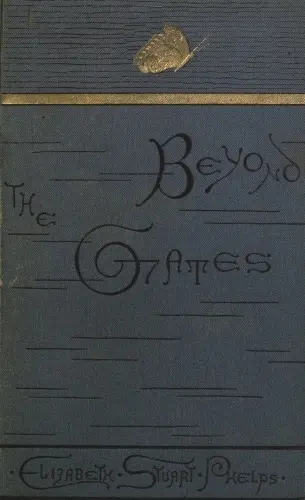
Elizabeth Stuart Phelps
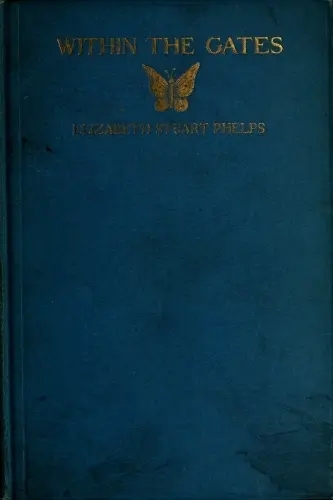
Elizabeth Stuart Phelps
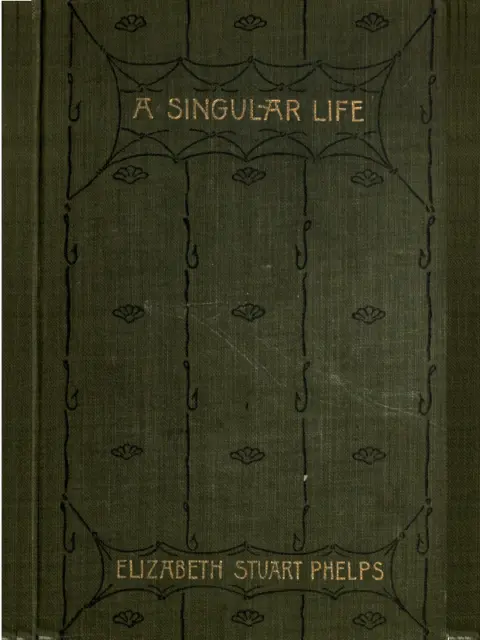
Elizabeth Stuart Phelps
BEHIND THE BOOK
This eBook is for the use of anyone anywhere in the United States and most other parts of the world at no cost and with almost no restrictions whatsoever. You may copy it, give it away or re-use it under the terms of the Project Gutenberg License included with this eBook or online at www.gutenberg.org. If you are not located in the United States, you will have to check the laws of the country where you are located before using this eBook. Read the source licence.
The original source file, including credits and licence, is retained by this library. Request an original-format copy at no charge. Please include the book title and Project Gutenberg identifier #18582.
KEEP YOUR CURIOSITY GOING
Coulson Kernahan

Maurice Baring
Frances Wright
Cécile Tormay

Frederic Jesup Stimson

W. H. P. (William Henry Pope) Jarvis