THE CLASSIC COLLECTION✦The House of the ArrowCLASSIC FREE BOOKS
The House of the Arrow
A. E. W. (Alfred Edward Woodley) Mason
THE CLASSIC COLLECTION · 1910
"Green Stockings: A Comedy in Three Acts" by A. E. W. Mason is a theatrical play written in the early 20th century. The narrative centers around the lives and relationships of the Faraday family, particularly focusing on their eldest daughter, Celia, and her perceived struggles with marriage and societal expectations. The play captures the themes of love, family dynamics, and societal pressures with a comedic tone, reflecting the norms and customs of its time. At the start of the play, the scene is set in the elegant drawing room of the Faraday household, where the characters engage in lively conversation about the return of Celia, who has been away for a week. The dialogue introduces the characters, revealing their personalities and relationships. Phyllis is eager to marry but feels overshadowed by her older sister Celia, whom the others view as a spinster. A sense of urgency develops as it becomes clear that Celia’s presence complicates Phyllis's romantic intentions with Bobby Tarver. As the act unfolds, Celia arrives home drenched from the rain, hinting at her resilience despite her social circumstances and the jokes made about her by the family. The lighthearted banter gradually reveals deeper tensions regarding marriage and independence, setting the stage for Celia's pivotal role in the unfolding comedy and her unconventional approach to navigating her societal constraints.
Introduction adapted from the source catalogue; source summaries may be automatically generated.
Free to read · English · 30,090 words · No account needed
MAKE TIME FOR A GOOD BOOK
On by default. Untick to stop anonymous reading totals. Each page counts after 10 seconds in view. How this works.
Anonymous counting is on unless you have switched it off.
SMITH. (Not hearing it) Oh, damn Wobbles. (Crosses L.) I'm going because---- (The center doors open quickly. GRICE, STEELE, FARADAY, TARVER and PHYLLIS, EVELYN, RALEIGH and AUNT IDA are in the doorway, having come from the left. Conscious of the presence of returning party, SMITH reverts to his tone of solemnity and CELIA bows her head with grief. FARADAY, in doorway, hearing SMITH, turns and raises his hands to quiet the party. GRICE and AUNT IDA have drifted down L. ahead of the others. AUNT IDA sinks wearily into chair by desk.) Hour by hour, he lay on his sick bed, looking out across the--thatched roofs of Berbera to the Arab---- (GRICE sneezes loudly. Turning) Good Lord, what's that! (The others come down in the following order: STEELE, RALEIGH and EVELYN come down R.; PHYLLIS and TARVER up C.; FARADAY to R. of CELIA; MADGE by AUNT IDA'S chair. GRICE has gone down L.C. Some of the party are carrying programs. The doors are left open.) In the midst of our sad communings, how strangely out of place are these revelers.
OMNES. Revelers?
SMITH. They come flushed with new wine.
GRICE. New wine? They dined with me, sir.
CELIA. (Turning to FARADAY) Was the concert a success?
FARADAY. Of course it was. We were there. (Goes up stage.)
GRICE. (Plaintively) We missed you, Celia.
SMITH. Miss Faraday couldn't go without hearing Colonel Smith's last
message.
(AUNT IDA laughs hysterically.)
FARADAY. (Crossing to AUNT IDA. Sternly) Not again, Ida, not
again.
(AUNT IDA relapses into a state of semi-oblivion.)
SMITH. It's not nearly ended yet.
STEELE. Well, she has had over two hours to hear it in.
SMITH. (Scornfully) Two hours? It was a long message. He lay for weeks on his sickbed gazing across the thatched roofs of Berbera to--watching----
RALEIGH. Oh, yes, watching the Arab cows feeding at their anchors.
SMITH. Dhows, man, dhows!
RALEIGH. Well, dhows or cows, I don't care. And as for Smith, I tell you, I am fed with the fellow.
(CELIA explodes into laughter, covers her face with handkerchief, and
sits R. of table.)
STEELE. (Thinking CELIA is crying) You brute! You--you blundering
idiot!
TARVER. (Coming down R. of CELIA) Even now he's dead, he's kept you from the concert to-night. My agent told me that we just shouldn't do it. He expects I will lose by a hundred votes.
FARADAY. How's that?
CELIA. (Looking up quickly) Oh, no, Bobby, it's not too late. We'll help you. (Rises and crosses to SMITH, who is R.)
SMITH. I am at your service, Miss Faraday.
TARVER. (To SMITH, eagerly) And you're some good--aren't you? (Goes up to PHYLLIS, back C.)
Your reading position is saved on this browser. Take it to another device with a library code. Reading pages adapt to text, rather than matching a printed edition.
A. E. W. (Alfred Edward Woodley) Mason
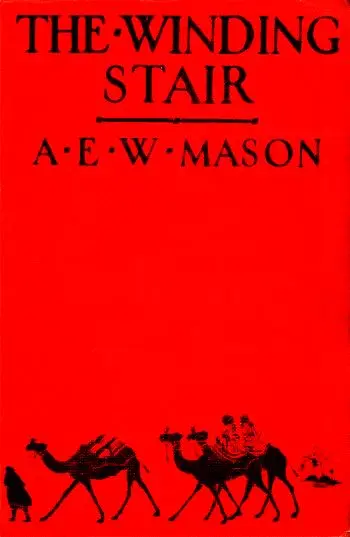
A. E. W. (Alfred Edward Woodley) Mason
A. E. W. (Alfred Edward Woodley) Mason
A. E. W. (Alfred Edward Woodley) Mason
BEHIND THE BOOK
This eBook is for the use of anyone anywhere in the United States and most other parts of the world at no cost and with almost no restrictions whatsoever. You may copy it, give it away or re-use it under the terms of the Project Gutenberg License included with this eBook or online at www.gutenberg.org. If you are not located in the United States, you will have to check the laws of the country where you are located before using this eBook. Read the source licence.
The original source file, including credits and licence, is retained by this library. Request an original-format copy at no charge. Please include the book title and Project Gutenberg identifier #38678.
KEEP YOUR CURIOSITY GOING
Maurice Baring
W. B. (William Butler) Yeats
Edward Martyn

John Brougham & Charlotte Brontë
Marguerite Merington
Leonid Andreyev