THE CLASSIC COLLECTION✦The House of the ArrowCLASSIC FREE BOOKS
The House of the Arrow
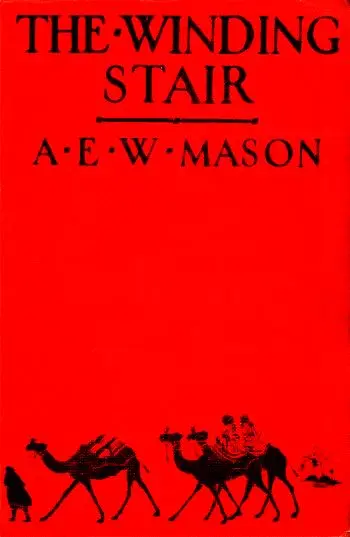
A. E. W. (Alfred Edward Woodley) Mason
THE CLASSIC COLLECTION · 1910
"Green Stockings: A Comedy in Three Acts" by A. E. W. Mason is a theatrical play written in the early 20th century. The narrative centers around the lives and relationships of the Faraday family, particularly focusing on their eldest daughter, Celia, and her perceived struggles with marriage and societal expectations. The play captures the themes of love, family dynamics, and societal pressures with a comedic tone, reflecting the norms and customs of its time. At the start of the play, the scene is set in the elegant drawing room of the Faraday household, where the characters engage in lively conversation about the return of Celia, who has been away for a week. The dialogue introduces the characters, revealing their personalities and relationships. Phyllis is eager to marry but feels overshadowed by her older sister Celia, whom the others view as a spinster. A sense of urgency develops as it becomes clear that Celia’s presence complicates Phyllis's romantic intentions with Bobby Tarver. As the act unfolds, Celia arrives home drenched from the rain, hinting at her resilience despite her social circumstances and the jokes made about her by the family. The lighthearted banter gradually reveals deeper tensions regarding marriage and independence, setting the stage for Celia's pivotal role in the unfolding comedy and her unconventional approach to navigating her societal constraints.
Introduction adapted from the source catalogue; source summaries may be automatically generated.
Free to read · English · 30,090 words · No account needed
MAKE TIME FOR A GOOD BOOK
On by default. Untick to stop anonymous reading totals. Each page counts after 10 seconds in view. How this works.
Anonymous counting is on unless you have switched it off.
GRICE. Bobby will be delighted to take away his Atlas. (MARTIN enters L.I with copy of the "London Times" and a small folded periodical on salver.) Tarver, geography, eight o'clock sharp. Dinner, eight fifteen. (Turns to table.)
MARTIN. The Times, sir.
FARADAY. At last.
GRICE. Ah, the Times!
AUNT IDA. (Rising in alarm and backing up stage from chair. GRICE takes her place in chair.) Oh, the Times, the Times!
TARVER. Oh, Phyllis, where is that bottle of Guy's tonic?
PHYLLIS. It is out here, Bobby. (Exit in the morning room.)
TARVER. (Following her) Thanks awfully. I needed it badly.
(MADGE takes periodical and begins to read. FARADAY takes the outer sheet of the Times, pulls it off, and throws it across table. It falls to floor R. of table. GRICE stoops to pick it up. EVELYN takes it from his hand as he rises, saying, "Thank you, Admiral." GRICE looks at her disgustedly and sits twiddling his thumbs. NOTE: The outer sheets of the Times must be stuck together in order to have them fall properly. NOTE: The birth, marriage and death column of the Times is in the upper left hand corner of the first page. EVELYN, MADGE and FARADAY have become absorbed in their papers. GRICE looks about him and then, exasperated, seizes a book and sits R. of table L., reading it.)
FARADAY. (After a pause) I never saw a paper like this. (Strikes
paper with back of his hand.) There is absolutely nothing in this
paper.
(TARVER and PHYLLIS re-enter, go to fender and sit. TARVER has
had his clothes brushed.)
GRICE. I never saw a paper with anything in it. (Pause.) How about
the bye-elections?
FARADAY. (Grunting, absorbed in his paper) Huh! (Long pause.)
EVELYN. (Reading front page) Oh, Madge, Elsie Hardiman is engaged.
MADGE. Not really?
AUNT IDA. (From up stage, comes slightly R.C. Uneasily and
anxiously watching EVELYN) Isn't there--isn't there any other news,
Evelyn?
EVELYN. No, dear.
AUNT IDA. Anybody married?
EVELYN. No one we know.
AUNT IDA. (With a forced attempt at cheerfulness) Or dead?
EVELYN. (Absently. Looking over paper) No, dear. Ab--so--lutely noth---- (Her eye suddenly lights on SMITH'S death notice. She reads it in pantomime. A look of horror comes over her face and she utters a shrill scream.)
(All rise hastily with exclamations.)
FARADAY. (Jumping to his feet) God bless my soul! What's the matter,
what's the matter?
TARVER. Great Scott! What's the matter?
MADGE. What is the matter, Evelyn?
GRICE. (Coming center) Really, Lady Trenchard, you ought not to startle people like that. It's selfish. (Goes to her, takes paper from her limp hand and comes down stage.) What's the news, eh?
Your reading position is saved on this browser. Take it to another device with a library code. Reading pages adapt to text, rather than matching a printed edition.
A. E. W. (Alfred Edward Woodley) Mason
A. E. W. (Alfred Edward Woodley) Mason
A. E. W. (Alfred Edward Woodley) Mason
A. E. W. (Alfred Edward Woodley) Mason
BEHIND THE BOOK
This eBook is for the use of anyone anywhere in the United States and most other parts of the world at no cost and with almost no restrictions whatsoever. You may copy it, give it away or re-use it under the terms of the Project Gutenberg License included with this eBook or online at www.gutenberg.org. If you are not located in the United States, you will have to check the laws of the country where you are located before using this eBook. Read the source licence.
The original source file, including credits and licence, is retained by this library. Request an original-format copy at no charge. Please include the book title and Project Gutenberg identifier #38678.
KEEP YOUR CURIOSITY GOING
Maurice Baring
W. B. (William Butler) Yeats
Edward Martyn

John Brougham & Charlotte Brontë
Marguerite Merington
Leonid Andreyev