THE CLASSIC COLLECTION✦A Christmas Carol The original manuscriptCLASSIC FREE BOOKS
A Christmas Carol The original manuscript
Charles Dickens
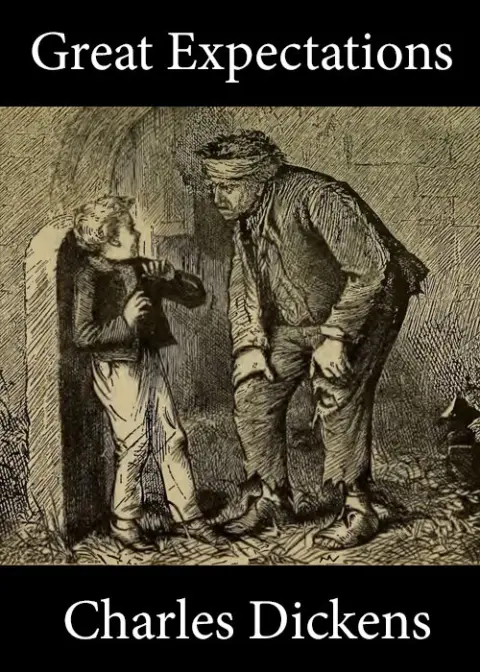
THE CLASSIC COLLECTION · 1861
"Great Expectations" by Charles Dickens is a novel first published serially from 1860 to 1861. The story follows Pip, a young orphan living with his sister and her blacksmith husband on England's coastal marshes. After a terrifying encounter with an escaped convict and strange visits to the bitter Miss Havisham and her cold adopted daughter Estella, Pip's life transforms when he mysteriously receives a fortune from an unknown benefactor. This bildungsroman explores wealth and poverty, love and rejection, through vivid characters and dramatic scenes that have captivated readers for generations.
Introduction adapted from the source catalogue; source summaries may be automatically generated.
Free to read · English · 187,831 words · No account needed
MAKE TIME FOR A GOOD BOOK
On by default. Untick to stop anonymous reading totals. Each page counts after 10 seconds in view. How this works.
Anonymous counting is on unless you have switched it off.
“Now, whether,” pursued Herbert, “he had used the child’s mother ill, or whether he had used the child’s mother well, Provis doesn’t say; but she had shared some four or five years of the wretched life he described to us at this fireside, and he seems to have felt pity for her, and forbearance towards her. Therefore, fearing he should be called upon to depose about this destroyed child, and so be the cause of her death, he hid himself (much as he grieved for the child), kept himself dark, as he says, out of the way and out of the trial, and was only vaguely talked of as a certain man called Abel, out of whom the jealousy arose. After the acquittal she disappeared, and thus he lost the child and the child’s mother.”
“I want to ask—”
“A moment, my dear boy, and I have done. That evil genius, Compeyson, the worst of scoundrels among many scoundrels, knowing of his keeping out of the way at that time and of his reasons for doing so, of course afterwards held the knowledge over his head as a means of keeping him poorer and working him harder. It was clear last night that this barbed the point of Provis’s animosity.”
“I want to know,” said I, “and particularly, Herbert, whether he told you when this happened?”
“Particularly? Let me remember, then, what he said as to that. His expression was, ‘a round score o’ year ago, and a’most directly after I took up wi’ Compeyson.’ How old were you when you came upon him in the little churchyard?”
“I think in my seventh year.”
“Ay. It had happened some three or four years then, he said, and you brought into his mind the little girl so tragically lost, who would have been about your age.”
“Herbert,” said I, after a short silence, in a hurried way, “can you see me best by the light of the window, or the light of the fire?”
“By the firelight,” answered Herbert, coming close again.
“Look at me.”
“I do look at you, my dear boy.”
“Touch me.”
“I do touch you, my dear boy.”
“You are not afraid that I am in any fever, or that my head is much disordered by the accident of last night?”
“N-no, my dear boy,” said Herbert, after taking time to examine me. “You are rather excited, but you are quite yourself.”
“I know I am quite myself. And the man we have in hiding down the river, is Estella’s Father.”
Your reading position is saved on this browser. Take it to another device with a library code. Reading pages adapt to text, rather than matching a printed edition.
Charles Dickens
Samuel McChord Crothers & Charles Dickens
Rebecca Harding Davis & Thomas De Quincey & Charles Dickens & Nathaniel Hawthorne & Edward Bulwer Lytton, Baron Lytton & Edgar Allan Poe & Harriet Elizabeth Prescott Spofford
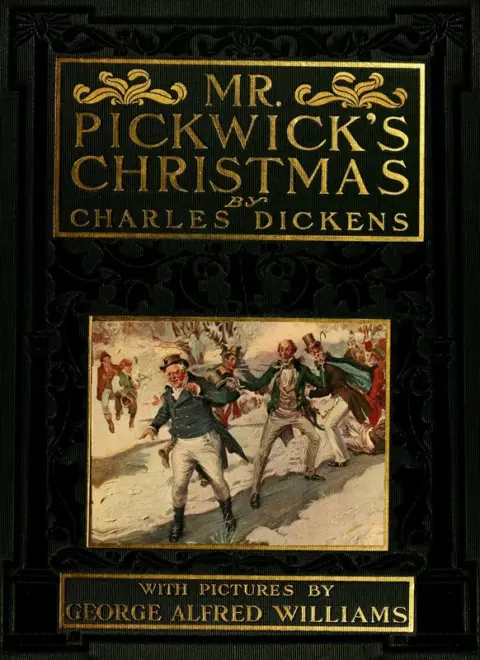
Charles Dickens
BEHIND THE BOOK
This eBook is for the use of anyone anywhere in the United States and most other parts of the world at no cost and with almost no restrictions whatsoever. You may copy it, give it away or re-use it under the terms of the Project Gutenberg License included with this eBook or online at www.gutenberg.org. If you are not located in the United States, you will have to check the laws of the country where you are located before using this eBook. Read the source licence.
The original source file, including credits and licence, is retained by this library. Request an original-format copy at no charge. Please include the book title and Project Gutenberg identifier #1400.
KEEP YOUR CURIOSITY GOING
Coulson Kernahan

Maurice Baring
Frances Wright
Cécile Tormay

Frederic Jesup Stimson

W. H. P. (William Henry Pope) Jarvis