THE CLASSIC COLLECTION✦An outlaw’s diary: the CommuneCLASSIC FREE BOOKS
An outlaw’s diary: the Commune
Cécile Tormay
THE CLASSIC COLLECTION · 1890
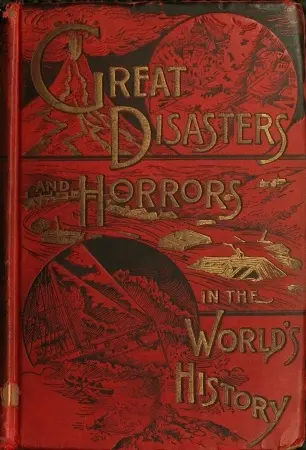
"Great Disasters and Horrors in the World's History" by Allen Howard Godbey is a historical account written in the late 19th century. The work compiles significant calamities that have afflicted humanity across different eras, both on land and at sea, presenting a vivid portrayal of disasters such as tornadoes, floods, earthquakes, and volcanic eruptions. This book aims to explore not only the events themselves but also the principles governing these natural calamities, emphasizing human responses and heroism in the face of adversity. The opening of this account sets the tone for the exploration of natural disasters, beginning with a deep dive into the myths and personifications associated with winds in ancient cultures. Godbey reflects on how human understanding has transformed from mystical interpretations to a more scientific grasp of atmospheric phenomena. The author aims to illustrate the laws of nature that govern storms and earthquakes while intertwining thrilling narratives of previous calamities. Through this introduction, readers are prepared for a robust examination of not only the horrors wrought by nature but also the indomitable spirit of humanity that shines through in the aftermath of such events.
Introduction adapted from the source catalogue; source summaries may be automatically generated.
Free to read · English · 145,118 words · No account needed
MAKE TIME FOR A GOOD BOOK
On by default. Untick to stop anonymous reading totals. Each page counts after 10 seconds in view. How this works.
Anonymous counting is on unless you have switched it off.
“There are the very ruts which were made by the wheels of chariots, flying, perhaps, from the impending ruin; there are water-pipes, in the cavities of which, sealed by the hand of time, the splashing fluid can still be heard; there are rude and grotesque inscriptions, scratched by some loiterer on the stucco, and as fresh as when they excited the mirth of the passer-by; there are egg-shells, bones of fish and chickens, and other fragments of a repast of which skeletons lying near were partaking when the catastrophe overwhelmed them; there is fuel ready to be supplied to furnaces for heating the baths; there are the stains left upon the counters of drinking shops by wet glasses; there are the vials of the apothecary, still containing the fluids he was wont to dispense; there are ovens in which loaves of bread, carbonized, but otherwise perfect, may yet be seen; there are vases with olives still swimming in oil, the fruit retaining its flavor, and the oil
burning readily when submitted to the flame; there are shelves, on which are piled stores of raisins, figs and chestnuts; there are amphorae containing the rare wine for which Campania was so famous.”
Here you saw a new altar of white marble, wondrously beautiful, just from the hands of the sculptor; “an enclosure was building all round; the mortar just dashed against the side of the wall was but half spread out; you saw the long, sliding stroke of the trowel about to return and obliterate its own track; but it never returned; the hand of the workman was suddenly arrested, and the whole looks so fresh and new that you would almost swear that the mason had only gone to his dinner, and about to come back immediately to smooth the roughness.”
The younger Pliny tells us of his uncle’s death, and of the suddenness of the calamity. The people were in the amphitheater when the volcano burst forth. The elder Pliny, in command of the fleet at Misenum, was called by his sister to notice a strange cloud that had just appeared. He had just returned from a walk, bathed, and gone to his study. This was August 24, A. D. 79, about 1 P.M. The dense cloud occasionally glowed with light; again, it was of inky blackness. It was the “pine tree banner,” since become so familiar to the Neapolitans. Pliny at once started for his galleys, determined to have a closer view of the strange scene. As he went to the shore he received a note from a lady who lived at the base of the mountain, urging him to come to her assistance. He set out at once to render what aid he could; “for the villas stood extremely thick upon that lovely coast.” They neared the mount; cinders, pumice, ashes, and glowing stones fell on and among the vessels. Sternly ordering the frightened crew to press on, Pliny stood in the bow of his vessel, calmly dictating notes and observations on the awful scene. Reaching Stabiae, he found a friend in great fear, preparing for flight, and waiting for a change of wind. Pliny ordered baths, and sat calmly down to supper, assuring his friend that the lurid flames on the mountain sides were but villages fired by the heated stones. Retiring to rest, his anxious friends heard him snoring. Finding they were about to be entombed in the falling cinders, they roused him, and all, tying pillows on their heads as protection from the showers of stones, sought the seashore; but the waves ran too high for them to embark. It was still dark as Erebus in the limit of the cloud, though already broad day. Drinking some water, Pliny stretched himself on a mat; but an unusual rush of sulphurous vapor compelled the company to disperse, and two servants assisted him to rise, but he at once fell back dead. Perhaps the noxious vapors were in greater quantity near the ground. His nephew tells us he always had weak lungs. The company fled. Three days later, Pliny’s body was found “looking more like a man asleep than dead.” At Misenum, fourteen miles away, the earth was constantly and violently shaken. Houses were toppling down. Chariots could not be steadied, even by supporting them with large stones. The sea rushed back, leaving many marine animals stranded high and dry. The dark cloud on Vesuvius flamed and roared. The cloud enveloped Misenum and spread to Capreæ. “Nothing was to be heard but the shrieks of women and children, and the cries of men; some were calling for their children, others for their parents, others for their husbands, and only distinguishing each other by their voices; one was lamenting his own fate, another that of his family; some wished to die that they might escape the dreadful fear of death; but the greater part imagined that the last and eternal night was come, which was to destroy the gods and the world together.” Then came the flash of flames; then darkness and ashes, blinding, crushing, burying. Stabiae also was buried. But the destruction of the two great cities is given no word; it was sudden and complete. The ruins show they were shattered by an earthquake. Then showers of broken lava rushed upon Herculaneum; while Pompeii, farther away, was reached only by the cinder-showers. Dion Cassius tells us the people were seated in the theatres when the shock came.
Your reading position is saved on this browser. Take it to another device with a library code. Reading pages adapt to text, rather than matching a printed edition.
BEHIND THE BOOK
This eBook is for the use of anyone anywhere in the United States and most other parts of the world at no cost and with almost no restrictions whatsoever. You may copy it, give it away or re-use it under the terms of the Project Gutenberg License included with this eBook or online at www.gutenberg.org. If you are not located in the United States, you will have to check the laws of the country where you are located before using this eBook. Read the source licence.
The original source file, including credits and licence, is retained by this library. Request an original-format copy at no charge. Please include the book title and Project Gutenberg identifier #51246.
KEEP YOUR CURIOSITY GOING
Cécile Tormay

Moritz Busch
John L. Ransom
Frances Wright
Cécile Tormay

Mabel Potter Daggett