THE CLASSIC COLLECTION✦An outlaw’s diary: the CommuneCLASSIC FREE BOOKS
An outlaw’s diary: the Commune
Cécile Tormay
THE CLASSIC COLLECTION · 1890
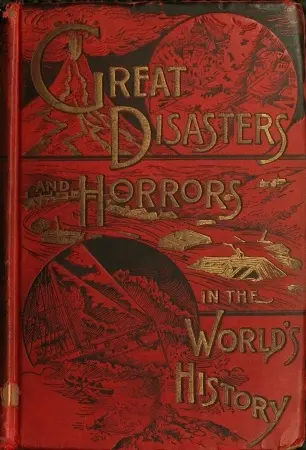
"Great Disasters and Horrors in the World's History" by Allen Howard Godbey is a historical account written in the late 19th century. The work compiles significant calamities that have afflicted humanity across different eras, both on land and at sea, presenting a vivid portrayal of disasters such as tornadoes, floods, earthquakes, and volcanic eruptions. This book aims to explore not only the events themselves but also the principles governing these natural calamities, emphasizing human responses and heroism in the face of adversity. The opening of this account sets the tone for the exploration of natural disasters, beginning with a deep dive into the myths and personifications associated with winds in ancient cultures. Godbey reflects on how human understanding has transformed from mystical interpretations to a more scientific grasp of atmospheric phenomena. The author aims to illustrate the laws of nature that govern storms and earthquakes while intertwining thrilling narratives of previous calamities. Through this introduction, readers are prepared for a robust examination of not only the horrors wrought by nature but also the indomitable spirit of humanity that shines through in the aftermath of such events.
Introduction adapted from the source catalogue; source summaries may be automatically generated.
Free to read · English · 145,118 words · No account needed
MAKE TIME FOR A GOOD BOOK
On by default. Untick to stop anonymous reading totals. Each page counts after 10 seconds in view. How this works.
Anonymous counting is on unless you have switched it off.
One of the best stories illustrating this class of dangers is that of the whaleship Rufus. A whaling vessel in 1774 found an abandoned ship; and on boarding her, found the crew scattered about in the postures assumed when they first yielded to the fatal sleep. The tale, in verse worth
remembering, but seldom or never seen, was told many years ago by an unknown author. The distinctness and simplicity of the style render the poem worth preserving, aside from the interest of the story.
Sing not, my Muse, of brightening fields
Of ether, fair displayed,
Of whispering bowers, where Zephyr yields
His fragrance to the glade
But haste thee to the frozen throne,
The starry blue domain
Where Winter, monarch dread and lone,
Asserts his iron reign.
Now Europe’s northern cape recedes,
And Iceland’s utmost shore;
The sailor turns his face and heeds
Those viewless forms no more.
For mountains, distant yet, but bright,
Edging the arctic tide,
’Neath spiry flames of dancing light,
At masthead are descried.
For see! in glittering points, the coast
Divides; the mountain chain,
On waves afar in silence tossed,
Trembles athwart the main.
Anon, the mariner looks forth,
And scans with cheerless brow,--
Borne onward by the angry North,
An arctic navy now.
“How shall the good ship Rufus speed?
How live?” the master cried;--
“God send us help in time of need,"--
“Amen!” the crew replied.
Each ice-built crag and snowy cliff
Chases the foaming spray;
And, ’mid those moving Alps, the skiff
Must find her destined way.
Her destined way?--Her destined fate!
Now drops the needful gale;
The waves become a glassy plate;
The bark forbears to sail.
Prisoned of God; by mountains pent,--
Fuel and food consumed;--
Ask not of me the dire event,
Nor why they thus were doomed.
Again, borne forth by waves and wind,
Men spread a venturous sail,
’Mid rocks of massy ice to find
The scarce less massy whale.
The optic tube now aids the eye,
And scans the distant sea:
A distant speck they now descry;
A speck--what can it be?
“What can it be?” inquire the men--
“An iceberg, or a sail?”
As yet the crew inquire in vain,
And doubt must yet prevail.
Yes, doubt prevails, and strengthens still,
Though fast the object nears.
“Sure ’tis no sail which at the will
Of winds and billows steers!”
Fancy still limns out forms uncouth,
Yet scarce herself persuades;
But fancy now gives place to truth
More startling than her shades.
A dreary hull, with shattered mast,
And sails of strangest guise,
And cordage fluttering in the blast,
Now meets their wondering eyes.
Your reading position is saved on this browser. Take it to another device with a library code. Reading pages adapt to text, rather than matching a printed edition.
BEHIND THE BOOK
This eBook is for the use of anyone anywhere in the United States and most other parts of the world at no cost and with almost no restrictions whatsoever. You may copy it, give it away or re-use it under the terms of the Project Gutenberg License included with this eBook or online at www.gutenberg.org. If you are not located in the United States, you will have to check the laws of the country where you are located before using this eBook. Read the source licence.
The original source file, including credits and licence, is retained by this library. Request an original-format copy at no charge. Please include the book title and Project Gutenberg identifier #51246.
KEEP YOUR CURIOSITY GOING
Cécile Tormay

Moritz Busch
John L. Ransom
Frances Wright
Cécile Tormay

Mabel Potter Daggett