THE CLASSIC COLLECTION✦The Pilgrim’s Progress by John Bunyan Every Child Can ReadCLASSIC FREE BOOKS
The Pilgrim’s Progress by John Bunyan Every Child Can Read
John Bunyan
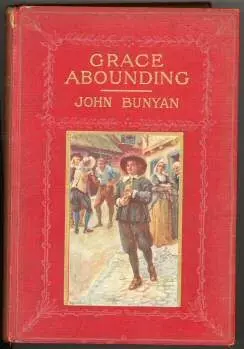
THE CLASSIC COLLECTION · 1666
"Grace Abounding to the Chief of Sinners" by John Bunyan is a theological autobiography written in the late 17th century. This reflective work chronicles Bunyan's profound spiritual journey, particularly emphasizing his struggles with sin, guilt, and the grace of God that ultimately led to his conversion and faith in Jesus Christ. The opening of this work introduces Bunyan's background, detailing his humble upbringing and his early life marked by sin and rebellion against God. He describes the internal turmoil he faced as a child, grappling with fear and haunting thoughts of damnation. As he transitions into adulthood, his life is characterized by a deep exploration of religious matters, driven by various temptations and doubts. Bunyan recounts his initial rejection of faith, despite moments of awareness and fear regarding his sinful state. Throughout this opening portion, his sincere reflections on feeling lost and in despair suggest a candid journey against a backdrop of spiritual awakening and highlight the significant role of divine mercy in his eventual redemption.
Introduction adapted from the source catalogue; source summaries may be automatically generated.
Free to read · English · 57,738 words · No account needed
MAKE TIME FOR A GOOD BOOK
On by default. Untick to stop anonymous reading totals. Each page counts after 10 seconds in view. How this works.
Anonymous counting is on unless you have switched it off.
Wom. At which Chester again seemed to be in a chafe, and put off his hat, and as she thought, scratched his head for anger: but when I saw, said she, that there was no prevailing to have my husband sent for, though I often desired them that they would send for him, that he might speak for himself; telling them, that he could give them better satisfaction than I could, in what they demanded of him, with several other things, which now I forget; only this I remember, that though I was somewhat timorous at my first entrance into the chamber, yet before I went out, I could not but break forth into tears, not so much because they were so hard-hearted against me, and my husband, but to think what a sad account such poor creatures will have to give at the coming of the Lord, when they shall there answer for all things whatsoever they have done in the body, whether it be good, or whether it be bad.
So, when I departed from them, the book of statutes was brought, but what they said of it I know nothing at all, neither did I hear any more from them.
Some Carriages of the Adversaries of God’s Truth with me at the next Assizes, which was on the 19th of the first month, 1662.
I SHALL pass by what befell between these two assizes, how I had, by my jailor, some liberty granted me, more than at the first, and how I followed my wonted course of preaching, taking all occasions that were put into my hand to visit the people of God; exhorting them to be steadfast in the faith of Jesus Christ, and to take heed that they touched not the Common Prayer, etc., but to mind the Word of God, which giveth direction to Christians in every point, being able to make the man of God perfect in all things through faith in Jesus Christ, and thoroughly to furnish him unto all good works. 2 Tim. iii. 17. Also how I having, I say, somewhat more liberty, did go to see the Christians at London; which my enemies hearing of, were so angry, that they had almost cast my jailor out of his place, threatening to indict him, and to do what they could against him. They charged me also, that I went thither to plot and raise division, and make insurrection, which, God knows, was a slander; whereupon my liberty was more straitened than it was before; so that I must not now look out of the door. Well, when the next sessions came, which was about the 10th of the 11th month (1661), I did expect to have been very roundly dealt withal; but they passed me by, and would not call me, so that I rested till the assizes, which was held the 19th of the first month (1662) following; and when they came, because I had a desire to come before the judge, I desired my jailor to put my name into the calendar among the felons, and made friends of the judge and high-sheriff, who promised that I should be called: so that I thought what I had done might have been effectual for the obtaining of my desire: but all was in vain; for when the assizes came, though my name was in the calendar, and also though both the judge and sheriff had promised that I should appear before them, yet the justices and the clerk of the peace, did so work it about, that I, notwithstanding, was deferred, and was not suffered to appear: and although I say, I do not know of all their carriages towards me, yet this I know, that the clerk of the peace (Mr Cobb) did discover himself to be one of my greatest opposers: for, first he came to my jailor and told him that I must not go down before the judge, and therefore must not be put into the calendar; to whom my jailor said, that my name was in already. He bid him put it out again; my jailor told him that he could not: for he had given the judge a calendar with my name in it, and also the sheriff another. At which he was very much displeased, and desired to see that calendar that was yet in my jailor’s hand, who, when he had given it him, he looked on it, and said it was a false calendar; he also took the calendar and blotted out my accusation, as my jailor had written it (which accusation I cannot tell what it was, because it was so blotted out), and he himself put in words to this purpose: That John Bunyan was committed to prison; being lawfully convicted for upholding of unlawful meetings and conventicles, etc. But yet for all this, fearing that what he had done, unless he added thereto, it would not do, he first ran to the clerk of the assizes; then to the justices, and afterwards, because he would not leave any means unattempted to hinder me, he came again to my jailor, and told him, that if I did go down before the judge, and was released, he would make him pay my fees, which he said was due to him; and further, told him, that he would complain of him at the next quarter sessions for making of false calendars, though my jailor himself, as I afterwards learned, had put in my accusation worse than in itself it was by far. And thus was I hindered and prevented at that time also from appearing before the judge: and left in prison.
Your reading position is saved on this browser. Take it to another device with a library code. Reading pages adapt to text, rather than matching a printed edition.
John Bunyan
John Bunyan
John Bunyan
BEHIND THE BOOK
This eBook is for the use of anyone anywhere in the United States and most other parts of the world at no cost and with almost no restrictions whatsoever. You may copy it, give it away or re-use it under the terms of the Project Gutenberg License included with this eBook or online at www.gutenberg.org. If you are not located in the United States, you will have to check the laws of the country where you are located before using this eBook. Read the source licence.
The original source file, including credits and licence, is retained by this library. Request an original-format copy at no charge. Please include the book title and Project Gutenberg identifier #654.
KEEP YOUR CURIOSITY GOING

David Patterson (Spirit) Hatch

David Patterson (Spirit) Hatch

David Patterson (Spirit) Hatch
John L. Ransom

Herman W. Mudgett

Harriet Monroe