THE CLASSIC COLLECTION✦The Pilgrim’s Progress by John Bunyan Every Child Can ReadCLASSIC FREE BOOKS
The Pilgrim’s Progress by John Bunyan Every Child Can Read
John Bunyan
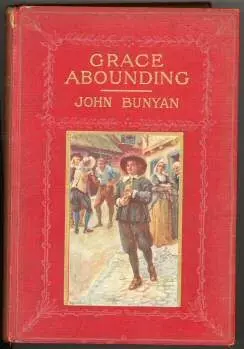
THE CLASSIC COLLECTION · 1666
"Grace Abounding to the Chief of Sinners" by John Bunyan is a theological autobiography written in the late 17th century. This reflective work chronicles Bunyan's profound spiritual journey, particularly emphasizing his struggles with sin, guilt, and the grace of God that ultimately led to his conversion and faith in Jesus Christ. The opening of this work introduces Bunyan's background, detailing his humble upbringing and his early life marked by sin and rebellion against God. He describes the internal turmoil he faced as a child, grappling with fear and haunting thoughts of damnation. As he transitions into adulthood, his life is characterized by a deep exploration of religious matters, driven by various temptations and doubts. Bunyan recounts his initial rejection of faith, despite moments of awareness and fear regarding his sinful state. Throughout this opening portion, his sincere reflections on feeling lost and in despair suggest a candid journey against a backdrop of spiritual awakening and highlight the significant role of divine mercy in his eventual redemption.
Introduction adapted from the source catalogue; source summaries may be automatically generated.
Free to read · English · 57,738 words · No account needed
MAKE TIME FOR A GOOD BOOK
On by default. Untick to stop anonymous reading totals. Each page counts after 10 seconds in view. How this works.
Anonymous counting is on unless you have switched it off.
Cobb. Well, said he, I do not profess myself to be a man that can dispute; but this I say, truly, neighbour Bunyan, I would have you consider this matter seriously, and submit yourself; you may have your liberty to exhort your neighbour in private discourse, so be you do not call together an assembly of people; and, truly, you may do much good to the church of Christ, if you would go this way; and this you may do, and the law not abridge you of it. It is your private meetings that the law is against.
Bun. Sir, said I, if I may do good to one by my discourse? why may I not do good to two? And if to two, why not to four, and so to eight? etc.
Cobb. Ay, saith he, and to a hundred, I warrant you.
Bun. Yes, Sir, said I, I think I should not be forbid to do as much
good as I can.
Cobb. But, saith he, you may but pretend to do good, and instead, notwithstanding, do harm, by seducing the people; you are, therefore, denied your meeting so many together, lest you should do harm.
Bun. And yet, said I, you say the law tolerates me to discourse with my neighbour; surely there is no law tolerates me seduce any one; therefore if I may by the law discourse with one, surely it is to do him good; and if I by discoursing may do good to one, surely, by the same law, I may do good to many.
Cobb. The law, saith he, doth expressly forbid your private meetings; therefore they are not to be tolerated.
Bun. I told him that I would not entertain so much uncharitableness of that Parliament in the 35th of Elizabeth, or of the Queen herself, as to think they did, by that law, intend the oppressing of any of God’s ordinances, or the interrupting any in way of God; but men may, in the wresting of it, turn it against the way of God; but take the law in itself, and it only fighteth against those that drive at mischief in their hearts and meeting, making religion only their cloak, colour, or pretence; for so are the words of the statute: If any meetings, under colour or pretence of religion, etc.
Cobb. Very good; therefore the king, seeing that pretences are usually in and among people, so as to make religion their pretence only; therefore he, and the law before him, doth forbid such private meetings, and tolerates only public; you may meet in public.
Your reading position is saved on this browser. Take it to another device with a library code. Reading pages adapt to text, rather than matching a printed edition.
John Bunyan
John Bunyan
John Bunyan
BEHIND THE BOOK
This eBook is for the use of anyone anywhere in the United States and most other parts of the world at no cost and with almost no restrictions whatsoever. You may copy it, give it away or re-use it under the terms of the Project Gutenberg License included with this eBook or online at www.gutenberg.org. If you are not located in the United States, you will have to check the laws of the country where you are located before using this eBook. Read the source licence.
The original source file, including credits and licence, is retained by this library. Request an original-format copy at no charge. Please include the book title and Project Gutenberg identifier #654.
KEEP YOUR CURIOSITY GOING

David Patterson (Spirit) Hatch

David Patterson (Spirit) Hatch

David Patterson (Spirit) Hatch
John L. Ransom

Herman W. Mudgett

Harriet Monroe