THE CLASSIC COLLECTION✦The Pilgrim’s Progress by John Bunyan Every Child Can ReadCLASSIC FREE BOOKS
The Pilgrim’s Progress by John Bunyan Every Child Can Read
John Bunyan
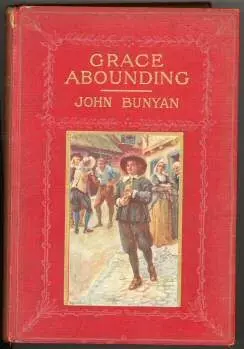
THE CLASSIC COLLECTION · 1666
"Grace Abounding to the Chief of Sinners" by John Bunyan is a theological autobiography written in the late 17th century. This reflective work chronicles Bunyan's profound spiritual journey, particularly emphasizing his struggles with sin, guilt, and the grace of God that ultimately led to his conversion and faith in Jesus Christ. The opening of this work introduces Bunyan's background, detailing his humble upbringing and his early life marked by sin and rebellion against God. He describes the internal turmoil he faced as a child, grappling with fear and haunting thoughts of damnation. As he transitions into adulthood, his life is characterized by a deep exploration of religious matters, driven by various temptations and doubts. Bunyan recounts his initial rejection of faith, despite moments of awareness and fear regarding his sinful state. Throughout this opening portion, his sincere reflections on feeling lost and in despair suggest a candid journey against a backdrop of spiritual awakening and highlight the significant role of divine mercy in his eventual redemption.
Introduction adapted from the source catalogue; source summaries may be automatically generated.
Free to read · English · 57,738 words · No account needed
MAKE TIME FOR A GOOD BOOK
On by default. Untick to stop anonymous reading totals. Each page counts after 10 seconds in view. How this works.
Anonymous counting is on unless you have switched it off.
Bun. To whom I said, that I could follow my calling, and that too, namely, preaching the Word: and I did look upon it as my duty to do them both, as I had an opportunity.
Fost. He said, To have any such meetings was against the law; and, therefore, he would have me leave off, and say, I would call the people no more together.
Bun. To whom I said, that I durst not make any further promise; for my conscience would not suffer me to do it. And again, I did look upon it as my duty to do as much good as I could, not only in my trade, but also in communicating to all people wheresoever I came the best knowledge I had in the Word.
Fost. He told me that I was the nearest the Papists of any, and that he would convince me of immediately.
Bun. I asked him, Wherein?
Fost. He said, In that we understood the Scriptures literally.
Bun. I told him that those that were to be understood literally, we understood them so; but for those that was to be understood otherwise, we endeavoured so to understand them.
Fost. He said, Which of the Scriptures do you understand literally?
Bun. I said this, He that believes shall be saved. This was to be understood just as it is spoken; that whosoever believeth in Christ shall, according to the plain and simple words of the text, be saved.
Fost. He said that I was ignorant, and did not understand the Scriptures; for how, said he, can you understand them when you know not the original Greek? etc.
Bun. To whom I said, that if that was his opinion, that none could understand the Scriptures but those that had the original Greek, etc., then but a very few of the poorest sort should be saved (this is harsh); yet the Scripture saith, That God hides these things from the wise and prudent (that is, from the learned of the world), and reveals them to babes and sucklings.
Fost. He said there were none that heard me but a company of foolish
people.
Bun. I told him that there was the wise as well as the foolish that do hear me; and again, those that were most commonly counted foolish by the world are the wisest before God; also, that God had rejected the wise, and mighty, and noble, and chosen the foolish, and the base.
Fost. He told me that I made people neglect their calling; and that God had commanded people to work six days, and serve Him on the seventh.
Your reading position is saved on this browser. Take it to another device with a library code. Reading pages adapt to text, rather than matching a printed edition.
John Bunyan
John Bunyan
John Bunyan
BEHIND THE BOOK
This eBook is for the use of anyone anywhere in the United States and most other parts of the world at no cost and with almost no restrictions whatsoever. You may copy it, give it away or re-use it under the terms of the Project Gutenberg License included with this eBook or online at www.gutenberg.org. If you are not located in the United States, you will have to check the laws of the country where you are located before using this eBook. Read the source licence.
The original source file, including credits and licence, is retained by this library. Request an original-format copy at no charge. Please include the book title and Project Gutenberg identifier #654.
KEEP YOUR CURIOSITY GOING

David Patterson (Spirit) Hatch

David Patterson (Spirit) Hatch

David Patterson (Spirit) Hatch
John L. Ransom

Herman W. Mudgett

Harriet Monroe