THE CLASSIC COLLECTION✦The Pilgrim’s Progress by John Bunyan Every Child Can ReadCLASSIC FREE BOOKS
The Pilgrim’s Progress by John Bunyan Every Child Can Read
John Bunyan
THE CLASSIC COLLECTION · 1666
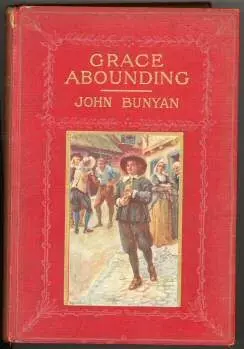
"Grace Abounding to the Chief of Sinners" by John Bunyan is a theological autobiography written in the late 17th century. This reflective work chronicles Bunyan's profound spiritual journey, particularly emphasizing his struggles with sin, guilt, and the grace of God that ultimately led to his conversion and faith in Jesus Christ. The opening of this work introduces Bunyan's background, detailing his humble upbringing and his early life marked by sin and rebellion against God. He describes the internal turmoil he faced as a child, grappling with fear and haunting thoughts of damnation. As he transitions into adulthood, his life is characterized by a deep exploration of religious matters, driven by various temptations and doubts. Bunyan recounts his initial rejection of faith, despite moments of awareness and fear regarding his sinful state. Throughout this opening portion, his sincere reflections on feeling lost and in despair suggest a candid journey against a backdrop of spiritual awakening and highlight the significant role of divine mercy in his eventual redemption.
Introduction adapted from the source catalogue; source summaries may be automatically generated.
Free to read · English · 57,738 words · No account needed
MAKE TIME FOR A GOOD BOOK
On by default. Untick to stop anonymous reading totals. Each page counts after 10 seconds in view. How this works.
Anonymous counting is on unless you have switched it off.
WHEN, by the good hand of my God, I had for five or six years together, without any interruption, freely preached the blessed gospel of our Lord Jesus Christ; and had also, through His blessed grace, some encouragement by His blessing thereupon; the devil, that old enemy of man’s salvation, took his opportunity to inflame the hearts of his vassals against me, insomuch that at the last, I was laid out for by the warrant of a justice, and was taken and committed to prison. The relation thereof is as followeth:—
Upon the 12th of this instant, November 1660, I was desired by some of the friends in the country to come to teach at Samsell, by Harlington, in Bedfordshire. To whom I made a promise, if the Lord permitted, to be with them on the time aforesaid. The justice hearing thereof (whose name is Mr Francis Wingate), forthwith issued out his warrant to take me, and bring me before him, and in the meantime to keep a very strong watch about the house where the meeting should be kept, as if we that were to meet together in that place did intend to do some fearful business, to the destruction of the country; when alas! the constable, when he came in, found us only with our Bibles in our hands, ready to speak and hear the word of God; for we were just about to begin our exercise. Nay, we had begun in prayer for the blessing of God upon our opportunity, intending to have preached the word of the Lord unto them there present: {184} but the constable coming in prevented us. So I was taken and forced to depart the room. But had I been minded to have played the coward, I could have escaped and kept out of his hands. For when I was come to my friend’s house, there was whispering that that day I should be taken, for there was a warrant out to take me; which when my friend heard, he being somewhat timorous, questioned whether we had best have our meeting or not; and whether it might not be better for me to depart, lest they should take me and have me before the justice, and after that send me to prison (for he knew better than I what spirit they were of, living by them): to whom I said, No, by no means, I will not stir, neither will I have the meeting dismissed for this. Come, be of good cheer; let us not be daunted; our cause is good, we need not be ashamed of it; to preach God’s Word, is so good a work, that we shall be well rewarded, if we suffer for that; or to this purpose—(But as for my friend, I think he was more afraid of me, than of himself.) After this I walked into the close, where I somewhat seriously considering the matter, this came into my mind, That I had showed myself hearty and courageous in my preaching, and had, blessed be grace, made it my business to encourage others; therefore thought I, if I should now run, and make an escape, it will be of a very ill savour in the country. For what will my weak and newly-converted brethren think of it, but that I was not so strong in deed as I was in word? Also I feared that if I should run now there was a warrant out for me, I might by so doing make them afraid to stand, when great words only should be spoken to them. Besides I thought, that seeing God of His mercy should choose me to go upon the forlorn hope in this country; that is, to be the first, that should be opposed, for the gospel; if I should fly, it might be a discouragement to the whole body that might follow after. And further, I thought the world thereby would take occasion at my cowardliness, to have blasphemed the gospel, and to have had some ground to suspect worse of me and my profession, than I deserved. These things with others considered by me, I came in again to the house, with a full resolution to keep the meeting, and not to go away, though I could have been gone about an hour before the officer apprehended me; but I would not; for I was resolved to see the utmost of what they could say or do unto me. For blessed be the Lord, I knew of no evil that I had said or done. And so, as aforesaid, I begun the meeting. But being prevented by the constable’s coming in with his warrant to take me, I could not proceed. But before I went away, I spake some few words of counsel and encouragement to the people, declaring to them, that they saw we were prevented of our opportunity to speak and hear the Word of God, and were like to suffer for the same; desiring them that they would not be discouraged, for it was a mercy to suffer upon so good account. For we might have been apprehended as thieves or murderers, or for other wickedness; but blessed be God it was not so, but we suffer as Christians for well doing: and we had better be the persecuted, than the persecutors, etc. But the constable and the justice’s man waiting on us, would not be at quiet till they had me away and that we departed the house. But because the justice was not at home that day, there was a friend of mine engaged for me to bring me to the constable on the morrow morning. Otherwise the constable must have charged a watch with me, or have secured me some other way, my crime was so great. So on the next morning we went to the constable, and so to the justice. {187a} He asked the constable what we did, where we was met together, and what we had with us? I trow, he meant whether we had armour or not; but when the constable told him that there were only met a few of us together to preach and hear the Word, and no sign of anything else, he could not well tell what to say: yet because he had sent for me, he did adventure to put out a few proposals to me, which were to this effect, namely, What I did there? And why I did not content myself with following my calling? for it was against the law, that such as I should be admitted to do as I did.
Your reading position is saved on this browser. Take it to another device with a library code. Reading pages adapt to text, rather than matching a printed edition.
John Bunyan
John Bunyan
John Bunyan
BEHIND THE BOOK
This eBook is for the use of anyone anywhere in the United States and most other parts of the world at no cost and with almost no restrictions whatsoever. You may copy it, give it away or re-use it under the terms of the Project Gutenberg License included with this eBook or online at www.gutenberg.org. If you are not located in the United States, you will have to check the laws of the country where you are located before using this eBook. Read the source licence.
The original source file, including credits and licence, is retained by this library. Request an original-format copy at no charge. Please include the book title and Project Gutenberg identifier #654.
KEEP YOUR CURIOSITY GOING

David Patterson (Spirit) Hatch

David Patterson (Spirit) Hatch

David Patterson (Spirit) Hatch
John L. Ransom

Herman W. Mudgett

Harriet Monroe