THE CLASSIC COLLECTION✦Among the campsCLASSIC FREE BOOKS
Among the camps
Thomas Nelson Page
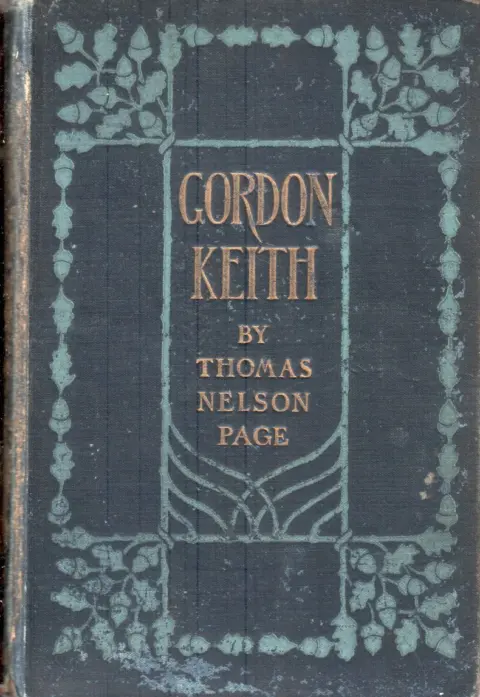
THE CLASSIC COLLECTION · 1903
"Gordon Keith" by Thomas Nelson Page is a novel written during the early 20th century. The story begins with Gordon Keith, the son of a general and gentleman who struggles with the ramifications of losing his family's plantation after the Civil War. As Gordon navigates the challenges of his new life, he reflects on the past, his father's ideals of gentility, and the contrast between their former wealth and the current struggles. The opening of the novel introduces us to Gordon's life before and during the upheaval caused by the war. It paints a vivid picture of the plantation life at Elphinstone, detailing Gordon's relationships with his parents and his childhood memories. The narrative explores themes of loss and resilience, illustrating both his father's steadfastness and the boy's youthful yearnings for adventure and military glory. As the story unfolds, it sets the stage for Gordon's transition from an idyllic upbringing to confronting the harsh realities of life after the war, foreshadowing his quest for purpose and identity amidst the remnants of a once-grand legacy.
Introduction adapted from the source catalogue; source summaries may be automatically generated.
Free to read · English · 176,099 words · No account needed
MAKE TIME FOR A GOOD BOOK
On by default. Untick to stop anonymous reading totals. Each page counts after 10 seconds in view. How this works.
Anonymous counting is on unless you have switched it off.
"Stuff! I don't care what he told you! Alice, he is a perfectly unknown and untrained young--creature. All young men talk that way. He is perfectly gauche and boorish in his manner--"
"Why, mamma, he has beautiful manners!" exclaimed Alice "I heard a lady saying the other day he had the manners of a Chesterfield."
"Chester-nonsense!" exclaimed Mrs. Yorke.
"I think he has, too, mamma."
"I don't agree with you," declared Mrs. Yorke, energetically. "How would he appear in New York? Why, he wears great heavy shoes, and his neckties are something dreadful."
"His neckties are bad," admitted Alice, sadly.
Mrs. Yorke, having discovered a breach in her adversary's defences, like a good general directed her attack against it.
"He dresses horribly; he wears his hair like a--countryman; and his manners are as antiquated as his clothes. Think of him at the opera or at one of Mrs. Wentworth's receptions! He says 'madam' and 'sir' as if he were a servant."
"I got after him about that once," said the girl, reflectively. "I said that only servants said that."
"Well, what did he say?"
"Said that that proved that servants sometimes had better manners than
their masters."
"Well, I must say, I think he was excessively rude!" asserted Mrs. Yorke, picking up her fan and beginning to fan rapidly.
"That's what I said; but he said he did not see how it could be rude to state a simple and impersonal fact in a perfectly respectful way."
Alice was warming up in defence and swept on.
"He said the new fashion was due to people who were not sure of their own position, and were afraid others might think them servile if they employed such terms."
"What does he know about fashion?"
"He says fashion is a temporary and shifting thing, sometimes caused by accident and sometimes made by tradesmen, but that good manners are the same to-day that they were hundreds of years ago, and that though the ways in which they are shown change, the basis is always the same, being kindness and gentility."
Mrs. Yorke gasped.
"Well, I must say, you seem to have learned your lesson!" she exclaimed.
Alice had been swept on by her memory not only of the words she was repeating, but of many conversations and interchanges of thought Gordon Keith and she had had during the past weeks, in which he had given her new ideas. She began now, in a rather low and unsteady voice, her hands tightly clasped, her eyes in her lap:
"Mamma, I believe I like him very much--better than I shall ever--"
Your reading position is saved on this browser. Take it to another device with a library code. Reading pages adapt to text, rather than matching a printed edition.
Thomas Nelson Page
Thomas Nelson Page
Thomas Nelson Page
Thomas Nelson Page
BEHIND THE BOOK
This eBook is for the use of anyone anywhere in the United States and most other parts of the world at no cost and with almost no restrictions whatsoever. You may copy it, give it away or re-use it under the terms of the Project Gutenberg License included with this eBook or online at www.gutenberg.org. If you are not located in the United States, you will have to check the laws of the country where you are located before using this eBook. Read the source licence.
The original source file, including credits and licence, is retained by this library. Request an original-format copy at no charge. Please include the book title and Project Gutenberg identifier #14068.
KEEP YOUR CURIOSITY GOING
Cécile Tormay

Moritz Busch
Coulson Kernahan
John L. Ransom

Maurice Baring
Frances Wright