THE CLASSIC COLLECTION✦Among the campsCLASSIC FREE BOOKS
Among the camps
Thomas Nelson Page
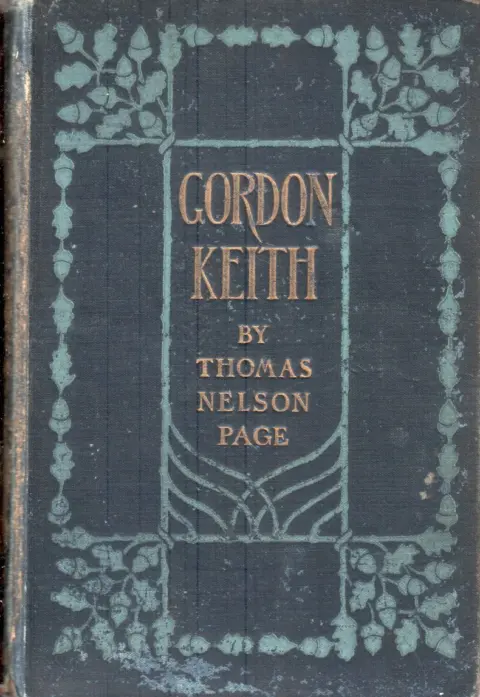
THE CLASSIC COLLECTION · 1903
"Gordon Keith" by Thomas Nelson Page is a novel written during the early 20th century. The story begins with Gordon Keith, the son of a general and gentleman who struggles with the ramifications of losing his family's plantation after the Civil War. As Gordon navigates the challenges of his new life, he reflects on the past, his father's ideals of gentility, and the contrast between their former wealth and the current struggles. The opening of the novel introduces us to Gordon's life before and during the upheaval caused by the war. It paints a vivid picture of the plantation life at Elphinstone, detailing Gordon's relationships with his parents and his childhood memories. The narrative explores themes of loss and resilience, illustrating both his father's steadfastness and the boy's youthful yearnings for adventure and military glory. As the story unfolds, it sets the stage for Gordon's transition from an idyllic upbringing to confronting the harsh realities of life after the war, foreshadowing his quest for purpose and identity amidst the remnants of a once-grand legacy.
Introduction adapted from the source catalogue; source summaries may be automatically generated.
Free to read · English · 176,099 words · No account needed
MAKE TIME FOR A GOOD BOOK
On by default. Untick to stop anonymous reading totals. Each page counts after 10 seconds in view. How this works.
Anonymous counting is on unless you have switched it off.
She regretted extremely, she said, that she had not foreseen this. It was all so unexpected to her that she was quite overwhelmed by it. She felt that this was a lie, and she was not sure that he did not know it. Of course, it was quite impossible that she could consent to anything like what he had proposed.
"Do you mean because she is from the North and I am from the South?" he
asked earnestly.
"No; of course not. I have Southern blood myself. My grandmother was from the South." She smiled at his simplicity.
"Then why?"
This was embarrassing, but she must answer.
"Why, you--we--move in--quite different--spheres, and--ah, it's really not to be thought of Mr. Keith," she said, half desperately.
He himself had thought of the different spheres in which they moved, but he had surmounted that difficulty. Though her father, as he had learned, had begun life as a store-boy, and her mother was not the most learned person in the world, Alice Yorke was a lady to her finger-tips, and in her own fine person was the incontestable proof of a strain of gentle blood somewhere. Those delicate features, fine hands, trim ankles, and silken hair told their own story.
So he came near saying, "That does not make any difference"; but he
restrained himself. He said instead, "I do not know that I
understand you."
It was very annoying to have to be so plain, but it was, Mrs. Yorke
felt, quite necessary.
"Why, I mean that my daughter has always moved in the--the most--exclusive society; she has had the best advantages, and has a right to expect the best that can be given her."
"Do you mean that you think my family is not good enough for your
daughter?"
There was a tone in his quiet voice that made her glance up at him, and a look on his face that made her answer quickly:
"Oh, no; not that, of course. I have no doubt your family is--indeed, I have heard it is--ur--. But my daughter has every right to expect the best that life can give. She has a right to expect--an--establishment."
"You mean money?" Keith asked, a little hoarsely.
"Why, not in the way in which you put it; but what money stands for--comforts, luxuries, position. Now, don't go and distress yourself about this. You are nothing but a silly boy. You fancy yourself in love with my daughter because she is the only pretty girl about here."
"She is not; but she is the prettiest I know," ejaculated Keith,
bitterly.
"You think that, and so you fancy you are in love with her."
Your reading position is saved on this browser. Take it to another device with a library code. Reading pages adapt to text, rather than matching a printed edition.
Thomas Nelson Page
Thomas Nelson Page

Thomas Nelson Page
Thomas Nelson Page
BEHIND THE BOOK
This eBook is for the use of anyone anywhere in the United States and most other parts of the world at no cost and with almost no restrictions whatsoever. You may copy it, give it away or re-use it under the terms of the Project Gutenberg License included with this eBook or online at www.gutenberg.org. If you are not located in the United States, you will have to check the laws of the country where you are located before using this eBook. Read the source licence.
The original source file, including credits and licence, is retained by this library. Request an original-format copy at no charge. Please include the book title and Project Gutenberg identifier #14068.
KEEP YOUR CURIOSITY GOING
Cécile Tormay

Moritz Busch
Coulson Kernahan
John L. Ransom

Maurice Baring
Frances Wright