THE CLASSIC COLLECTION✦Among the campsCLASSIC FREE BOOKS
Among the camps
Thomas Nelson Page
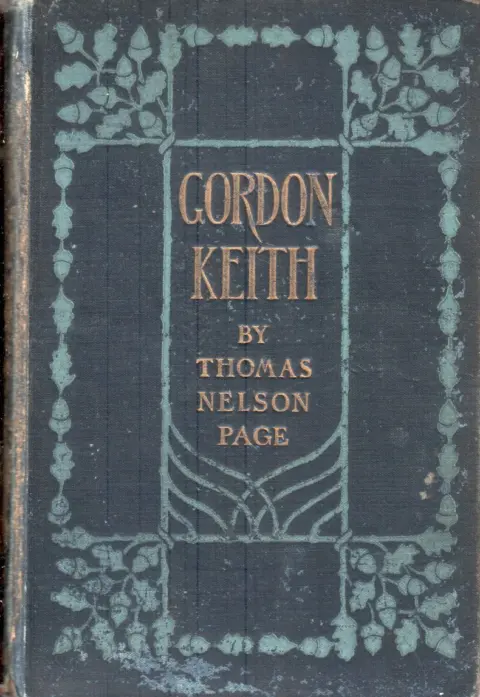
THE CLASSIC COLLECTION · 1903
"Gordon Keith" by Thomas Nelson Page is a novel written during the early 20th century. The story begins with Gordon Keith, the son of a general and gentleman who struggles with the ramifications of losing his family's plantation after the Civil War. As Gordon navigates the challenges of his new life, he reflects on the past, his father's ideals of gentility, and the contrast between their former wealth and the current struggles. The opening of the novel introduces us to Gordon's life before and during the upheaval caused by the war. It paints a vivid picture of the plantation life at Elphinstone, detailing Gordon's relationships with his parents and his childhood memories. The narrative explores themes of loss and resilience, illustrating both his father's steadfastness and the boy's youthful yearnings for adventure and military glory. As the story unfolds, it sets the stage for Gordon's transition from an idyllic upbringing to confronting the harsh realities of life after the war, foreshadowing his quest for purpose and identity amidst the remnants of a once-grand legacy.
Introduction adapted from the source catalogue; source summaries may be automatically generated.
Free to read · English · 176,099 words · No account needed
MAKE TIME FOR A GOOD BOOK
On by default. Untick to stop anonymous reading totals. Each page counts after 10 seconds in view. How this works.
Anonymous counting is on unless you have switched it off.
"You know there may be a cellar under a ground-floor," observed Mr.
Stirling, demurely.
Keith looked at him, and their eyes met.
Fortunately, perhaps, for Keith, some one came up just then and claimed a dance with Mrs. Lancaster. She moved away, and then turned back.
"I shall see you again?"
"Yes. Why, I hope so-certainly."
She stopped and looked at him.
"When are you going away?"
"Why, I don't exactly know. Very soon. Perhaps, in a day or two."
"Well, won't you come to see us? Here, I will give you my address. Have you a card?" She took the pencil he offered her and wrote her number on it. "Come some afternoon--about six; Mr. Lancaster is always in then," she said sedately. "I am sure you will like each other." Keith bowed.
She floated off smiling. What she had said to Mrs. Wentworth occurred to
her.
"Yes; he looks like a man." She became conscious that her companion was
asking a question.
"What is the matter with you?" he said. "I have asked you three times who that man was, and you have not said a word."
"Oh, I beg your pardon. Mr. Keith, an old friend of mine," she said, and
changed the subject.
As to her old friend, he was watching her as she danced, winding in and out among the intervening couples. He wondered that he could ever have thought that a creature like that could care for him and share his hard life. He might as soon have expected a bird-of-paradise to live by choice in a coal-bunker.
He strolled about, looking at the handsome women, and presently found himself in the conservatory. Turning a clump, of palms, he came on Mrs. Wentworth and Mr. Wickersham sitting together talking earnestly. Keith was about to go up and speak to Mrs. Wentworth, but her escort said something under his breath to her, and she looked away. So Keith passed on.
A little later, Keith went over to where Mrs. Lancaster stood. Several men were about her, and just after Keith Joined her, another man walked up, if any movement so lazy and sauntering could be termed walking.
"I have been wondering why I did not see you," he drawled as he came up.
Keith recognized the voice of Ferdy Wickersham. He turned and faced him; but if Mr. Wickersham was aware of his presence, he gave no sign of it. His dark eyes were on Mrs. Lancaster. She turned to him.
"Perhaps, Ferdinand, it was because you did not use your eyes. That is not ordinarily a fault of yours."
"I never think of my eyes when yours are present," said he, lazily.
Your reading position is saved on this browser. Take it to another device with a library code. Reading pages adapt to text, rather than matching a printed edition.
Thomas Nelson Page
Thomas Nelson Page
Thomas Nelson Page
Thomas Nelson Page
BEHIND THE BOOK
This eBook is for the use of anyone anywhere in the United States and most other parts of the world at no cost and with almost no restrictions whatsoever. You may copy it, give it away or re-use it under the terms of the Project Gutenberg License included with this eBook or online at www.gutenberg.org. If you are not located in the United States, you will have to check the laws of the country where you are located before using this eBook. Read the source licence.
The original source file, including credits and licence, is retained by this library. Request an original-format copy at no charge. Please include the book title and Project Gutenberg identifier #14068.
KEEP YOUR CURIOSITY GOING
Cécile Tormay

Moritz Busch
Coulson Kernahan
John L. Ransom

Maurice Baring
Frances Wright