THE CLASSIC COLLECTION✦Among the campsCLASSIC FREE BOOKS
Among the camps
Thomas Nelson Page
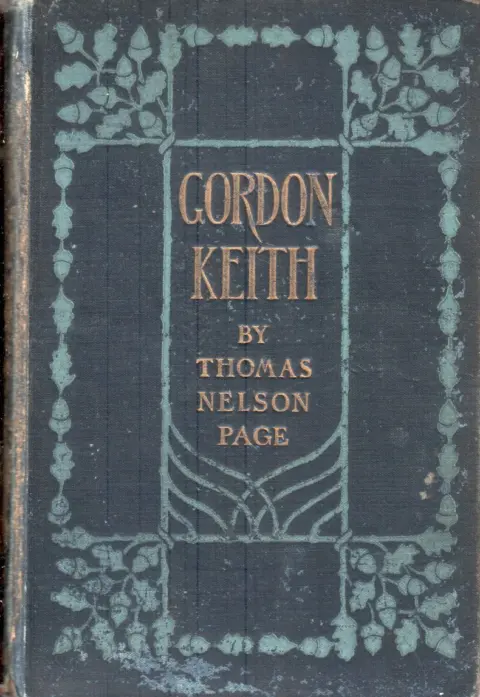
THE CLASSIC COLLECTION · 1903
"Gordon Keith" by Thomas Nelson Page is a novel written during the early 20th century. The story begins with Gordon Keith, the son of a general and gentleman who struggles with the ramifications of losing his family's plantation after the Civil War. As Gordon navigates the challenges of his new life, he reflects on the past, his father's ideals of gentility, and the contrast between their former wealth and the current struggles. The opening of the novel introduces us to Gordon's life before and during the upheaval caused by the war. It paints a vivid picture of the plantation life at Elphinstone, detailing Gordon's relationships with his parents and his childhood memories. The narrative explores themes of loss and resilience, illustrating both his father's steadfastness and the boy's youthful yearnings for adventure and military glory. As the story unfolds, it sets the stage for Gordon's transition from an idyllic upbringing to confronting the harsh realities of life after the war, foreshadowing his quest for purpose and identity amidst the remnants of a once-grand legacy.
Introduction adapted from the source catalogue; source summaries may be automatically generated.
Free to read · English · 176,099 words · No account needed
MAKE TIME FOR A GOOD BOOK
On by default. Untick to stop anonymous reading totals. Each page counts after 10 seconds in view. How this works.
Anonymous counting is on unless you have switched it off.
"Well, I don't know that every one would call her that. Indeed, I am not quite sure that I should call her that myself always; but she can be sweet. My children adore her, and I think that is always a good sign."
"Undoubtedly. They judge correctly, because directly."
The picture of a young girl in a riding-habit kneeling in the dust with a chubby, little, ragged child in her arms flashed before Keith's mental vision. And he almost gave a gasp.
"Is she married happily?'" he asked "I hope she is happy."
"Oh, as happy as the day is long," declared Mrs. Wentworth, cheerfully. Deep down in her eyes was a wicked twinkle of malice. Her face wore a look of content. "He is not altogether indifferent yet," she said to herself. And when Keith said firmly that he was very glad to hear it, she did him the honor to disbelieve him.
"Of course, you know that Mr. Lancaster is a good deal older than
Alice?"
Yes, Keith had heard so.
"But a charming man, and immensely rich."
"Yes." Keith began to look grim.
"Aren't you going to see here?" inquired Mrs. Wentworth, finding that Keith was not prepared to say any more on the subject.
Keith said he should like to do so very much. He hoped to see her before going away; but he could not tell.
"She is married now, and must be so taken up with her new duties that I fear she would hardly remember me," he added, with a laugh. "I don't think I ever made much impression on her."
"Alice Yorke is not one to forget her friends. Why, she spoke of you with real friendship," she said, smiling, thinking to herself, Alice likes him, and he is still in love with her. This begins to be interesting.
"A woman does not have to give up all her friends when she marries?" she added, with her eyes on Keith.
Keith smiled.
"Oh, no; only her lovers, unless they turn into friends."
"Of course, those," said Mrs. Wentworth, who, after a moment's reflection, added, "They don't always do that. Do you believe a woman ever forgets entirely a man she has really loved?"
"She does if she is happily married and if she is wise."
"But all women are not happily married."
"And, perhaps, all are not wise," said Keith.
Some association of ideas led him to say suddenly:
"Tell me something about Ferdy Wickersham. He was one of your ushers, wasn't he?" He was surprised to see Mrs. Wentworth's countenance change. Her eyelids closed suddenly as if a glare were turned unexpectedly on them, and she caught her breath.
Your reading position is saved on this browser. Take it to another device with a library code. Reading pages adapt to text, rather than matching a printed edition.
Thomas Nelson Page
Thomas Nelson Page
Thomas Nelson Page
Thomas Nelson Page
BEHIND THE BOOK
This eBook is for the use of anyone anywhere in the United States and most other parts of the world at no cost and with almost no restrictions whatsoever. You may copy it, give it away or re-use it under the terms of the Project Gutenberg License included with this eBook or online at www.gutenberg.org. If you are not located in the United States, you will have to check the laws of the country where you are located before using this eBook. Read the source licence.
The original source file, including credits and licence, is retained by this library. Request an original-format copy at no charge. Please include the book title and Project Gutenberg identifier #14068.
KEEP YOUR CURIOSITY GOING
Cécile Tormay

Moritz Busch
Coulson Kernahan
John L. Ransom

Maurice Baring
Frances Wright