THE CLASSIC COLLECTION✦Among the campsCLASSIC FREE BOOKS
Among the camps
Thomas Nelson Page
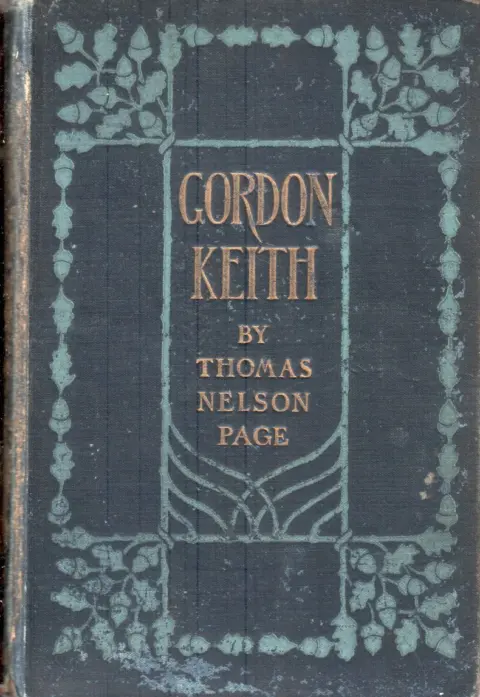
THE CLASSIC COLLECTION · 1903
"Gordon Keith" by Thomas Nelson Page is a novel written during the early 20th century. The story begins with Gordon Keith, the son of a general and gentleman who struggles with the ramifications of losing his family's plantation after the Civil War. As Gordon navigates the challenges of his new life, he reflects on the past, his father's ideals of gentility, and the contrast between their former wealth and the current struggles. The opening of the novel introduces us to Gordon's life before and during the upheaval caused by the war. It paints a vivid picture of the plantation life at Elphinstone, detailing Gordon's relationships with his parents and his childhood memories. The narrative explores themes of loss and resilience, illustrating both his father's steadfastness and the boy's youthful yearnings for adventure and military glory. As the story unfolds, it sets the stage for Gordon's transition from an idyllic upbringing to confronting the harsh realities of life after the war, foreshadowing his quest for purpose and identity amidst the remnants of a once-grand legacy.
Introduction adapted from the source catalogue; source summaries may be automatically generated.
Free to read · English · 176,099 words · No account needed
MAKE TIME FOR A GOOD BOOK
On by default. Untick to stop anonymous reading totals. Each page counts after 10 seconds in view. How this works.
Anonymous counting is on unless you have switched it off.
Mr. Creamer of Creamer, Crustback & Company, Capitalists, a tall, broad-shouldered man, with a strongly cut nose and chin and keen, gray eyes, that, through long habitude, weighed chances with an infallible appraisement, to whom Keith had a letter from an acquaintance, one of those casual letters that mean anything or nothing, informed him frankly that he had "neither time nor inclination to discuss enterprises, ninety-nine out of every hundred of which were frauds, and the hundredth generally a failure."
"This is not a fraud," said Keith, hotly, rising. "I do not indorse frauds, sir." He began to draw on his gloves. "If I cannot satisfy any reasonable man of the fact I state, I am willing to fail. I ought to fail." With a bow, he turned to the door.
Something in Keith's assurance went further with the shrewd-eyed capitalist than his politeness had done. He shot a swift glance as he was retiring toward the door.
"Why didn't Wickersham make money down there?" he demanded, half in query, half in denial, gazing keenly over his gold-rimmed glasses. "He usually makes money, even if others lose it."
Mr. Creamer had his own reasons for not liking Wickersham.
Keith was standing at the door.
"For two or three reasons. One was that he underestimated the people who live down there, and thought he could force them into selling him their lands, and so lost the best properties there."
"The lands you have, I suppose?" said the banker, looking again at Keith
quickly.
"Yes, the lands I have, though you don't believe it," said Keith, looking him calmly in the eyes.
The banker was gazing at the young man ironically; but, as he observed him, his credulity began to give way.
That stamp of truth which men recognize was written on him unmistakably. Mr. Creamer's mind worked quickly.
"By the way, you came from down there. Did you know a young man named Rhodes? He was an engineer. Went over the line."
Keith's eyes brightened. "He is one of my best friends. He is in Russia
now."
Mr. Creamer nodded. "What do you think of him?"
"He is one of the best."
Mr. Creamer nodded. He did not think it necessary to tell Keith that Rhodes was paying his addresses to his daughter.
"You write to him," said Keith. "He will tell you just what I have. Tell him they are the Rawson lands."
Keith opened the door. "Good morning, sir."
"One moment!" Mr. Creamer leaned back in his chair. "Whom else do you know here?" he asked after a second.
Keith reflected a moment.
"I know Mr. Wentworth."
"Norman Wentworth?"
Your reading position is saved on this browser. Take it to another device with a library code. Reading pages adapt to text, rather than matching a printed edition.
Thomas Nelson Page
Thomas Nelson Page
Thomas Nelson Page
Thomas Nelson Page
BEHIND THE BOOK
This eBook is for the use of anyone anywhere in the United States and most other parts of the world at no cost and with almost no restrictions whatsoever. You may copy it, give it away or re-use it under the terms of the Project Gutenberg License included with this eBook or online at www.gutenberg.org. If you are not located in the United States, you will have to check the laws of the country where you are located before using this eBook. Read the source licence.
The original source file, including credits and licence, is retained by this library. Request an original-format copy at no charge. Please include the book title and Project Gutenberg identifier #14068.
KEEP YOUR CURIOSITY GOING
Cécile Tormay

Moritz Busch
Coulson Kernahan
John L. Ransom

Maurice Baring
Frances Wright