Pioneers of the Old Southwest: a chronicle of the dark and bloody ground
Constance Lindsay Skinner
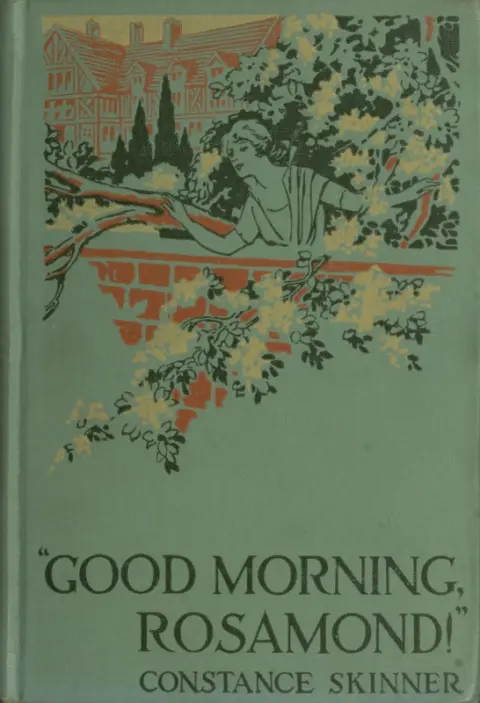
THE CLASSIC COLLECTION · 1917
"Good-Morning, Rosamond!" by Constance Lindsay Skinner is a novel written in the early 20th century. The story centers around Rosamond Mearely, a young widow and the wealthiest woman in the small hamlet of Roseborough, as she navigates the complexities of her new life after the passing of her husband, Hibbert Mearely. The book explores themes of societal expectations, personal identity, and the quest for freedom and happiness. At the start of the novel, readers are introduced to Rosamond's daily life, characterized by strict domestic routines managed by her two long-serving housemaids, Amanda and Jemima Frigget. As Rosamond prepares for her morning routine, tensions arise with her staff regarding her lateness, which uncovers social dynamics and expectations related to her late husband's status. The opening scenes reveal Rosamond's inner thoughts about her past marriage, as well as her determination to embrace her youth and beauty on what she deems her one "Wonderful Day." Amidst her reflections, she eagerly anticipates a future filled with love and adventure, hinting at her desire for liberation from the constraints of her high-society life.
Introduction adapted from the source catalogue; source summaries may be automatically generated.
Free to read · English · 82,509 words · No account needed
MAKE TIME FOR A GOOD BOOK
On by default. Untick to stop anonymous reading totals. Each page counts after 10 seconds in view. How this works.
Anonymous counting is on unless you have switched it off.
The phrase had caught Andrews’s ear. In playing, he parroted vacantly:
“‘Here where all hearts are tender and sincere!’ Very nice. Trumps.”
Mrs. Witherby returned to the item of greatest interest to her.
“But, dear Mrs. Lee, you spoke just now of his being handsomely paid for something. What was he paid for, and how much was it?”
“Oh, yes. For designing a great pleasure garden for the peasants of that place. But I don’t know the amount.”
“Oh, he is a landscape gardener now?” Andrews asked. He was an amateur horticulturist, in a very small way, himself, and enjoyed gardening details. The judge, whose interest in Mr. Falcon was exhausted, had returned to his paper. Mrs. Lee laughed.
“No. Not a gardener. He is a writer. But one who can write on the earth, if pencil and pad fail him. A practical poet--if you can call ‘practical’ a man who roams the world in search of beauty, or of conditions which will allow him to make them beautiful. The professor delighted in saying--oh, figuratively, of course--that one could easily recognize the true artist, because his fingers are always knuckle-deep in earth-dust; whereas the dilettante’s fingers are chiefly remarkable for nail-polish.”
“And, there, I entirely agree with him! As I am constantly telling Corinne, I consider the way people polish their nails, nowadays, is positively vulgar.” Mrs. Witherby spoke emphatically and played her card with a righteous flourish.
“Mamma! It’s my lead.” There was more than a suggestion of anger in
Corinne’s voice.
Bowing, Dr. Wells handed his partner her card, saying politely:
“Your card.”
“Corinne, you watch me like a hawk; as if you thought your own mother would cheat you if you weren’t looking.”
“Ah! but I always am looking,” that young lady cried gayly.
There was a lull at the table after this family tilt, and the Judge seized the occasion to share the “exclusive,” which had proved too thrilling to be kept to himself.
“Ah--give me your attention a moment. I have just read in my Digest, here, such a peculiar tale. A reigning prince of some little European state has run off.”
“Dear, dear,” Mrs. Lee said. “Was it a love-affair?”
“Ah--not precisely: though a princess had been arranged for him.”
Even Miss Crewe felt a degree of interest in a run-away prince, or perhaps she felt that she had challenged her aunt’s wrath long enough. She rose, as her cousin called to her:
“Oh, Mabel, come and hear about the prince. Do tell us more, Judge
Giffen.”
The Judge consulted his paper.
Your reading position is saved on this browser. Take it to another device with a library code. Reading pages adapt to text, rather than matching a printed edition.
Constance Lindsay Skinner
BEHIND THE BOOK
This eBook is for the use of anyone anywhere in the United States and most other parts of the world at no cost and with almost no restrictions whatsoever. You may copy it, give it away or re-use it under the terms of the Project Gutenberg License included with this eBook or online at www.gutenberg.org. If you are not located in the United States, you will have to check the laws of the country where you are located before using this eBook. Read the source licence.
The original source file, including credits and licence, is retained by this library. Request an original-format copy at no charge. Please include the book title and Project Gutenberg identifier #57254.
KEEP YOUR CURIOSITY GOING
Coulson Kernahan

Maurice Baring
Frances Wright
Cécile Tormay

Frederic Jesup Stimson

W. H. P. (William Henry Pope) Jarvis