THE CLASSIC COLLECTION✦The Countess FannyCLASSIC FREE BOOKS
The Countess Fanny
Marjorie Bowen
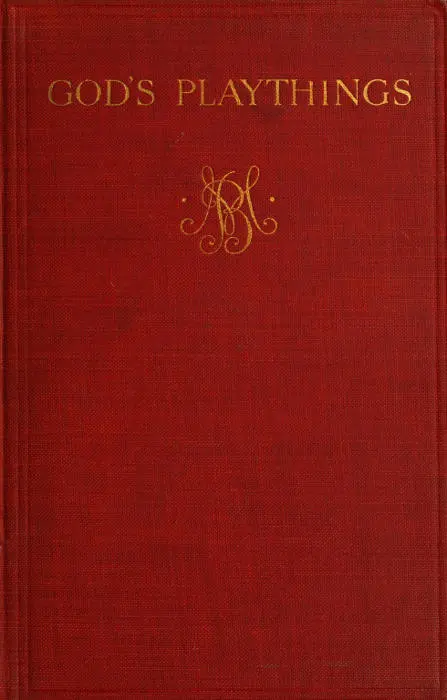
THE CLASSIC COLLECTION · 1913
"God's Playthings" by Marjorie Bowen is a historical novel written in the early 20th century. The narrative opens with the dramatic tale of James Scott, Duke of Monmouth, a historical figure involved in a rebellion against King James II of England, exploring themes of ambition, loyalty, and the tragic consequences of political intrigue. The story introduces Duke Monmouth's complex character, characterized by both noble aspirations and deep vulnerabilities, as he navigates the perils of his rebellion and confronts the bitter reality of his fate. The opening of "God's Playthings" immerses readers in a rich historical tapestry, vividly portraying the events surrounding Monmouth's rebellion. It begins with a letter from Monmouth, revealing his desperation and hope for mercy from the King, illustrated against the backdrop of betrayal and shifting loyalties. As the narrative progresses, it delves into Monmouth's internal struggles, depicting his reluctance to engage in treachery despite the urgings of others, ultimately leading to a poignant climax of existential questions about identity and legacy. This early portion effectively sets up a dramatic and emotionally charged story that promises to explore the intersections of personal ambition and tragic downfall.
Introduction adapted from the source catalogue; source summaries may be automatically generated.
Free to read · English · 76,247 words · No account needed
MAKE TIME FOR A GOOD BOOK
On by default. Untick to stop anonymous reading totals. Each page counts after 10 seconds in view. How this works.
Anonymous counting is on unless you have switched it off.
He saw the myrtle with the frail bridal blossoms, he saw the vineyards with the opulent grapes, he saw ladies in dresses stiff with jewels and heavy sleeves slipping from polished shoulders, he saw peasant girls with flushed faces and dusky hair.…
Then these pictures faded; he was in the dark silence of the Escurial; his terrible brother was speaking to him, caressing him; then Perez pulled a curtain back, and he saw his confidant Escovedo, lying mangled on a bier, bloody, with a fearful face.
Don Juan moaned and opened his eyes; he was light-headed; he beat his
hands on the cushions.
“Escovedo!” he muttered. “Escovedo!”
The pigeon above, startled by his sudden movement, flew out over his head and away into freedom through the broken wall.
Juan of Austria shivered and blenched before the swift flash of the white wings as if an angel had passed him.
“I am a great sinner,” he said with trembling lips. He remembered how the Pope had embraced and blessed him after Lepanto; he hoped that, in case he died, God would remember it too, and how he had slain the infidel on the coast of Africa. His mind cleared, he looked round for Farnese, he called his secretary, his page, but no one came.
He lay quite still, thinking now of the great ambition, the great chimera of his life, the passionate desire to be recognised as royal, as a Prince, to one day be a King.
He had dreamt that he might be King of many countries, even King of England with Marie Stewart for wife, but he had never attained even recognition as a Prince of Spain.
All Philip’s promises, all Philip’s flatteries had amounted to nothing. While he was useful he was caressed; when he grew too great he was forsaken, left without arms, without money, without men, left with Farnese watching him night and day.
And they had killed the man he loved, his friend, his confidant
Escovedo.
That fact rose up horrid, insistent, burning his heart with rage.
He could not forgive Perez; he could not forgive Philip.
In discomfort of mind and body he tossed from side to side. One of the gold cushions slipped from beneath him, and he was too weak to recover it; he lay with his eyes vacantly on it, and presently sat up with sudden strength and pointed at it with a quivering finger.
On the gold brocade was a round black hole where the stuff had been
burnt away.
Don Juan began to laugh; he remembered the yellow drop of liquid that had gleamed on the rich fabric; he shouted for some one to come.
Your reading position is saved on this browser. Take it to another device with a library code. Reading pages adapt to text, rather than matching a printed edition.
Marjorie Bowen
Marjorie Bowen
Marjorie Bowen
Marjorie Bowen
BEHIND THE BOOK
This eBook is for the use of anyone anywhere in the United States and most other parts of the world at no cost and with almost no restrictions whatsoever. You may copy it, give it away or re-use it under the terms of the Project Gutenberg License included with this eBook or online at www.gutenberg.org. If you are not located in the United States, you will have to check the laws of the country where you are located before using this eBook. Read the source licence.
The original source file, including credits and licence, is retained by this library. Request an original-format copy at no charge. Please include the book title and Project Gutenberg identifier #49504.
KEEP YOUR CURIOSITY GOING
Cécile Tormay

Moritz Busch
Coulson Kernahan
John L. Ransom

Maurice Baring
Frances Wright