THE CLASSIC COLLECTION✦The Countess FannyCLASSIC FREE BOOKS
The Countess Fanny
Marjorie Bowen
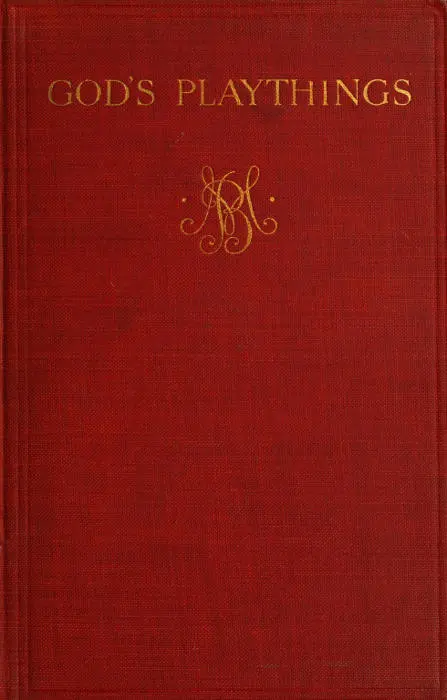
THE CLASSIC COLLECTION · 1913
"God's Playthings" by Marjorie Bowen is a historical novel written in the early 20th century. The narrative opens with the dramatic tale of James Scott, Duke of Monmouth, a historical figure involved in a rebellion against King James II of England, exploring themes of ambition, loyalty, and the tragic consequences of political intrigue. The story introduces Duke Monmouth's complex character, characterized by both noble aspirations and deep vulnerabilities, as he navigates the perils of his rebellion and confronts the bitter reality of his fate. The opening of "God's Playthings" immerses readers in a rich historical tapestry, vividly portraying the events surrounding Monmouth's rebellion. It begins with a letter from Monmouth, revealing his desperation and hope for mercy from the King, illustrated against the backdrop of betrayal and shifting loyalties. As the narrative progresses, it delves into Monmouth's internal struggles, depicting his reluctance to engage in treachery despite the urgings of others, ultimately leading to a poignant climax of existential questions about identity and legacy. This early portion effectively sets up a dramatic and emotionally charged story that promises to explore the intersections of personal ambition and tragic downfall.
Introduction adapted from the source catalogue; source summaries may be automatically generated.
Free to read · English · 76,247 words · No account needed
MAKE TIME FOR A GOOD BOOK
On by default. Untick to stop anonymous reading totals. Each page counts after 10 seconds in view. How this works.
Anonymous counting is on unless you have switched it off.
There was a pause of silence, broken only by the gusty descent of the rain on the window and the splashing of the drops on the glowing logs.
Sophia Dorothea closed her eyes.
“Do you remember,” she murmured, and her expression was greedy as the expression of one glimpsing the food he is famishing for, “that night–how young I was?”
“Do I remember? It was the last thing that ever happened to me,” answered Annette von Arlestein.
Before the mental vision of both the tragedy that had been lying silently in their hearts so long loomed suddenly clear and distinct, as if it had happened yesterday. There was silence.
They saw the scene before them as if they had not been actors in it.
A luxurious bedroom, a white and gilt imitation of Versailles, filled with elegant furniture, fashionable toilet articles and splendid clothes, a bed of white satin and many mirrors–this was what they both saw.
All was brilliant, pretty and cheerful.
At the foot of the bed stood a beautiful woman, Sophia Dorothea, opulent in charms and happiness; her black hair rolled in curls between a braid of pearls and fell on her soft shoulders. White and crimson mingled ravishingly in her face and her dark eyes were soft, yet sparkling.
She wore a gown of white brocade, cut low on the bosom and laced across the muslin shift with a pink cord; the skirt was embroidered with little wreaths of blue roses; the petticoat glimmered with gold thread.
The candles were lit.
Near her stood a handsome creature, Annette von Arlestein, full of sparkle and daring, in a violet gown; she held a blue quilted cloak. On the peach-coloured lining the candle light flickered up and down.
They were both listening … waiting.…
“Then you put the cloak on me,” said the Princess, “and we thought we were so safe–he being away–and I went downstairs.”
Madame von Arlestein saw it–the lovely figure muffled in the dark cloak, creeping down the wide, dark stairs, while she stood at the head with a candle, ready to put her hand over it at the slightest sound.
“Then you followed, Annette, to keep watch. I was a fool to go, but he had to leave soon, and I was mad to see him.”
“And the Elector was coming home the next day,” added the old woman.
Another scene rose before them: the vast dark kitchens beneath the dining-hall that opened on to the back entrance to the palace.
This room was underground, but was lit by the perpetual fire that burnt
in the huge grate.
Your reading position is saved on this browser. Take it to another device with a library code. Reading pages adapt to text, rather than matching a printed edition.
Marjorie Bowen
Marjorie Bowen
Marjorie Bowen
Marjorie Bowen
BEHIND THE BOOK
This eBook is for the use of anyone anywhere in the United States and most other parts of the world at no cost and with almost no restrictions whatsoever. You may copy it, give it away or re-use it under the terms of the Project Gutenberg License included with this eBook or online at www.gutenberg.org. If you are not located in the United States, you will have to check the laws of the country where you are located before using this eBook. Read the source licence.
The original source file, including credits and licence, is retained by this library. Request an original-format copy at no charge. Please include the book title and Project Gutenberg identifier #49504.
KEEP YOUR CURIOSITY GOING
Cécile Tormay

Moritz Busch
Coulson Kernahan
John L. Ransom

Maurice Baring
Frances Wright